
A dangerous economic illusion is masking a deep financial crisis inside American households. While top-line economic data and corporate earnings reports suggest that the U.S. consumer remains resilient, retail analysts and economists warn that this superficial stability is being artificially propped up by temporary tax refunds. In reality, the crushing weight of wartime inflation is pushing lower-income families into systemic poverty.
The Wartime Fuel Shock and Retail Stagnation
The economic pain began to intensify rapidly after military escalations in the Iran war drove global fuel prices to historic highs. While shoppers have not completely ceased spending, the sudden spike in gasoline costs has acted as a toxic catalyst, trickling down into every aspect of the domestic household budget and systematically leaving less room for daily nonessential purchases.
The subtle but alarming shifts in consumer behavior are highly visible across the retail landscape. Major corporate mainstays, including Walmart, McDonald’s, and Dollar General, have openly flagged noticeable, severe cutbacks among their lower-income customer bases during recent earnings calls. Foot traffic has slowed to a crawl at clothing and furniture outlets as families alter their daily routines just to afford fuel, frequently skipping local independent service stations to plan commutes around discount wholesale filling stations like Costco.
The Looming Financial Cliff
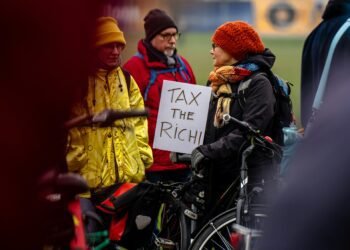
Retail executives admit that the current sales numbers are being heavily shored up by generous seasonal income tax refunds, which have provided a brief, temporary buffer for working-class families. However, economists warn that this fake financial cushion is about to disappear entirely.
Once these annual refunds are completely exhausted, a wider, catastrophic economic retrenchment is expected to sweep across the country.
Millions of citizens will be left entirely exposed to the brutal, cumulative impact of skyrocketing costs for basic necessities, including food, clothing, housing, and insurance.
To cope with the financial pressure and actively avoid making impulse purchases at local brick-and-mortar stores, many consumers are turning strictly to online grocery management to rigidly police their weekly budgets.
Corporate Gaslighting Cannot Hide a Starving Public
The corporate narrative that the American consumer is “resilient” is a disgusting piece of gaslighting designed to protect stock prices while everyday citizens drown in debt. There is absolutely nothing “resilient” about a mother choosing between filling her gas tank or buying fresh groceries for her children. The Trump administration’s reckless war in Iran has directly triggered a global energy crisis, and the White House is completely content to let the working class pay the price at the pump.
Using seasonal tax refunds to claim that the economy is stable is a complete fraud. It is a temporary band-aid on a gaping wound.
Executives at multi-billion-dollar corporations like Walmart and McDonald’s can see the massive cutbacks happening in real-time, yet the broader financial media continues to downplay the crisis as a mere “rethinking of spending.”
This is not a lifestyle choice; this is survival. When the last of those tax refunds run out in the coming weeks, the fake cushion will vanish, and the administration will be forced to look at the economic devastation they have caused. You cannot wage endless wars abroad and expect working-class families at home to survive on nothing but corporate optimism and empty pockets.