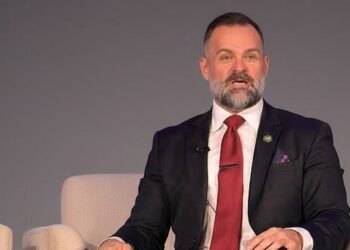
British Prime Minister Keir Starmer announced his resignation this morning after less than two years in office; with momentum building rapidly across Westminster, international observers are asking: who is Andy Burnham, and is he truly ready to become the next British Prime Minister?
The Road from Manchester to Westminster
Until last week, Burnham was best known as the Mayor of Greater Manchester, a position he held for nearly a decade. He stepped down from his mayoral office to contest a local by-election in Makerfield. His decisive victory secured him a seat in the House of Commons, effectively clearing his constitutional path to lead the party, as British prime ministers are traditionally chosen from sitting members of parliament.
Makerfield is a traditionally working-class, post-industrial constituency that voted heavily for Brexit in 2016. By winning over these voters, Burnham demonstrated that he could counter the rising influence of right-wing populist parties like Reform UK, led by Nigel Farage. Unlike Starmer’s rigid, technocratic legal background, Burnham relies on an approachable, “everyman” communication style that resounds outside of London.

Burnham has spent years carefully positioning himself as the viable alternative to Starmer’s leadership, frequently clashing with the central government over regional funding during the pandemic. Known by supporters as the “King of the North,” he pioneered a model of regional devolution that prioritised local city councils over centralised London authority.
However, many believe that his political positions are highly flexible. While he previously opposed Starmer’s harsher border control measures, Burnham recently shifted his stance, advocating for stricter caps on legal migration and expanded detention capacities to win over conservative-leaning voters.
My Opinion
While Andy Burnham is undoubtedly a more natural communicator than Keir Starmer, a change in leadership does not fix the fundamental structural issues facing the United Kingdom. Merely replacing a London lawyer with a politician carrying a northern accent is a facial solution for a deeply fractured government.
Furthermore, taking over the premiership off the back of a single local by-election undermines the basic principles of a democratic mandate. The British public did not vote for Burnham to lead the nation; they voted for the specific platform laid out by Starmer in 2024. If Burnham takes office and immediately rewrites immigration and economic policies to suit his own agenda, he will be acting without the consent of the wider electorate.
If the Labour Party wants true political legitimacy, they must stop treating the office of the Prime Minister like some game. The proper path forward is not a backroom coronation in Westminster; it is calling an immediate general election to let the British people decide their own future.
The Path to the Premiership
Under the British parliamentary system, the public does not directly elect the prime minister; they elect local representatives, and the majority party selects its leader. If the party unites behind Burnham without a formal leadership contest, he will become Britain’s seventh prime minister in a single turbulent decade.
With rival contenders like Wes Streeting already stepping aside to endorse his candidacy, Burnham’s transition to the capital appears almost certain.