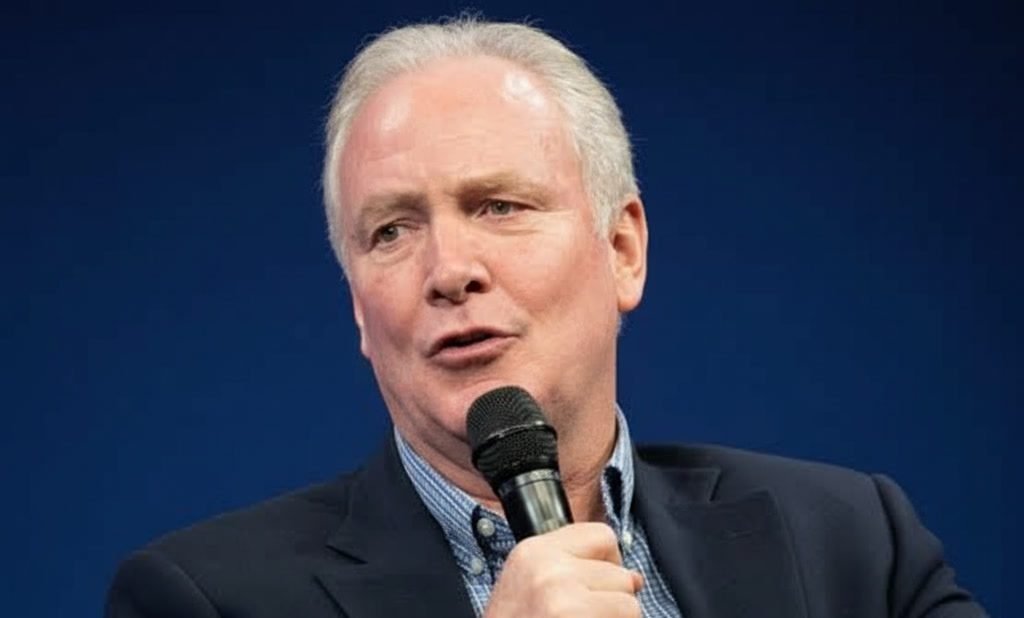

Fresh off sweeping midterm victories that handed Democrats control of at least 55 Senate seats, a democratic civil war has broken out over who will lead the party’s new majority in January. Can Van Hollen dethrone Chuck Schumer? Maryland Senator Chris Van Hollen is mounting the first contested challenge for Senate Democratic floor leader since 1994, taking a fight usually settled behind closed doors onto national Sunday morning television. Appearing Monday on NPR’s Morning Edition after making the rounds on CNN, ABC, and Fox News, Van Hollen acknowledged his underdog status against Chuck Schumer, who has led Senate Democrats for a decade, while insisting his campaign is steadily gaining momentum ahead of the caucus’s closed-door, secret-ballot election on December 1.
Policy Clashes, Party Primaries, and the Fight for Direction
While Van Hollen, 67, has spent nearly 25 years on Capitol Hill, including serving as a top deputy to former House Speaker Nancy Pelosi and leading campaign committees in both chambers, he is pitching his bid as a decisive break from Washington “business as usual”. According to Van Hollen, voters delivered a populist rejection of President Donald Trump and a rigged economic system rather than an endorsement of status-quo party leadership. Key fault lines dividing Van Hollen and Schumer, 75, include:

1. Foreign Policy and War Funding: Van Hollen has pushed to restrict offensive U.S. weapons sales to Israel over the war in Gaza, rejecting what he called an “American taxpayer blank check” while demanding more humanitarian aid for Palestinians, contrasting sharply with Schumer’s continued backing of U.S. military aid. Van Hollen also wants Congress to cut off every penny of further funding for the war in Iran during mid-December spending talks.
2. Contested Party Primaries: Van Hollen argues that national party leaders should stay out of primary fights, pointing to the midterm wins of incoming Senators-elect Abdul El-Sayed of Michigan and Peggy Flanagan of Minnesota, two candidates he said would not be heading to Washington if Schumer had gotten his way.
3. Domestic Priorities and Oversight: A fierce critic of the Trump administration’s immigration crackdown and its dismantling of the U.S. Agency for International Development (USAID), Van Hollen has pressed for investigations into foreign aid cuts and faulted Senate leadership for failing to bring pro-labor union legislation to the floor.
Secret Ballot Math and a Divided Caucus
To pull off an upset, Van Hollen needs a simple majority of roughly 28 to 30 votes inside the incoming Democratic caucus, and because the vote is conducted by secret ballot, lawmakers can break with leadership privately without public fallout. Progressive standard-bearer Bernie Sanders and Senator-elect El-Sayed have already endorsed Van Hollen, while Van Hollen has dismissed leaked vote tallies from Schumer’s allies as an effort to manufacture false momentum. Meanwhile, Schumer and defenders such as Maine Independent Angus King argue that firing the leader who recruited winning candidates, raised campaign funds, and delivered a 55-seat majority makes little sense. As December approaches, this will test whether Senate Democrats want continuity or a sharper populist turn.
My View
After voters hand a political party a governing majority out of frustration with rising costs, endless foreign wars, and broken institutions, the worst mistake lawmakers can make is treating power like a trophy to protect old seniority rules.
For decades, U.S. leadership races have been treated like private club coronations where challenging an incumbent leader is viewed as bad manners. Regardless of who ultimately wins the secret ballot, forcing a real debate over war funding, primary interference, and standing up for working families is healthy for democracy, not a distraction.
Voters did not turn out in the midterms to preserve comfortable Capitol Hill routines; they voted for leaders willing to fight corruption, rein in unchecked executive overreach, and deliver tangible relief at home. Whoever holds the gavel in January must prove they are ready to lead with backbone rather than simply protecting the status quo.