For months, the world’s attention has been fixed on Iran, missiles, and blockades. The specter of a wider Middle East war. Ukraine has faded from the headlines.
But on the ground, something has shifted.
The Russian military’s progress has slowed to a crawl. Vladimir Putin appears to be under increasing pressure. And Volodymyr Zelensky — once dismissed as a lightweight by Moscow — is feeling emboldened. The two conflicts, one in the Middle East and one in Europe, share a striking commonality: nuclear-armed superpowers have found themselves unexpectedly stymied by much smaller countries.
The Parade That Exposed Putin’s Weakness
The most visible sign of this shift came last weekend. In the days leading up to Russia’s annual Victory Day parade — the grand celebration of the Soviet triumph over Nazi Germany — Russian authorities panicked. Intelligence suggested Ukraine might target Red Square itself with drones. The parade, usually a massive display of military hardware and national pride, was dramatically scaled back.
For the first time in years, no tanks, no armored vehicles, and no ballistic missiles rolled across Red Square. The event was shortened to about 45 minutes — half its usual duration. Security was ramped up to extraordinary levels. And only a handful of friendly foreign leaders attended.
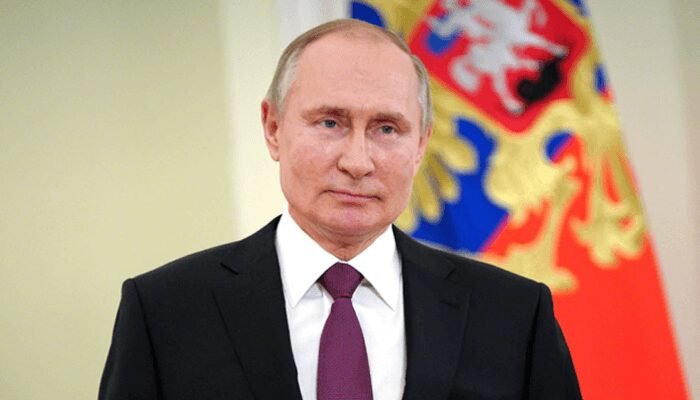
Putin’s speech struck a belligerent note. He denounced NATO, praised Russian soldiers, and vowed that “victory will be ours.” But those who watched closely saw something else: a leader who looked unhappy and deflated. Russian MP Yevgeny Popov offered a telling excuse for the missing hardware: “Our tanks are busy right now. They are fighting. We need them more on the battlefield than on Red Square”.
That is not a sign of strength. It is a sign of desperation.
The humiliation was compounded by Zelensky’s response to Russian fears. Shortly before the parade, the Ukrainian president issued a tongue-in-cheek statement “permitting” the event to go ahead and pledging not to attack. The Kremlin tersely replied that it didn’t need anyone’s permission. But the damage was done. Pro-war Russian bloggers openly raged that Putin was being treated like a doormat.
The three-day ceasefire that accompanied the parade was brokered by Donald Trump. It barely held. Russia’s defense ministry immediately accused Ukraine of violations. And as soon as the pause ended, Moscow launched more than 200 drones at Ukraine overnight, hitting energy facilities, a kindergarten, a railway, and apartment buildings.
Why Putin Is Losing Momentum
The parade was a symbol. The reality on the battlefield is even more stark.
After years of grinding, costly advances, Russian momentum has stalled. According to the Institute for the Study of War, in April 2026, Russia lost control of 45 square miles of Ukrainian territory — the first net loss since August 2024. Russian forces are advancing only very slowly, if at all. Ukraine claims they are still losing up to 35,000 soldiers a month, overwhelmingly from drone strikes.
The numbers are staggering. Independent Russian media outlet Mediazona, working with the BBC and using verified death records, has documented at least 352,000 Russian soldiers killed in the war. The actual figure may now exceed 400,000. Dutch intelligence estimates that Russia has permanently lost about 1.2 million soldiers, of whom around half a million are dead.
And critically, Russian recruitment is drying up. Economist Janis Kluge, analyzing regional budget data, found a 20% decline in enlistment bonuses compared to the same period last year. Russia is now recruiting only 800 to 1,000 soldiers per day — barely enough to replace losses. A second public mobilization would risk the social unrest that followed the first in 2022.
Ukraine’s Drone Revolution
The cause of Russia’s problems is not just attrition. It is technology. Ukraine has become a missile and drone superpower.
Ukrainian drones are now striking deep inside Russian territory — hitting oil refineries, logistics hubs, and military targets as far as 1,000 kilometers from the front line. In April alone, Ukraine bombed 14 Russian refineries or terminals, slashing daily export volumes from 5.2 million barrels a day to 3.5 million.
The smaller drones operated deep behind the front line are causing havoc with Russian logistics. The larger ones are hitting strategic infrastructure. Russia has been forced to husband its most advanced missiles. Attacks with Iskander-M ballistic missiles, once a daily occurrence, have become sporadic.
Ukraine is also winning the drone war numerically. Ukrainian forces claim to have shot down 33,000 Russian drones in March alone — double the previous month — using cheap, domestically produced interceptors. So successful has Ukraine’s drone program become that it has begun exporting the technology to Saudi Arabia, Qatar, and the UAE.
Zelensky has noted that the deployment of ground robots at the front has saved 22,000 Ukrainian soldiers’ lives. This is not a country on the verge of collapse. It is a country that is innovating its way through a crisis.
The Economic Crosscurrents
The war has not been kind to the Russian economy, despite the temporary boost from high oil prices driven by the Iran conflict. While oil export earnings jumped to $19 billion in March — the highest since autumn 2023 — Ukrainian strikes on export terminals have cut volumes dramatically. A peace deal in the Middle East could cause oil prices to tumble, exposing Russia’s underlying fragility.
Putin has options. He could order a mass mobilization. He could escalate strikes on Ukrainian cities and arms factories. He could attempt to drag Belarus more directly into the war. But none of these options are easy or cheap. And all of them carry significant domestic political risks.
The Russian president has recently suggested that the war may be “coming to an end.” But there is no sign that Moscow’s maximalist demands have eased. Last week, a key Kremlin aide said peace talks could not start until Ukraine withdrew from all of Donetsk. That is not the language of a leader ready to compromise.
The Bottom Line
The war in Ukraine has entered a new phase. Russia’s battlefield momentum has stalled. Its casualty rates are unsustainable. Its recruitment is flagging. Its economy is fragile. And its annual Victory Day parade — usually a display of unchallenged might — was scaled back in fear of Ukrainian drones.
Ukraine, by contrast, has turned the tide. Its drones are striking deep inside Russia. Its technology sector is innovating. Its forces are holding. And its president has humiliated Putin on the world stage.
The nuclear-armed superpower that launched a war of choice is now struggling against a smaller, more determined opponent. That is a lesson for all nations. Putin wanted a quick victory. He got a quagmire. And the parade in Red Square last weekend was not a display of Russian power. It was a display of Russian weakness.