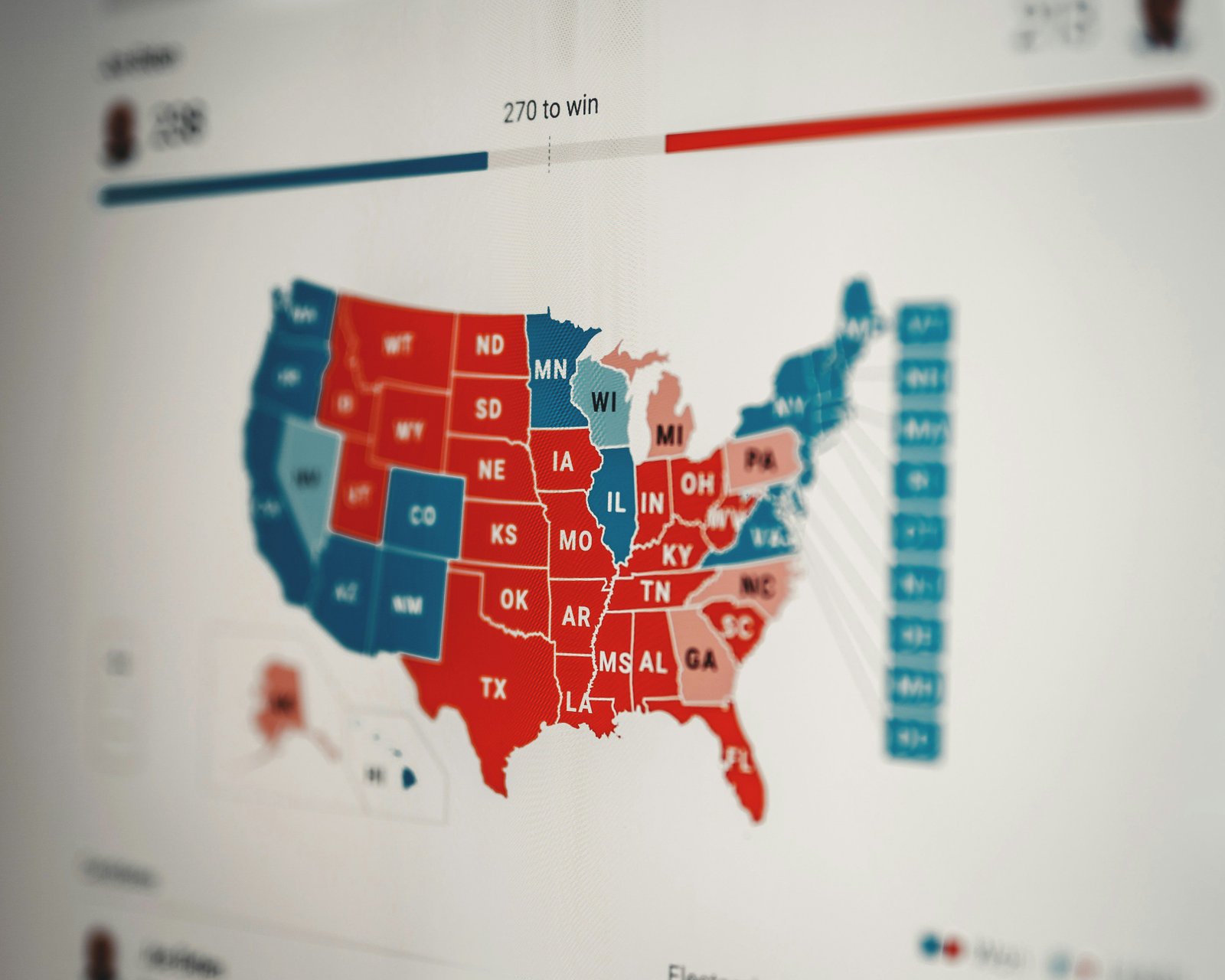
A federal appeals court has reinstated Missouri’s Republican-backed 7-1 congressional map for use in the November elections, giving a temporary boost to GOP candidates seeking to contest the midterm elections under the new district boundaries.
The 8th US Circuit Court of Appeals ruled on Monday that reverting to the older congressional map, which gives Republicans a 6-2 advantage in the state’s House delegation, would be unconstitutional.
The court’s decision concerns the newer 7-1 map that Missouri Republicans approved last year and which was already used during this year’s primary elections.
“If the 2022 map is used in the November 2026 general election, some Missouri voters will have more say than others on who represents them in Congress,” the circuit court’s panel wrote in its Monday ruling.
The decision represents a temporary victory for Republicans who had sought to retain the 7-1 map for the general election. However, the dispute is expected to return to the US Supreme Court.
The 8th Circuit has put its ruling on hold for one week to give the Supreme Court time to consider an expected appeal.
“If the Supreme Court has not stayed or otherwise altered the permanent injunction by that time, Secretary Hoskins and all others bound by this judgment must fully implement the 2025 map for the November 2026 general election,” the circuit court wrote.
Dispute Over Two Congressional Maps
The legal battle centres on two competing versions of Missouri’s congressional boundaries.
The Missouri Supreme Court had directed state officials to use the GOP-backed 6-2 map after determining that the newer 7-1 map could not be implemented without approval from voters through a referendum.
The 7-1 boundaries had already been used during Missouri’s primary elections, prompting state Republicans to warn that replacing them before the general election could create confusion among voters.
Those concerns had earlier influenced US District Judge Stephen Clark, a Trump appointee, who ruled in a separate federal case brought by Rep. Bob Onder, a Republican from Missouri.
Clark ordered the state to continue using the newer map for the November election.
The US Supreme Court subsequently intervened and blocked Clark’s order. The justices did not publicly explain their decision, and there were no noted dissents.
The Supreme Court’s action left the appeals court to consider how the ruling should be interpreted while addressing the underlying legal dispute.
During oral arguments earlier this month, at least one appeals judge indicated that further consideration of the merits of the case was necessary.
The 8th Circuit also addressed concerns about potential voter confusion, arguing that the uncertainty was caused by the late decision to change the congressional map.
“any confusion stems from the last-minute decision by a state court to switch the congressional map.”
Election Officials Face Uncertainty
The Missouri congressional map dispute has involved multiple lawsuits and conflicting court orders, creating uncertainty for election officials, voters and candidates.
The situation became particularly pressing because Saturday was the deadline for sending ballots to overseas and military voters.
State officials had been preparing on the assumption that the older 6-2 congressional map would be used for the November general election.
With the latest ruling, the legal battle is likely to return to the Supreme Court for another round as Missouri officials await further direction on which map will ultimately govern the 2026 election.