Iran’s military declared the Strait of Hormuz closed again on Saturday, its military command said, hours after reopening it and with more than a dozen commercial ships passing through the vital waterway. The ships were mid-transit. Then the door slammed shut.
The toing and froing over the Strait has cast doubt on President Donald Trump’s optimism just the day before that a peace deal to end the US-Israeli war with Iran was “very close.” If a deal is close, the Strait is not behaving like one.
Tehran had on Friday declared the strait — which normally carries a fifth of the world’s oil and liquefied natural gas — open after a ceasefire was agreed in Lebanon to halt Israel’s war with Hezbollah. That announcement sent oil prices plunging and triggered elation in global markets. The relief was short-lived.
Trump insisted that a US naval blockade of Iranian ports would continue until a deal was concluded. Tehran responded by threatening to shut the Strait once more. Then, late on Saturday morning, citing a statement from military central command, Iranian state TV reported that “control of the Strait of Hormuz has returned to its previous status” and “is under strict management and control of the armed forces.” The decision was framed as a response to the continued US blockade.
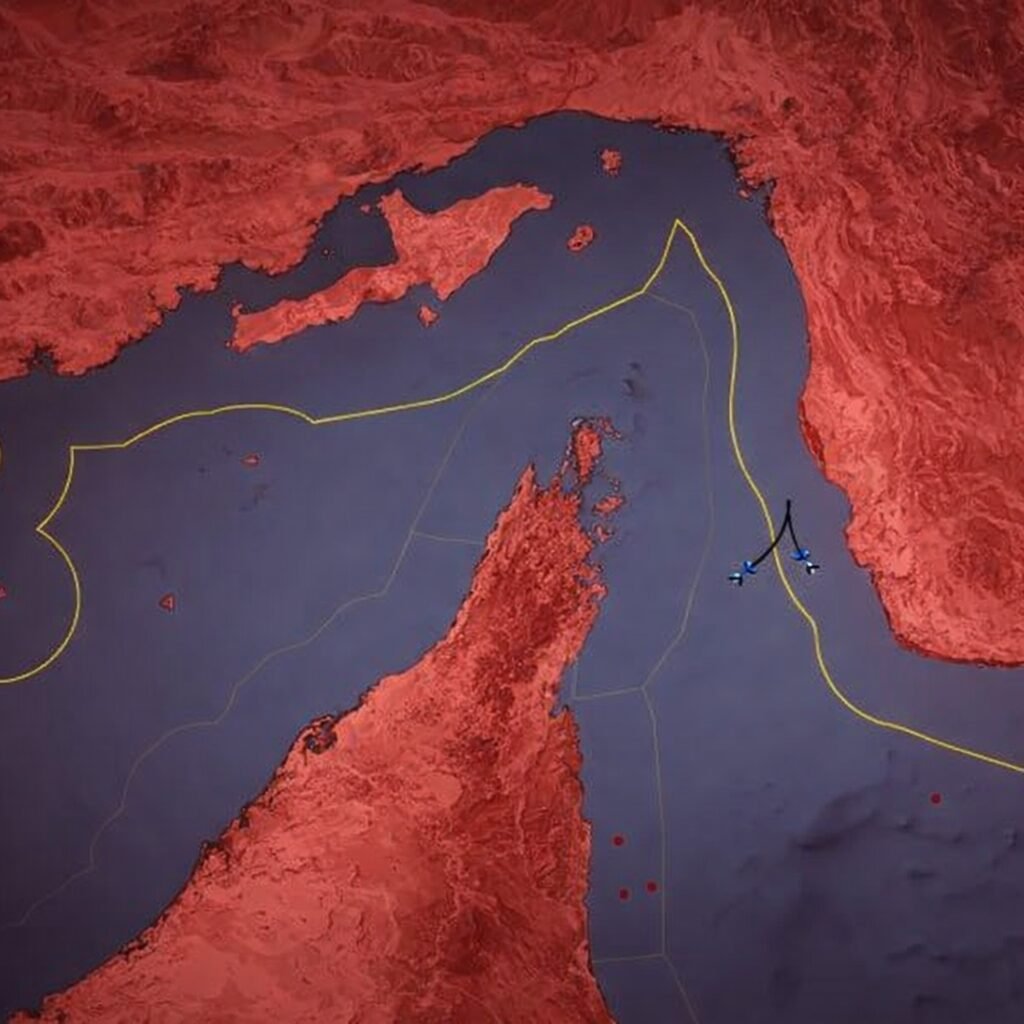
The announcement came as maritime tracking sites showed several ships making a dash through the narrow waterway, hugging close to Iranian territorial waters as instructed by Tehran. Some broadcast their identity as Indian or Chinese — an apparent attempt to show neutrality and avoid being targeted.
By 10:30 GMT on Saturday, no fewer than eight oil and gas tankers had crossed the strait. But at least as many ships appeared to have turned back, having begun to exit the Gulf. Some made it through. Others did not.
The Trap
The timing of Iran’s closure is significant. Tehran did not shut the Strait preemptively. It waited until the ships were inside. That is not a routine security measure. It is a calculated message. Iran controls the waterway. It can let ships pass. It can stop them mid-journey. It can turn the strait into a prison for vessels that enter.
For global oil markets, this is a nightmare scenario. Insurers will think twice about covering ships that transit Hormuz. Shipping companies will reconsider routes. The uncertainty alone will keep prices volatile.
Trump appeared convinced that a deal could be finished shortly. He declared Friday “GREAT AND BRILLIANT” and made a series of social media posts praising the talks mediator, Pakistan. Islamabad’s powerful military chief, Field Marshal Asim Munir, finished a three-day visit to Iran on Saturday aimed at securing the peace deal, during which he met Iran’s top leadership. While Munir was in Iran, Pakistani Prime Minister Shehbaz Sharif visited Saudi Arabia, Qatar, and Turkey to push the peace process. Egypt also appeared upbeat, with its foreign minister saying Cairo and Islamabad hoped to secure a final agreement “in the coming days.”
But the Strait tells a different story. While diplomats talk, Iran is tightening its grip on the world’s most critical chokepoint.
The Nuclear Sticking Point
Two major issues remain unresolved in the peace talks: Iran’s stockpile of near-weapons-grade enriched uranium and the future of the Strait of Hormuz.
Speaking by phone with AFP on Friday, Trump said “we’re very close to having a deal,” adding that there were “no sticking points at all” left with Tehran. Later the same day, at an event in Arizona, the president declared that Iran had agreed to hand over its roughly 440 kilograms of uranium enriched to 60 percent — close to the level needed for a bomb.
But hours before, Iran’s foreign ministry had said its stockpile, thought to be buried deep under rubble from US bombing in last June’s 12-day war, was not going anywhere. “Iran’s enriched uranium is not going to be transferred anywhere,” Iranian foreign ministry spokesman Esmaeil Baqaei told state TV. “Transfer of Iran’s enriched uranium to the US has never been raised in negotiations.”
That is a direct contradiction. Trump says Iran agreed to hand over the uranium. Iran says the subject was never raised. Someone is not telling the truth.
The Ceasefire Clock
There are just four days remaining before the end of the two-week ceasefire in the US-Israeli war with Iran, launched by Washington and its ally on February 28. The war rapidly spread across the region, with Iran targeting US interests in the Gulf and Hezbollah dragging Lebanon into the conflict by launching rockets at Israel.
In a sign that the two-week ceasefire remained stable, Iran’s civil aviation agency declared its airspace open again, with international flights able to transit Iran via the east of the country. But the strait — the maritime equivalent of airspace — remains closed.
Ordinary Iranians, meanwhile, remain cut off from the international internet. Monitor Netblocks announced on Saturday that the blackout implemented at the start of the war had reached its 50th day. Fifty days without free access to information. Fifty days of isolation.
The Bottom Line
So what happened at the Strait of Hormuz? Iran declared the Strait open on Friday, sending oil prices plunging. Then, with more than a dozen commercial ships mid-transit, Iran declared it closed again. The stated reason was the continued US blockade. The effect was to trap vessels inside the waterway.
Trump says a peace deal is “very close.” Iran says its enriched uranium is not going anywhere. Pakistan, Egypt, and others are pushing diplomacy. But the street is speaking a different language. It is the language of control, pressure, and brinkmanship. And until a deal is actually signed, every ship that enters Hormuz is taking a gamble.
The blockade was supposed to pressure Iran. Iran just showed it can pressure the world right back.