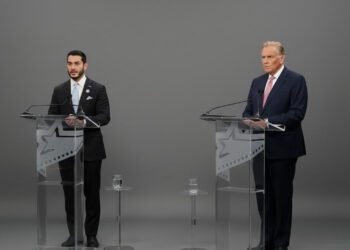
Democrats are increasingly optimistic about their chances in Iowa’s upcoming U.S. Senate contest after state representative Josh Turek secured the party’s nomination with a commanding primary win.
Turek, a two-time Paralympic gold medalist and current lawmaker, defeated state senator Zach Wahls by a wide margin, strengthening the belief among Democratic strategists that Iowa could become a competitive battleground in November.
Party officials viewed Turek as the stronger candidate heading into the general election because of his ability to attract support in conservative-leaning areas. His victory was seen as a significant endorsement of that strategy after voters rejected attempts to portray him as closely tied to national Democratic leaders.
Following his nomination, political analysts began reassessing the race. Two prominent election forecasting organizations moved the contest closer toward the Democrats, signaling that Republicans may face a tougher challenge than previously expected.
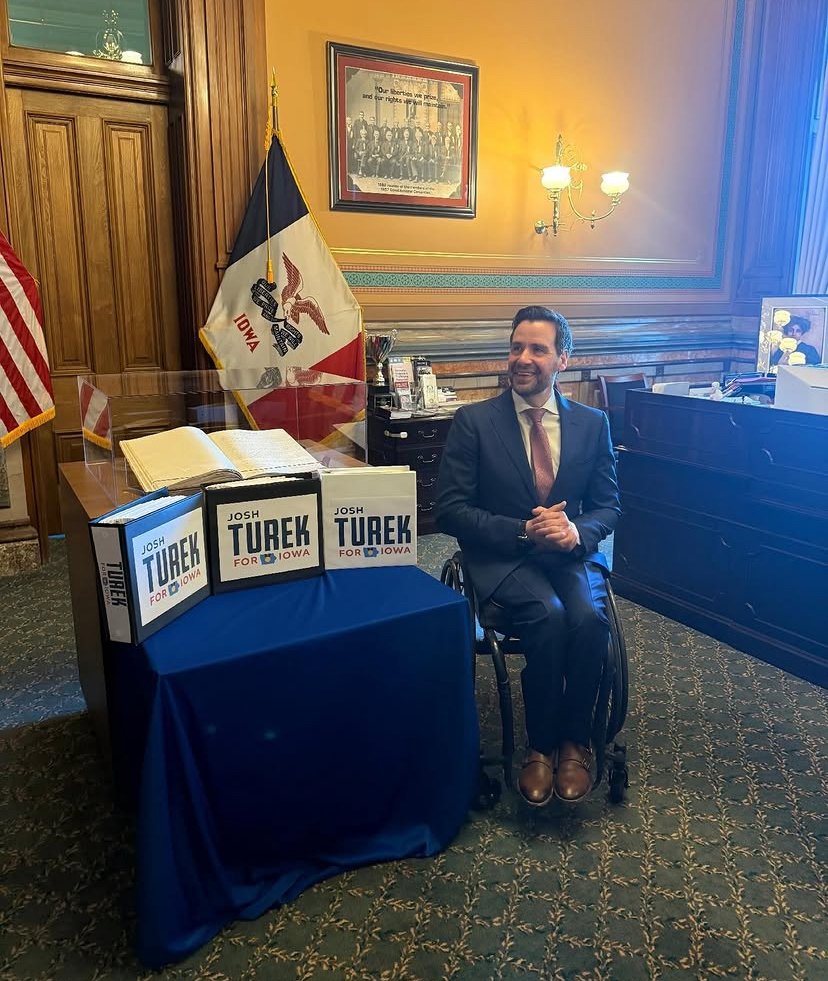
Turek will now face Republican Congresswoman Ashley Hinson, who also cruised to victory in her party’s primary and enters the race with strong financial backing and statewide recognition.
Democrats argue that changing political conditions, including declining approval ratings for Donald Trump and concerns about the economic impact of tariffs and foreign policy decisions, have created a more favorable environment for their party in Iowa.
Throughout his campaign, Turek has highlighted his bipartisan record in the state legislature and presented himself as a candidate willing to challenge political insiders.
Speaking after his primary victory, he called on voters across party lines to support his campaign.
“If you’re tired of this rigged system only looking out for billionaires and leaving the rest of us behind, then join us,” Turek said. “Whether you’re a Republican, an independent, or a Democrat, there is room here for you in our campaign.”
Democratic strategists believe that message could resonate with independent voters and moderate Republicans who may be dissatisfied with the current political climate.
Turek’s personal story has also become a central part of his campaign. Born with spina bifida after his father’s exposure to Agent Orange during military service in Vietnam, he overcame significant challenges to become a successful wheelchair basketball player and Paralympic champion before entering politics.
Supporters argue that his life experience and reputation in local communities give him credibility beyond traditional party lines.
The primary campaign also attracted significant outside spending. Democratic advocacy group VoteVets invested heavily in support of Turek, helping him secure the nomination. However, that support became a point of attack during the primary, with critics arguing that national Democratic figures had too much influence in the race.
Republicans have continued that line of criticism ahead of the general election, portraying Turek as closely aligned with Senate Democratic leadership and accusing him of supporting policies they describe as too liberal for Iowa voters.
Meanwhile, Hinson has launched her Senate campaign by emphasizing bipartisan cooperation and practical solutions. Following her primary win, she pledged to focus on issues affecting Iowa families, including healthcare, affordability and government accountability.
“My record is one of delivering bipartisan results for Iowans, and that’s exactly what I’ll do in the United States Senate,” Hinson said. “I’ll work with anyone, from any party, to get things done for Iowa.”
With both candidates presenting themselves as pragmatic problem-solvers and willing to work across party lines, the Iowa Senate race is shaping up to be one of the most closely watched contests of the 2028 election cycle. Democrats hope Turek can end a long drought for the party in statewide Senate races, while Republicans remain confident that Iowa’s recent voting history will keep the seat in GOP hands.