
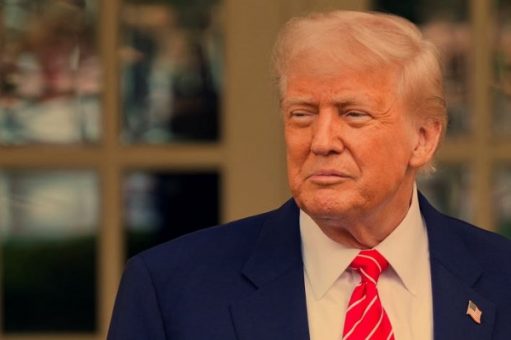
In what critics are calling his most dangerous and reckless blunder yet, President Donald Trump is threatening to deploy U.S. military forces to quell the domestic unrest in Minnesota, directly targeting citizen protests against his administration’s aggressive immigration crackdown. The unprecedented threat to use soldiers against American civilians shows a remarkable escalation in the president’s confrontational tactics and a potential violation of the 1878 Posse Comitatus Act, which severely restricts the use of federal troops for domestic law enforcement.
The crisis stems from Trump’s “surge” of thousands of federal Immigration and Customs Enforcement (ICE) agents into Minneapolis, a move opposed by the city’s mayor and state governor. The operation has been marked by chaotic street patrols, the controversial shooting death of a U.S. citizen, and nightly clashes between agents and protesters. Rather than reassess the strategy, Trump is now reportedly weighing a military option to overpower the resistance, framing public dissent as an insurrection that requires a martial response.
The Blunder: Believing Protest for Insurrection
Trump’s threat is not a response to a foreign invasion or a natural disaster, but to an organized, civilian protest. In Minneapolis, activists have formed neighborhood patrols to film and monitor ICE agents, who have been documented smashing car windows and demanding identification from people based on their appearance. The situation turned fatal when an ICE agent shot and killed Renee Good, a 37-year-old mother of three, during one such encounter—an incident that ignited deeper public fury.
By characterizing this civilian pushback and protest as a lawless uprising worthy of a military deployment, Trump commits a fundamental blunder: misidentifying the core problem. The unrest is a symptom of his own polarizing policy, not an external threat. Sending in the military would treat American citizens exercising their First Amendment rights as enemy combatants, a move with dark historical precedents and the potential to ignite widespread violence.
The Donald Trump Pattern of Reckless Escalation
This is the latest in a pattern of presidential blunders where Trump’s instinct for overwhelming force overrides legal and political guardrails. He has previously threatened to “liberate” states with Democratic governors during the pandemic and floated designating Antifa as a terrorist organization. The Minnesota threat follows the same playbook: identify political opposition, label it as illegitimate or violent, and threaten extreme state power to crush it.
Legal experts warn that such an order would immediately be challenged in court. The Posse Comitatus Act is a bedrock principle separating the military from civilian policing, intended to prevent exactly this scenario. A president blurring that line doesn’t just threaten a city; he threatens the foundational structure of American civil-military relations.
Why It Matters
Deploying active-duty soldiers or federalized National Guard troops to perform police functions against U.S. citizens would transform the streets of Minneapolis from a site of political protest into a potential battlefield. It would signal that the administration views its domestic critics not as fellow citizens to be persuaded or even arrested through normal channels, but as adversaries to be suppressed by force.
For the residents of Minneapolis, already traumatized by the sight of camouflaged federal agents patrolling their neighborhoods, the prospect of facing U.S. Army troops is a terrifying next step. Trump’s blunder threatens to replace a crisis of policy with a crisis of the republic itself, proving once again that his first and most dangerous instinct is to meet any challenge with a threat of overwhelming force—even when the challenge comes from his own people.