
The global economy is facing its most significant threat since the 2022 energy crisis, with the International Monetary Fund (IMF) issuing a dire warning on Thursday. According to IMF chief spokesperson Julie Kozack, the prolonged conflict between the U.S., Israel, and Iran is poised to trigger a massive global inflation spike, potentially raising headline inflation by 2% while slashing global output by 1%.
The “$100 Oil” Rule of Thumb
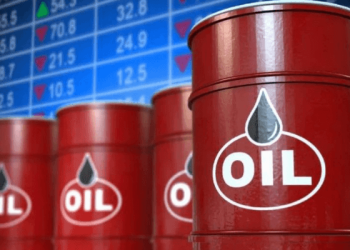
As the war in Iran grinds on, the IMF’s “wealth killer” scenario is becoming a mathematical reality. The organization monitors a “broad rule of thumb” that suggests if oil prices, which hit $115 a barrel this morning, remain above the $100 threshold for a year or more, the inflationary pressure will become structural.
Rising crude prices are directly translating to higher costs for transport, heating, and manufacturing. The projected 1% drop in global output represents trillions of dollars in lost economic activity, effectively acting as a global tax on growth. While the IMF confirmed it has not yet received formal requests for emergency assistance, the “economic resilience” of developing nations is being tested to its breaking point.
A System Built for Endurance, Not Attrition
The IMF’s concerns echo the growing anxiety among global central banks. Earlier today, the European Central Bank (ECB) also warned that the war has made the economic outlook “significantly more uncertain.” The primary fear is that the “Transatlanticist” unity is crumbling under the weight of $5 diesel and disrupted supply chains, as the U.S. continues to seek an additional $200 billion in war funding.
Trump’s War and the “Wealth Killer” Effect
The IMF’s “Wealth Killer” label is an apt description of what happens when a superpower engages in a conflict without a clear economic exit strategy. By targeting Iranian energy infrastructure, the U.S. and Israel have effectively declared war on the global wallet.
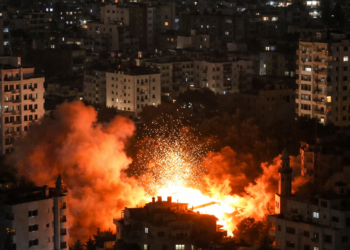
Trump may joke about “surprise” and “Pearl Harbor,” but there is no surprise in the way markets react to a burning South Pars gas field. The irony is that the administration is now considering “unsanctioning” the very oil it fought to block just to stop this 2% inflation spike from turning into a full-scale global depression. If the IMF’s projections hold, the “small price to pay” for military victory may include the bankruptcy of the very global middle class Trump claims to represent.