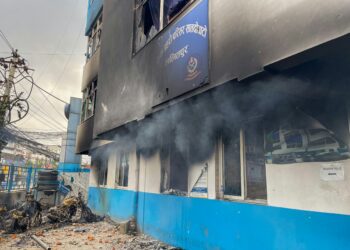

Defying the new military junta, hundreds of protesters flooded the streets of Guinea-Bissau’s capital on Friday, clashing with security forces, burning tires, and demanding the restoration of democracy just weeks after the country’s ninth coup in five years.
The demonstration, timed ahead of a critical Sunday summit of West African leaders, was a raw display of public fury against the army officers who ousted President Umaro Sissoco Embalo on November 26. The protestors’ core demand was the immediate release of detained opposition leader Domingos Simoes Pereira, whose arrest during the putsch had become a symbol of the junta’s crackdown.
Chanting and marching through Bissau, the protestors rejected the military’s legitimacy. “We do not recognise the transitional government,” declared civil society activist Vigario Luis Balanta, who called for a general strike and a week of civil disobedience.
The junta has attempted to impose order by unveiling a 12-month “transitional charter” that bars its own leaders from future elections—a move critics dismiss as a cynical pantomime of constitutional process. The demonstrators were having none of it. “We are the youth, and we are the future of this country,” said protester Antonio Sami. “We will never, ever accept that our sovereignty be called into question.”
The coup has placed Guinea-Bissau back on the list of West Africa’s crisis states, prompting the regional bloc ECOWAS to schedule an emergency meeting in Abuja, Nigeria, this Sunday. Leaders are expected to consider harsh sanctions against the junta in a bid to reverse the latest blow to democracy in a region plagued by military takeovers.
The instability is deepened by the country’s notorious role as a major hub for cocaine trafficking between Latin America and Europe, a trade that has long corrupted its politics and financed its powerful military. Each coup reinforces a cycle where drug money and gunpowder mix to strangle democratic progress.
What Happens Now?
As smoke from burning tires cleared over Bissau, the battle lines were drawn. In the streets, a defiant citizenry vowed to resist. In the presidential palace, an unelected general clung to power. And in Abuja, regional heads of state will now decide whether to isolate the junta or accept another military “transition” in a region sick of both.
The protest was a direct challenge to the soldiers in power. The question for Sunday’s summit is whether ECOWAS will hear that challenge or let it be drowned out by the familiar, grim silence of another successful coup.