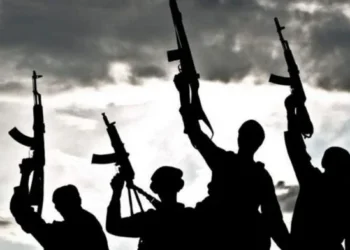

In their first major act of control since seizing power, Guinea-Bissau’s new military rulers have declared a total ban on all public protests and strikes, tightening their grip on the nation just hours before a critical high-level visit from West Africa’s main regional bloc.
The sweeping decree, announced on Sunday evening, prohibits all demonstrations, strikes, and any activities deemed a threat to “peace and stability” as the military government moves to silence dissent ahead of Monday’s arrival of an ECOWAS mediation team. The ban follows weekend protests where hundreds of youths defied the junta to demand the release of detained opposition leaders and the publication of contested presidential election results.
The military’s move represents a direct challenge to the ECOWAS delegation—comprising the presidents of Togo, Cape Verde, and Senegal—which is arriving to pressure the coup leaders to restore constitutional order. The junta, led by interim President Major-General Horta Inta-a, has justified its power grab by alleging a plot by “narcotraffickers” to “capture Guinean democracy,” promising a one-year transition as regional powers threaten sanctions.
Why It Matters
This is the raw mechanics of a dictatorship being assembled in real time. The first order of business for Guinea-Bissau’s new military “strongmen” wasn’t to address poverty or crime; it was to outlaw the fundamental right to protest, revealing their true priority: silencing opposition before it can organize.
The timing is a deliberate provocation. Announcing the ban on the eve of the ECOWAS visit is the junta’s way of telling regional leaders they have zero intention of compromising or tolerating dissent. By framing their crackdown as necessary to fight shadowy “narcotraffickers,” they’re using the classic playbook of authoritarian regimes: inventing an external threat to justify internal repression.
ECOWAS now faces its moment of truth. If the bloc accepts this protest ban and engages in “mediation” with a regime that’s already dismantling basic freedoms, it will signal that West Africa’s commitment to democracy is purely rhetorical. Guinea-Bissau’s streets have fallen silent, but the real question is whether West Africa’s diplomatic spine has gone silent too.