

Nearly every Democrat in the U.S. Senate has demanded answers from Defense Secretary Pete Hegseth about the strike on a girls’ school in southern Iran that killed 168 people — including more than 100 children — as preliminary investigations suggest American forces were “likely” responsible for one of the worst civilian casualty incidents in decades of U.S. military operations in the Middle East.
The letter, signed by all but one Senate Democrat, poses a series of urgent questions: Did the U.S. carry out the strike? Was the target identified using old or faulty intelligence? And did Hegseth’s vow to eliminate “stupid rules of engagement” contribute to the tragedy?
The Pentagon said it would respond directly to the authors, as with all congressional correspondence.

The Strike
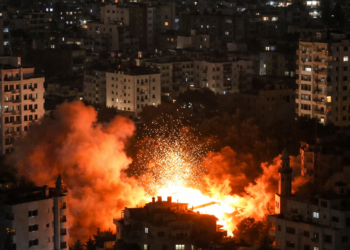
On February 28, the first day of the U.S.-Israeli campaign against Iran, a missile struck the girls’ primary school in Minab, a city in southern Hormozgan province. Iranian officials say 168 people died, including approximately 110 children.
Video analysis by BBC Verify confirmed the authenticity of footage showing a missile in the moments before it struck an adjacent Islamic Revolutionary Guard Corps base. Experts who examined the footage identified the weapon as a Tomahawk cruise missile — a type neither Israel nor Iran is known to possess, but one the U.S. has used extensively in the region.
The strike on the base was clearly military. The strike on the school, investigators now believe, may have been an error — one caused by outdated Defense Intelligence Agency data that identified the school building as still part of the IRGC naval compound, though it had been separated for years.
“When this particular building was part of a larger Iranian naval compound some years ago,” said Gen. David Petraeus, former CIA director and CENTCOM commander, “it appears that there may have been some old data”.
Petraeus, speaking to the BBC, acknowledged America’s likely role: “We were the only ones that have Tomahawk missiles in this particular exercise, this war” — though he cautioned he had not directly seen the evidence under review.
The Questions
The Democratic letter seizes on Hegseth’s own words. During a recent news conference, the defense secretary vowed there would be no “stupid rules of engagement” in this war — a phrase that now haunts him as investigators probe whether protocols designed to protect civilians were ignored or overridden.
Sen. Gary Peters, a Michigan Democrat and Armed Services Committee member, called the incident “a horrific tragedy.”
“Let’s try to get those facts as quickly as we can so we know exactly what happened, and then we can discuss what actions to take after we know those facts,” he told BBC News.
The letter asks whether Hegseth complied with rules to prevent war crimes — and whether the Pentagon’s internal investigation will be made public.
The Republican Silence
No Republican signed the letter. John Fetterman was the only Democrat not to do so; he has supported the military action but said an investigation into the school strike was appropriate.
The partisan divide reflects a broader dynamic: the war with Iran has united Republicans behind Trump while leaving Democrats struggling for leverage with limited congressional power.
But even Republicans have begun to ask questions. Sen. Thom Tillis of North Carolina recently told reporters the U.S. must “admit to the mistake if in fact the U.S. military was responsible”.
The Administration’s Response
Trump has been evasive when pressed. Asked about the strike on Tuesday, he said: “I just don’t know enough about it.” Referring to the ongoing military investigation, he added: “Whatever the report shows, I’m willing to live with that report”.
Earlier, Trump suggested Iran carried out the bombing — a claim contradicted by multiple lines of evidence.
Hegseth, when asked by the BBC last week, said the U.S. does not target civilians and was investigating the issue.
The Pentagon’s preliminary assessment, according to U.S. outlets including CBS News, points to American responsibility — but investigators have not reached a final conclusion.
Israel has denied any role. Two Israeli officials told the Washington Post the targeting was not discussed with their military.
The Wider Toll
The Minab school strike is not an isolated incident. Other civilian sites, including a hospital and historic landmarks, have been severely damaged since the operation began, satellite images and verified videos show.
Iran has responded by launching attacks on Israel and U.S.-allied Gulf states, hitting both military and civilian targets, including energy facilities.
The number of reported civilian casualties continues to grow.
What Comes Next
The Pentagon’s investigation continues. Hegseth will eventually respond to the Senate Democrats’ letter — or face escalating pressure to do so. The question of whether the U.S. will acknowledge responsibility, apologize, or offer compensation remains unanswered.
For the families of the 110 children killed in Minab, no investigation can undo what happened. But the answers matter — not just for them, but for a nation grappling with what it means to wage war in the 21st century, where schools can look like bases, intelligence can be outdated, and “stupid rules of engagement” can have consequences measured in children’s lives.