
The Democratic Republic of Congo arrived in Houston for the 2026 FIFA World Cup. They hadn’t played a single match yet. But they had already won, fashion-wise.
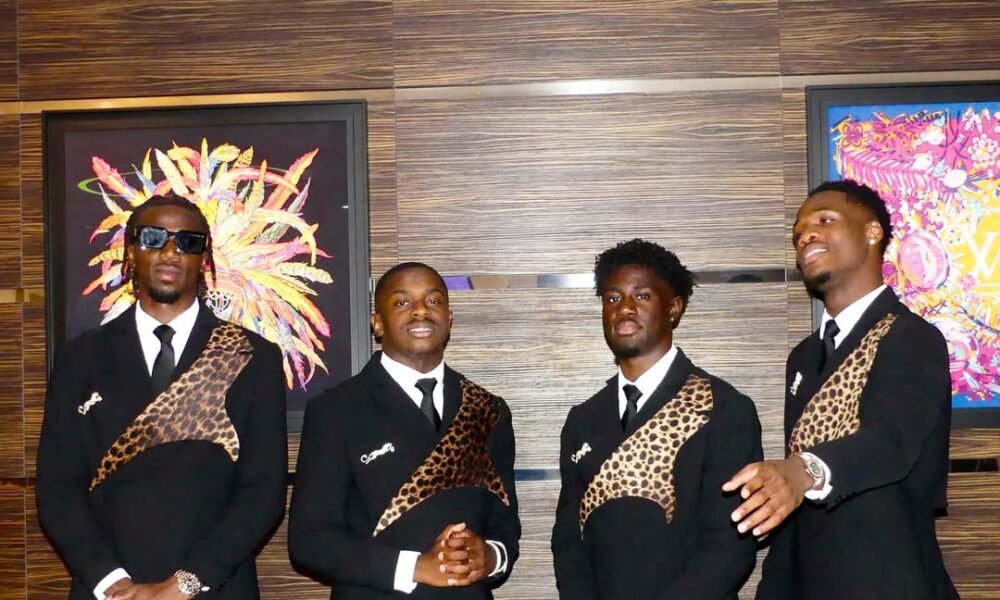
The images of their outfits went viral within hours. It featured: black silk crepe suits, leopard-print lapel collars, matching leopard brooches, and custom leopard-print travel bags. The entire delegation stepping off the plane looking less like athletes and more like dignitaries at a royal wedding.
For a team making their first World Cup appearance since 1974, the message they were projecting was that they were here to be remembered.
The Man Behind the Suits
Behind the statement was Alvin Junior Mak, a 30-year-old self-taught Congolese designer based in Paris. Before the World Cup, his Instagram had fewer than 10,000 followers. He learned to design by watching YouTube documentaries about fashion creative directors.
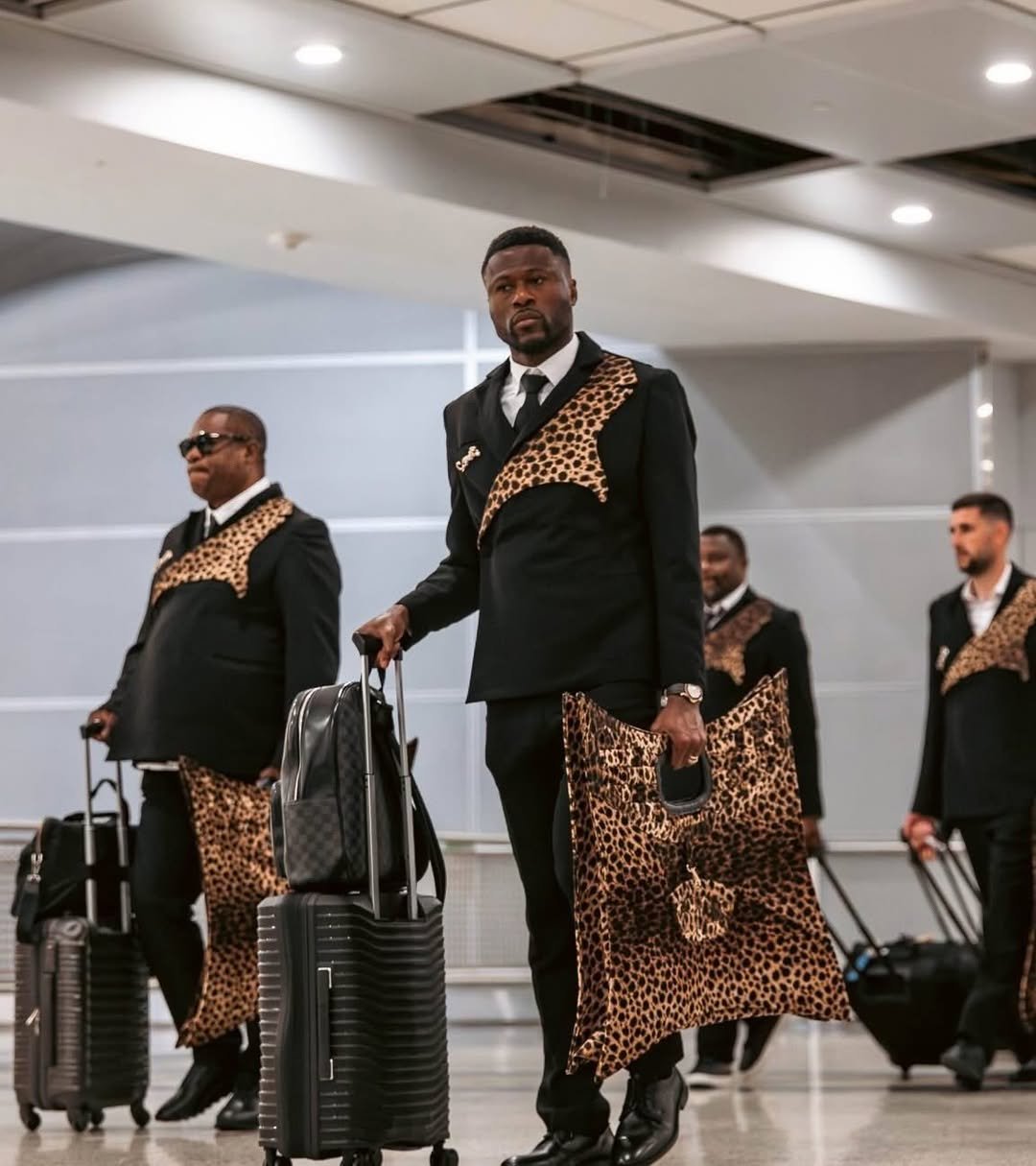
He cold-emailed Congo’s Ministry of Sports with a proposal. “I didn’t want to do a project just for the sake of doing one,” he told GQ. “I wanted to do something that had economic, social, and cultural significance”.
The ministry said yes. And the result was 55 suits and bags, all made in Congo by local artisans.
Why Leopard? Because It Means Something
The leopard motif was not a random fashion choice. The team’s nickname is Les Léopards. The leopard head sits at the centre of the country’s national emblem. In Congolese culture, the leopard is a symbol of power, resilience, and grace.
“In Congo culture, the spirit of leopard is a spirit of strength,” Mak told The New York Times. “It is the spirit of resilience, so I want to transfer this energy to them”.
Leopard has been part of Congo’s visual language for generations. Mobutu Sese Seko, the country’s long-time dictator, ruled in a brimless leopard-skin hat. To this day, the style is known to some as a “Mobutu hat”.
Mak was clear: “Leopard really means something for the Congolese culture deeply”.
The Sapeur Influence
Mak’s design also drew from La Sape—the Société des Ambianceurs et des Personnes Élégantes, a Congolese tradition of men dressing with zeal, pattern, and personality.
“In Congo, we have three things,” Mak said. “We have music, we have fashion, and we have sport” . A sapeur, in his words, is “an elegant person of Congo who wears clothes extravagantly”.
He wanted the team to carry that sartorial legacy onto the global stage. “Elegance is a way of wearing one’s history,” he said.
A Homage to 1974
Mak paid tribute to the 1974 team—the first from sub-Saharan Africa to qualify for a World Cup—who wore midnight blue suits. He updated the concept with black silk crepe and the leopard motif.
The matching travel bags were also intentional and designed with solid, pointed corners “reminiscent of a star,” Mak said. “It’s a symbol of our ambition for this World Cup. The national team isn’t here just to participate; it’s here to go all the way”.
Made in Congo, Not Paris
Crucially, everything was made in the Congo. “We took every measure for every player,” Mak said. The operation was challenging—players were bulking up as training progressed, requiring constant adjustments.
But the local production was non-negotiable. “I want to show the world what Congolese people can do,” he said.
The Global Response
The response was immediate and overwhelming. Inquiries poured in from around the world—including Taiwan, Mak said. Fans flooded social media with a single question: “Where can I get those bags?”
“It’s global right now,” Mak told The EastAfrican, still catching up to all the attention. “I’m very honoured, not just for myself, but more for my culture”.
A Broader Movement
Congo was not alone in representing their heritage on the global stage. Côte d’Ivoire also arrived in elephant-inspired outfits. Senegal wore traditional West African textiles. Ghana celebrated Kente identity. Across the continent, African teams are using the World Cup as a platform for cultural diplomacy—turning arrival fashion into a high-stakes statement of national identity.
But it was Congo’s leopard suits that captured the global imagination, and all it took was a self-taught designer.