
Iran has closed the Strait of Hormuz and will fire on any ship trying to pass through the world’s most vital oil export route, a senior Revolutionary Guards official declared Monday — an explicit threat that threatens to choke off a fifth of global oil flows and send crude prices soaring.
“The strait is closed. If anyone tries to pass, the heroes of the Revolutionary Guards and the regular navy will set those ships ablaze,” Ebrahim Jabari, a senior adviser to the Guards commander-in-chief, said in remarks carried by state media.
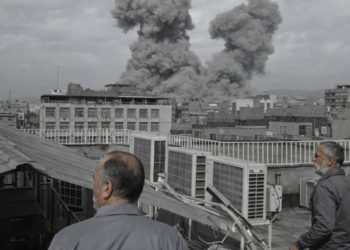
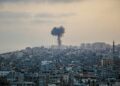
The announcement makes good on decades of Iranian threats to block the narrow waterway in retaliation for any attack on the Islamic Republic. On Saturday, U.S. and Israeli strikes targeted Iranian nuclear and military facilities, killing Supreme Leader Ayatollah Ali Khamenei and triggering waves of Iranian retaliation across the Gulf.
The World’s Most Vital Oil Route
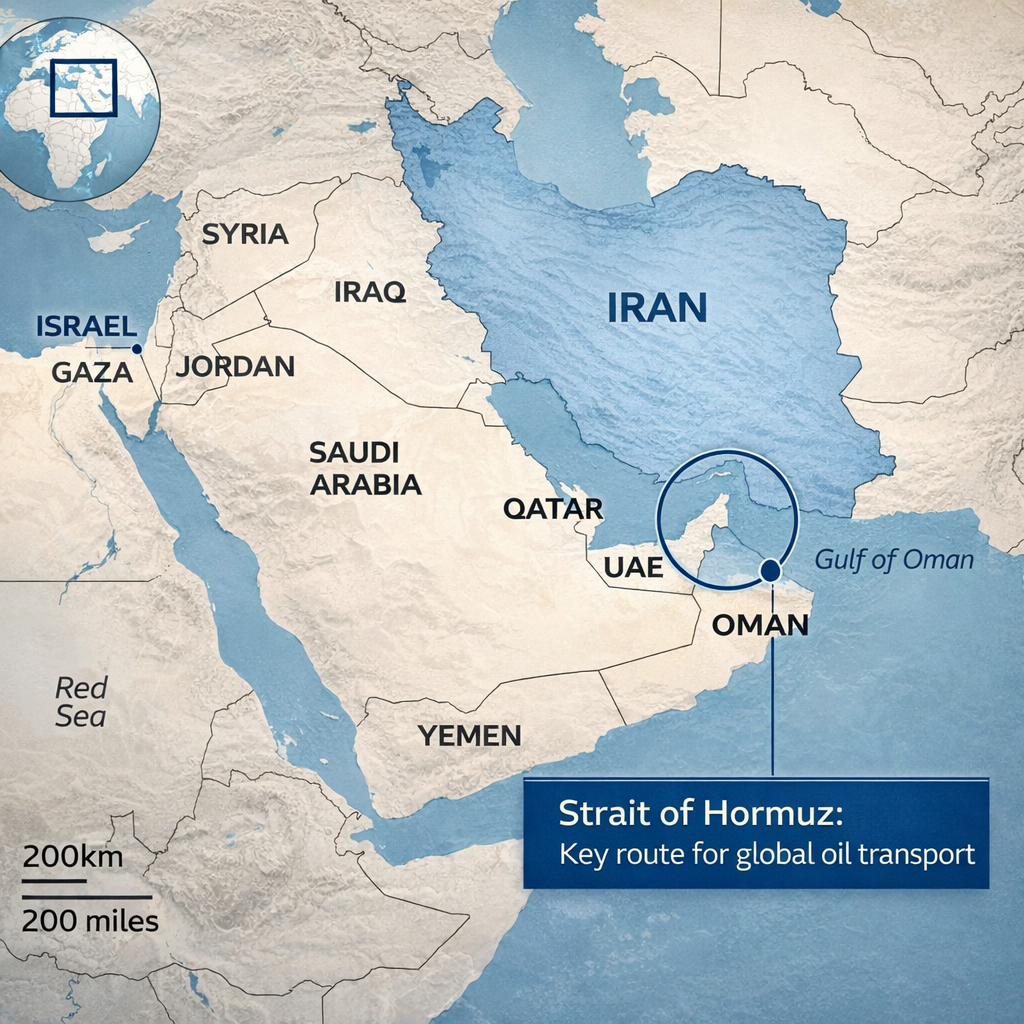
The Strait of Hormuz connects the biggest Gulf oil producers — Saudi Arabia, Iran, Iraq, and the United Arab Emirates — with the Gulf of Oman and the Arabian Sea. At its narrowest point, the waterway is just 33 kilometers (21 miles) wide.
About 20% of the world’s daily oil consumption passes through this choke point. In 2023, an average of 21 million barrels per day — roughly a fifth of global demand — flowed through the strait, according to the U.S. Energy Information Administration.
The closure threatens to cut off supplies from Saudi Arabia, the world’s largest oil exporter, as well as from Iraq, the UAE, and other Gulf producers. Kuwait, Qatar, and Bahrain also rely on the strait for their crude exports.
Iran’s Retaliatory Campaign
The closure is the latest escalation in Iran’s expanding retaliatory campaign following the February 28 U.S.-Israeli strikes. Since Saturday, Iran has:
· Launched multiple waves of missiles at Gulf neighbours hosting U.S. military bases, including Qatar, Kuwait, and Bahrain
· Fired missiles at the United Arab Emirates, Saudi Arabia, and Oman
· Struck Saudi Arabia’s Ras Tanura refinery, the kingdom’s largest, forcing a shutdown of the facility
· Targeted U.S. bases across the region, killing six American service members
President Donald Trump has described the operation as “massive and ongoing” and called for Iranians to “take over your government,” offering help in ousting the ruling clerics.
Oil Markets in Turmoil
The closure sent oil prices surging. Brent crude futures jumped approximately 10% on Monday, trading near $80 per barrel — the highest level in seven months. West Texas Intermediate rose 8.6% to around $73.
The price spike reflects twin supply shocks: the Strait of Hormuz closure and the near-total paralysis of shipping through the waterway, where at least three oil tankers have been attacked since Sunday.
Morgan Stanley analysts warned that if the strait remains closed for more than 25 days, major Gulf producers may be forced to halt production entirely. Citigroup raised its short-term Brent forecast to $85 and warned that in an extreme scenario — with sustained damage to regional energy infrastructure — prices could spike to $120.
A Long-Threatened Move
Iran has threatened to close the Strait of Hormuz for decades, warning that it would retaliate against any attack on its territory by blocking the waterway. The threat has been a cornerstone of Tehran’s military doctrine, designed to deter U.S. or Israeli strikes by holding global energy supplies hostage.
Now, with U.S. and Israeli bombs falling on Iranian soil and its supreme leader dead, Tehran has made good on that promise.
The move also comes after global shipping had already experienced disruptions linked to drone and missile attacks carried out by Yemen’s Iran-aligned Houthis. The group has targeted vessels in the Red Sea and the Gulf of Aden since the Gaza war broke out in 2023.
What Comes Next
The closure is not a declaration of war — it is war itself. Iran has effectively sealed off the Persian Gulf, daring the U.S. Navy to challenge its blockade.
The U.S. Fifth Fleet, based in Bahrain, has the power to attempt to reopen the strait by force. But any such attempt would mean direct naval engagement with Iranian forces — a confrontation that could rapidly escalate into a broader conflict.
For now, the strait remains closed, and oil tankers sit idle, with global markets bracing for supply shocks.