

When news broke that Fuji legend Wasiu Ayinde Marshal, globally known as KWAM 1, had formally expressed interest in becoming the next Awujale of Ijebuland, many Nigerians were taken aback.
For decades, KWAM 1 has been celebrated as a cultural icon, a voice of Yoruba identity, and one of the most recognizable figures in modern Fuji music. But royalty? The idea of him transitioning from the stage to the throne instantly sparked debate, raising questions about tradition, legitimacy, and the evolving perception of cultural leadership.
A Fuji Star Steps Toward Royalty
The development came after the passing of Oba Sikiru Kayode Adetona, the long-reigning Awujale, whose six-decade leadership shaped Ijebuland. With the stool vacant since July 2025, focus shifted to the Fusengbuwa Ruling House, whose turn it is to produce the next monarch.
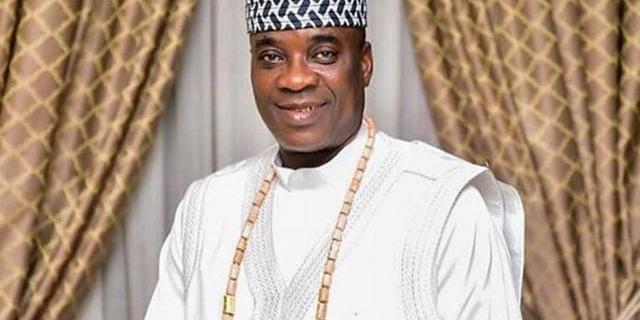
KWAM 1 submitted a formal letter indicating his desire to be considered for the stool, asserting that his ancestry traces to the Jadiara branch of the ruling house, making him a legitimate contender. He reinforced his bid by citing Ijebu customs and Ogun State chieftaincy laws, insisting that he was following the prescribed traditional process.
Lineage Form Submitted; Ruling House to Meet
Otunba Abdulateef Owoyemi, Chairman of the Fusengbuwa ruling house, confirmed that KWAM 1 has submitted the official lineage data form, a critical first step in establishing eligibility. Owoyemi told PUNCH that “the essence of filling the royal lineage data form, where contenders trace their genealogy back seven generations to establish their membership in the Fusengbuwa ruling house, is to prevent outsiders from claiming the throne.” He confirmed that the ruling family had scheduled an emergency meeting at Ile Nla, the ancestral home of the Fusengbuwa house, to deliberate on KWAM 1’s submission.
He also clarified that although the collection of expression-of-interest forms officially closed on December 5, KWAM 1 was granted a five-day extension, which expired on December 10. “Yes, he has sent someone to submit his form, and the family will meet on Thursday to discuss the nomination issues,” Owoyemi added.
The lineage form reportedly links KWAM 1 to the Setejoye family unit of the Jadiara ruling house through his father, Adisa Adesanya Anifowoshe, and carries the endorsement of Omooba Adetayo Oduneye, head of the Setejoye unit. Although he is widely associated with the Fidipote ruling house, where he holds the title Olori Omooba of Ijebu land, his decision to pursue the throne through the Jadiara unit has stirred discussions.
Why the Awujale Stool Matters
The Awujale is more than a traditional title; it is the symbolic custodian of Ijebu history, culture, and governance. Succession rotates strictly among four ruling houses, with Fusengbuwa currently in line to produce the next monarch. The process requires verified lineage to preserve the integrity of centuries-old traditions.
Disputes and Controversy
Despite KWAM 1’s submission, some family heads have questioned his claim. Otunba Akinola Odedina, Chairman of the Jadiara ruling house, stated that “I can say categorically that Wasiu has no genealogical lineage to Jadiara Royal House. We have waited for him to present his documents to prove his linkage. He is yet to show up.”
Similarly, Alhaji O. B. Yusuf, head of the Bubiade royal family, clarified that “neither the singer nor his father belongs to our lineage. We have waited for him to present his documents to prove his lineage, but he is yet to show up. I think it is necessary to release this information because of circulating rumours suggesting that I signed Otunba Wasiu Ayinde Anifowose’s family membership form.”
These disputes are expected to be addressed in the Fusengbuwa emergency meeting, where KWAM 1’s eligibility will be carefully scrutinized.
KWAM 1 Pushes Back
KWAM 1 maintains that his ties to both the Fidipote and Jadiara ruling houses validate his claim. During a recent performance, he emphasized that “my royal roots exist in both lines, and the titles I hold—Olori Omo-Oba and Otunba Afidipotemole—were given by the late Awujale himself. This is recognition of my heritage.” He argues that his musical contributions and cultural advocacy complement his claim, highlighting that service to the community extends beyond traditional governance.
From Fuji Legend to Royal Contender: Can Music and Monarchy Coexist?
KWAM 1’s bid raises a larger question: can a modern musician occupy a centuries-old traditional throne without compromising either identity? While his fame brings widespread attention and cultural influence, the monarchy demands strict adherence to lineage, rituals, and protocol. Some argue that his celebrity status may challenge the perception of traditional authority, while others suggest that cultural prominence and ancestral legitimacy can coexist, potentially modernizing public interest in age-old institutions
In my view, KWAM 1’s pursuit illustrates a broader tension between tradition and contemporary cultural influence. His musical career has already positioned him as a custodian of Yoruba culture, and if verified, his leadership could bridge generational gaps, making the Awujale stool more relatable to younger audiences. However, legitimacy rooted in lineage must remain central; without it, the symbolic authority of the throne risks being diluted.
Where Culture Meets Modern Identity
The debate surrounding KWAM 1 underscores the evolving nature of traditional institutions in a modern society. Can heritage adapt to contemporary public figures, or must it remain insulated from celebrity influence? The answer may determine not only KWAM 1’s fate but also how future leaders balance cultural prestige with modern relevance.
What Comes Next
As the Fusengbuwa Ruling House prepares to meet, KWAM 1’s next steps hinge on verification of his ancestry and acceptance by the council. Regardless of the outcome, his bid has reignited national discussions about heritage, leadership, and the intersection of celebrity with centuries-old tradition, offering a rare lens into the tensions and possibilities between modern fame and ancestral authority.