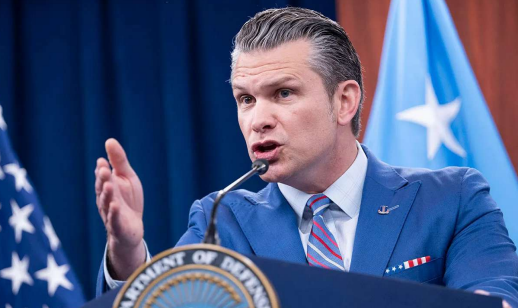

US senators are threatening to withhold Defense Secretary Pete Hegseth’s travel funding unless the Pentagon provides full details on a deadly February airstrike on a girls’ school in Iran, as well as unedited footage of lethal attacks on suspected drug-smuggling boats in Latin American waters.
The measures, embedded in the Senate Armed Services Committee’s defense policy legislation, would suspend 75 percent of the Defense Secretary’s travel funding until the Pentagon submits the required records to lawmakers.
The development marks an escalation from late last year, when Congress approved—and President Donald Trump signed—defense legislation that cut off 25 percent of Hegseth’s travel budget in a bid to compel the Pentagon to release the videos and respond to other outstanding requests. The latest proposal indicates lawmakers are still awaiting the information they seek.

It also reflects ongoing bipartisan frustration over what lawmakers describe as the Pentagon’s failure to fully respond to, or delays in addressing, congressional requests. The measures are included in the annual National Defense Authorization Act, which was approved last week by the Republican-controlled committee, with Senate Armed Services leaders formally introducing the bill on Tuesday.
Several lawmakers, including some Republican allies of President Donald Trump, have accused Pentagon leadership of failing to keep Congress adequately informed on key national security matters. They have linked that concern to their broader demand for clearer details on the developing Iran peace initiative being advanced by Trump’s administration in Washington.
The Senate’s latest effort to pressure the Pentagon faces an uncertain path to becoming law. A separate version of the defense policy bill passed by the House Armed Services Committee does not contain comparable provisions, meaning the proposed funding restrictions would need to survive negotiations between both chambers in the coming months before they can take effect.
Since September 2025, over 200 individuals have reportedly been killed in U.S. maritime strikes targeting suspected drug-trafficking vessels.
Members of the Democratic Party in Congress have continued to challenge the legal foundation of the operation, known as Operation Southern Spear, describing it as potentially unlawful and warning that the strikes could amount to violations of international law, including possible war crimes.
Lawmakers said they were particularly disturbed by reports of a “double tap” strike in September, which allegedly killed survivors of an initial attack on a suspected drug-smuggling boat in the Caribbean Sea.
After reviewing the incident, Senate Armed Services Committee Chair Roger Wicker (R-Miss.) said he found no indication that the United States committed a war crime in connection with the strike.
About 150 individuals, largely children, were said to have died in the Feb. 28 airstrike on an elementary school in Minab during the initial stage of the U.S. offensive in Iran.
Defense Department officials have maintained for months that the incident is still under investigation, without confirming whether the destruction was caused by errant U.S. munitions.
In total, the panel tied Hegseth’s travel budget to more than six separate information requests. Senators are also seeking further details on three U.S. airstrikes targeting suspected Houthi military positions in April 2025, as well as an unspecified January investigation conducted by U.S. Special Operations Command.
Many Democratic lawmakers rejected the $1.15 trillion defense measure, arguing that it does not impose enough checks on the Trump administration’s handling of the war in Iran and the continued attacks on suspected drug-smuggling boats. Still, the bill includes a number of bipartisan provisions that specifically scrutinize Hegseth’s tenure at the Pentagon.
Senators have passed a requirement compelling the Pentagon to notify Congress within five days whenever a top-ranking military officer—such as a three- or four-star general or admiral—is dismissed or exits office prematurely. The decision was prompted by Defense Secretary Pete Hegseth’s recent firing of several senior officers without detailed justification. A comparable clause has also been added to the House defense bill.