
Lebanon’s government took an unprecedented step Monday, voting to ban all military activities by Hezbollah and order the powerful Shiite group to hand over its weapons to the state — a dramatic shift in the country’s power balance that would have been unthinkable just months ago.
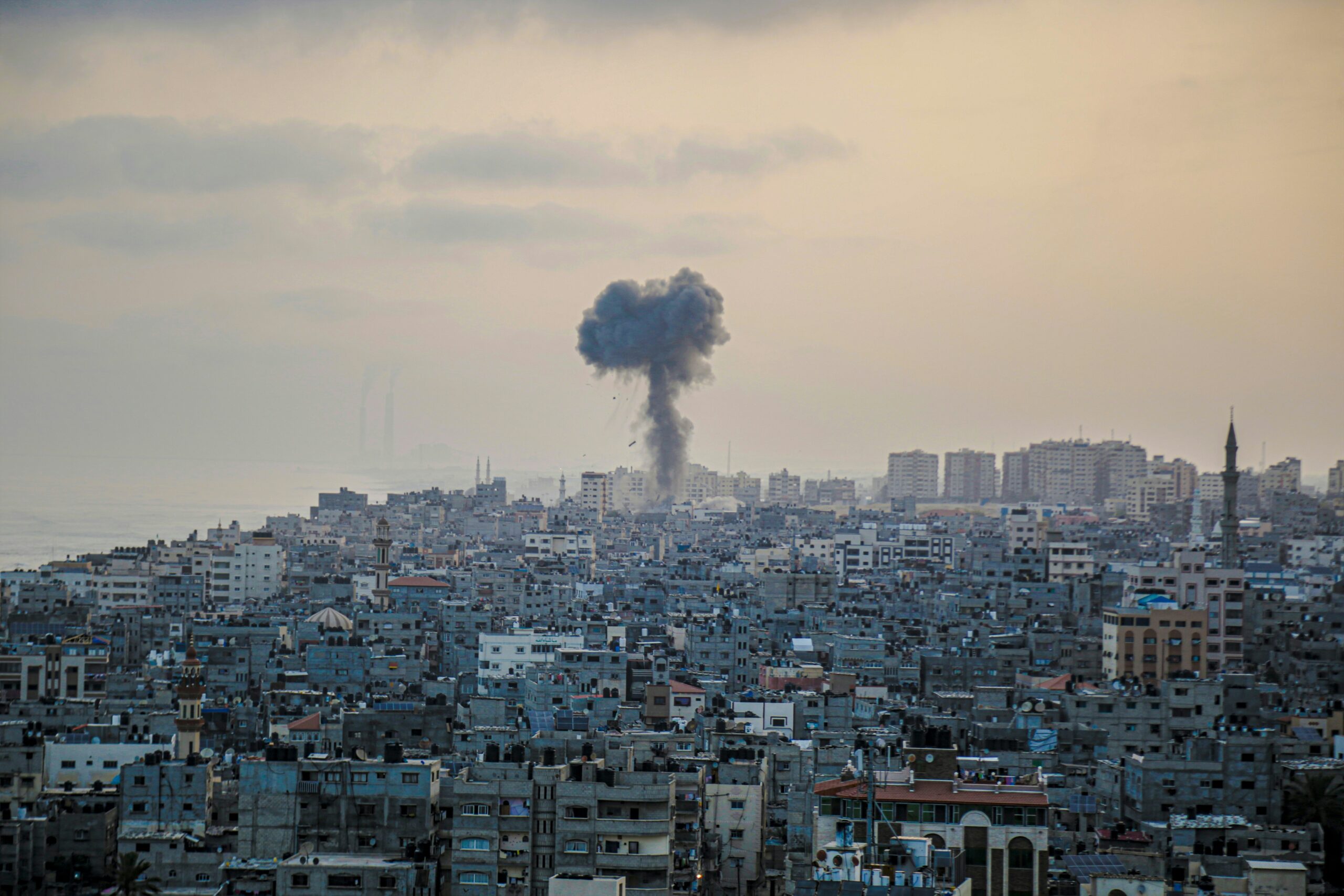
The emergency cabinet session was called after Hezbollah launched rockets toward Israel, triggering devastating Israeli airstrikes that killed 52 people and wounded more than 150 across Lebanon, according to the health ministry. Roads were jammed as residents fled targeted areas, many still scarred from the 2024 war.
Prime Minister Nawaf Salam emerged from the meeting with a stark message: Hezbollah’s attack showed disregard for “the will of the majority of Lebanese” and Lebanon rejects being dragged into the regional conflict.
“The state rejects any military actions launched from Lebanon outside the framework of its legitimate institutions and affirms that the decision of war and peace is exclusively in its hands,” Salam said.
This, he declared, “necessitates the immediate prohibition of all Hezbollah’s security and military activities as being outside the law, and obliging it to hand over its weapons to the Lebanese state.”
The vote was 22-2. The only dissenters: Hezbollah’s two ministers.
The Amal Factor
More significant than the vote count was who voted yes. Ministers from the Amal Movement — Hezbollah’s key Shiite ally, led by Parliament Speaker Nabih Berri — sided with the government.
For decades, Lebanon’s Shiite political establishment presented a united front. That unity has now cracked.
Senior Hezbollah politician Mohammed Raad rejected the government’s move, issuing a statement saying there was no justification for “bold and confrontational measures against Lebanese citizens who reject occupation.”
But his words carried less weight than the votes cast by his erstwhile allies.
A Historic Gamble
The decision marks a watershed moment in Lebanon’s post-civil war history. Hezbollah was the only faction allowed to keep its weapons after the 1975-90 civil war, using them to fight Israeli troops that occupied south Lebanon until 2000. The group has since become a state within a state, its military power dwarfing the Lebanese army.
In 2008, an attempt by the previous government to outlaw Hezbollah’s military telecom network led to armed conflict, with Hezbollah fighters taking over parts of Beirut. The memory of that confrontation has deterred every government since — until now.
Paul Salem of the Middle East Institute said the decision was historic but implementing it would be challenging.
“A clash is possible, and maybe a clash here and there is necessary if the state is going to behave like a state and implement its laws,” he said. “The state is not interested in confrontation — they are very aware of the risks, and they are not going to seek a broad confrontation — but this sends an important signal to Hezbollah that they have gone way beyond the pale.”
The Attack That Broke the Stalemate
Hezbollah said its attack was to avenge “the pure blood” of Iranian Supreme Leader Ayatollah Ali Khamenei, killed in Saturday’s U.S.-Israeli strikes, and “in defence of Lebanon.” The group claimed it targeted an Israeli military missile-defense facility south of Haifa.
The Israeli military said several projectiles fell in open areas and one was intercepted. No injuries or damage were reported.
But Israel’s response was swift and devastating. Heavy airstrikes pounded Hezbollah’s strongholds in Beirut’s southern suburbs and across Lebanon. The Israeli military said it had killed Hussein Makled, a top Hezbollah intelligence official, though the group did not confirm.
Israeli Chief of the General Staff Eyal Zamir warned of prolonged fighting. “We have launched an offensive campaign against Hezbollah … We must prepare for many prolonged days of combat ahead.”
Hezbollah leader Naim Qassem was declared a “target for elimination.”
The Human Toll
Fatima Haroun fled her home in the southern suburbs as the airstrikes began. She described scenes of panic as families scrambled to escape.
“Everyone was screaming, in the streets, fleeing,” she said, sitting on Beirut’s seafront corniche. “We are very tired of wars … We want safety.”
Her words echoed across a country that has known little else. The 2024 war left Hezbollah significantly weakened. Reconstruction has barely begun. Now, with regional conflict spiraling, Lebanon faces a new crisis — this time with its own government arrayed against its most powerful militia.
Implementation Questions
The Lebanese government, which took office a year ago, has long sought Hezbollah’s disarmament. The army has made progress near the Israeli border, where Hezbollah has not obstructed efforts to clear weapons caches — as required by a U.S.-backed ceasefire.
But Hezbollah refuses to disarm in full, arguing the ceasefire agreement does not apply to the rest of Lebanon.
Monday’s decision changes the legal framework but not the on-the-ground reality. The government has ordered the military to enforce the ban, but the army is no match for Hezbollah’s firepower. A direct confrontation could trigger civil conflict — precisely what the state hopes to avoid.
Salem’s assessment captures the paradox: the state is not seeking a fight, but by drawing this line, it may have invited one.
What Comes Next
For now, the government’s decision stands as a declaration of intent — and a warning. Lebanon’s political establishment, including Hezbollah’s Shiite allies, has concluded that the group’s military actions have become untenable. The cost in Lebanese lives, the risk of Israeli retaliation, and the destabilization of a fragile state have finally outweighed decades of deference.