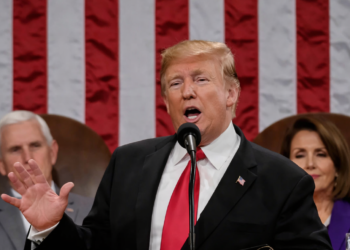
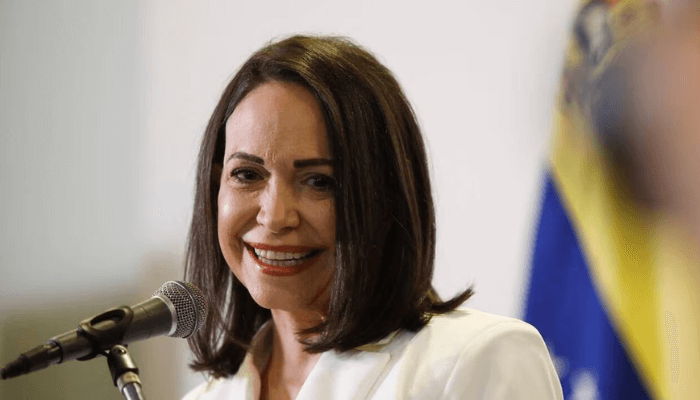
U.S. President Donald Trump met Venezuelan opposition leader Maria Corina Machado at the White House on Thursday, signaling a shift in U.S. focus from democracy promotion to securing access to Venezuela’s oil. The meeting, the first in person between the two, comes after Trump’s forces captured longtime Venezuelan leader Nicolas Maduro earlier this month, creating a power vacuum in Caracas.
Trump Prioritizes Oil Over Democracy
While many hoped the capture of Maduro would pave the way for a democratic transition, Trump has made clear that his priority is Venezuela’s energy resources. White House officials emphasized that economic rebuilding and energy security are the main concerns.
“The president is looking to stabilize Venezuela and secure resources, not necessarily to hand over governance to opposition leaders immediately,” a White House official said.
Trump has also praised Delcy Rodriguez, the country’s interim president, for her cooperation, suggesting a pragmatic approach rather than ideological alignment with Machado.
Machado’s Political Leverage
Machado, who fled Venezuela in December via a daring seaborne escape, is vying for influence in the post-Maduro government. She faces the challenge of convincing both the White House and international backers that she can lead effectively despite limited support inside Venezuela.
Her Nobel Peace Prize win last month adds to her political profile. Machado has suggested she could award the prize to Trump for deposing Maduro, a move the Norwegian Nobel Institute says is not legally possible but that underscores her willingness to cooperate with U.S. leadership.
Congress Remains a Key Player
Machado’s influence may ultimately be stronger on Capitol Hill than in the White House. After meeting Trump, she is scheduled to meet a bipartisan group of senior senators who have historically been more supportive of her than the administration. This dynamic suggests that while Trump is focused on oil and energy deals, Machado may rely on Congress to safeguard her political agenda in Venezuela.
The Challenges Ahead
Venezuela’s political and economic situation remains fragile. Maduro claimed victory in the 2024 election, but observers widely dispute the results. While dozens of political prisoners have been released, human rights groups warn that these measures are limited. Machado must navigate a landscape marked by U.S. interests, competing opposition factions, and ongoing instability in the country.
Experts say the White House’s approach prioritizes short-term energy security over long-term democratic reforms. For Venezuela, this could mean that Machado’s role is more symbolic than substantial unless she secures backing from both U.S. policymakers and domestic stakeholders.
For Machado, the White House seat is an opportunity, but also a test. Success will depend on her ability to balance U.S. expectations, domestic legitimacy, and regional diplomacy, a complex task in a country still reeling from years of political turmoil and economic collapse.