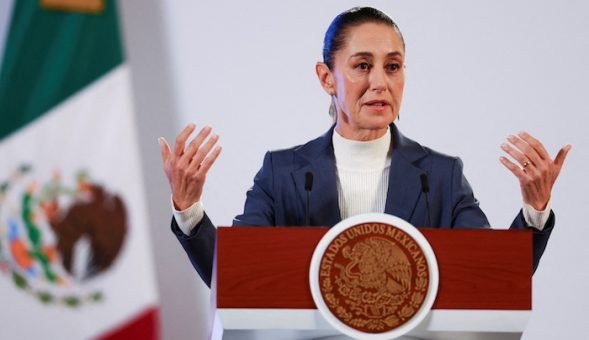

Mexican President Claudia Sheinbaum and Spain’s Pedro Sánchez met in Barcelona on Saturday after a summit of progressive leaders, signaling a rapprochement during the first presidential visit to the Mediterranean country in eight years. The meeting itself is the story. No Mexican president has made this trip since the ruling Morena party came to power in 2018.
The meeting took place during Sheinbaum’s visit to Barcelona to attend the fourth “In Defense of Democracy” summit, a gathering of global leftist leaders to mobilize advocates of these movements against the far right. But the real business was not on the summit agenda. It was between two leaders who needed to reset a relationship that had soured.
The Rift That Needed Mending
Relations deteriorated under Sheinbaum’s predecessor and mentor, Andrés Manuel López Obrador. In 2019, he demanded an apology from Spain for abuses committed during its colonial rule in Mexico. The request was not met. The tension lingered. For years, the two countries existed in a state of diplomatic coldness — not quite a crisis, but far from warm.
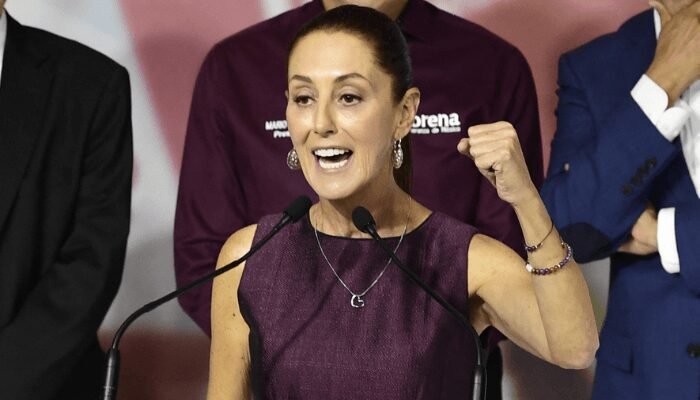
Sheinbaum appears determined to change that. “There has already been a rapprochement from both the Spanish president and the king himself, which we acknowledge,” Sheinbaum told reporters as she left the event. She noted that she still outlined Mexico’s stance on the importance of acknowledging the abuses committed during the colonization of Latin America during her meeting with Sánchez. The demand for acknowledgment remains. The tone has softened.
She also invited Sánchez to attend the fifth edition of the summit, to be held in Mexico next year. That is not a small gesture. It is an opening.
The Economic Dimension
Spain’s economy minister, Carlos Cuerpo, was blunt about what is at stake. “I believe that President Sheinbaum’s presence here is a very important and positive sign of a rapprochement between the two countries,” he told reporters at the summit, highlighting the importance of boosting trade and investment ties, particularly in the energy, infrastructure, and financial sectors.
Mexico and Spain share deep economic links. Spanish companies are major investors in Mexico’s energy and banking sectors. Mexican trade with Spain is a gateway to European markets. The diplomatic freeze under López Obrador did not sever these ties, but it did chill them. A thaw could unlock new deals.
Sheinbaum, meanwhile, thanked Sánchez for the invitation and noted that “there is no diplomatic crisis; there never has been one.” That is a careful phrase. There was no crisis because neither side declared one. But the absence of a presidential visit for eight years was its own kind of statement.
The Royal Question
One of the most sensitive issues has been the relationship with Spain’s monarchy. López Obrador had strained ties with King Felipe VI, refusing to invite him to key events. Sheinbaum has taken a different approach.
Her administration last month invited Spain’s King Felipe VI to attend the World Cup opening ceremony that will take place in June. That is a thawing after she did not invite him to her inauguration ceremony last year. The invitation is significant. It suggests that Sheinbaum is willing to separate diplomatic protocol from historical grievances.
Felipe VI last month acknowledged abuses in his country’s colonial past, softening the prior declination from the monarch to apologize for colonial-era abuses. The acknowledgment is not an apology. But it is a movement. Spain ruled one of the world’s largest empires between the 16th and 18th centuries, stretching across five continents, including much of Latin America, where colonial rule involved forced labor, land expropriation, and violence against Indigenous peoples. That history does not disappear. But two countries can choose how to carry it forward.
What This Means
The eight-year standoff between Mexico and Spain was never a war. It was a freeze. A refusal to send a president. A demand for an apology that went unanswered. A monarch not invited to ceremonies.
Now, Sheinbaum has visited. Sánchez has hosted. The king has acknowledged colonial abuses. The World Cup invitation has been extended. The next summit will be in Mexico.
The relationship is not fully repaired. The underlying grievances about colonialism have not been resolved. But the freeze is over. A Mexican president has set foot in Spain for the first time in eight years. That is nothing. It is the beginning of something.
The Bottom Line
Mexican President Claudia Sheinbaum and Spain’s Pedro Sánchez met in Barcelona on Saturday, marking the first presidential visit to Spain in eight years. The meeting signals a rapprochement after years of strained ties under Sheinbaum’s predecessor, Andrés Manuel López Obrador, who demanded an apology for colonial-era abuses that never came. Sheinbaum acknowledged a softening from both the Spanish president and the king. She invited Sánchez to Mexico for next year’s summit. Spain’s economy minister highlighted the importance of boosting trade and investment. And the king has acknowledged colonial abuses for the first time.
The eight-year standoff has not been fully resolved. But the ice has cracked. And a presidential visit is how it started.