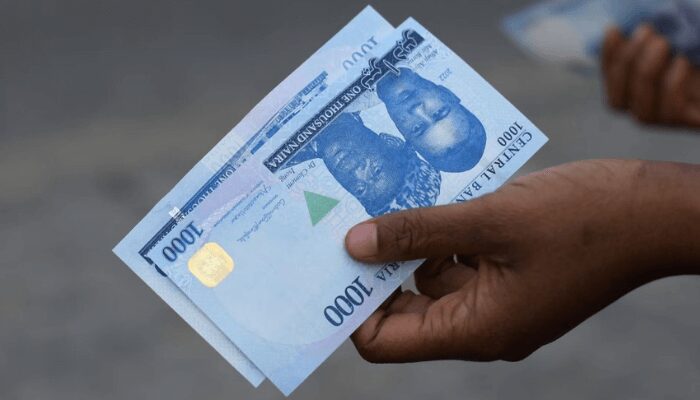

The Nigerian Naira showed little movement this Monday, holding at familiar levels as major foreign currencies maintained their grip on the parallel market. Expectations of a rebound have once again weakened, with the local currency still lacking the momentum needed to challenge the Dollar, Euro, and Pound.
While the market may appear calm on the surface, the Naira has yet to record any meaningful recovery. Instead, it remains under pressure due to sustained demand for foreign exchange and limited supply.
Current Black Market Exchange Rates
As of Monday, April 27, 2026, rates in the parallel market remain largely unchanged:
US Dollar: Buying at ₦1,388 and selling at ₦1,400
Euro: Buying at ₦1,600 and selling at ₦1,640
British Pound: Buying at ₦1,836 and selling at ₦1,885
Why the Naira Is Still Under Pressure
One of the key reasons behind the Naira’s continued weakness is the strong demand for foreign currencies. Importers, businesses, travelers, and individuals still depend heavily on the Dollar and other major currencies, while supply remains limited.
This gap between demand and availability continues to weigh on the market, making it difficult for the Naira to strengthen. Added to this is uncertainty around economic conditions and policy direction, prompting many traders and investors to hold onto foreign currencies rather than release them into circulation.
Impact on Nigerians
The Naira’s weak position continues to affect daily life across the country. Since Nigeria relies heavily on imported goods, higher exchange rates often translate into rising costs for food, fuel, transport, electronics, and other basic needs.
For many households, incomes are under increasing pressure as purchasing power continues to fall.
Although the Naira appears stable for now, the absence of real improvement means the burden of high living costs is far from over.