
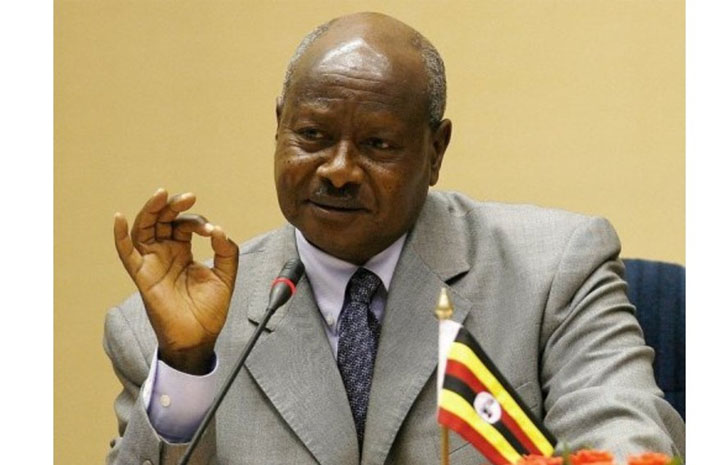
Ugandan President Yoweri Museveni is on a clear track to a historic seventh term, seizing a formidable early lead with 76% of the counted vote as provisional results pour in from Thursday’s tense national election. The 81-year-old former rebel commander, who has ruled since 1986, appears poised to extend his grip on power into a fifth decade, even as his main rival, Bobi Wine, cries foul and alleges “massive” fraud from a home surrounded by military and police.
The Ugandan Electoral Commission announced Friday morning that Museveni held a commanding lead based on results from 45% of polling stations, dwarfing the 20% reported for Wine, a 43-year-old pop star turned political phenomenon. The early margin suggests not just a win, but a potential overwhelming mandate that would allow Museveni to claim an indisputable, if contested, victory.
A ‘Historic’ Path Forged Amid Blackout and Allegations
The path to this lead was marred by controversy from the start. The election was held under a government-imposed internet blackout, severely hampering independent verification of results and the flow of information. Voting was delayed for hours across the country due to malfunctions in biometric voter verification machines and late-arriving ballot boxes—issues critics link directly to the communications shutdown.
From his home in Kampala, Wine, whose real name is Robert Kyagulanyi, has rejected the process. His National Unity Platform (NUP) party alleged the military and police had surrounded his compound late Thursday, “effectively placing him and his wife under house arrest” by erecting tents inside his fence. The heavy-handed move mirrors the aftermath of the 2021 election, where Wine was confined for days after challenging the results.
A Formidable Machine Versus a Disconnected Opposition
Museveni’s advantage stems from a formidable political and security apparatus built over 38 years. The ruling National Resistance Movement machinery, combined with the loyalty of the armed forces, has consistently delivered overwhelming victories in rural strongholds. The internet blackout served to cripple the opposition’s primary tool (social media mobilization) while doing little to hinder the state’s own logistical and security operations.
For Bobi Wine and his supporters, the formidable lead is not a reflection of the people’s will but a foregone conclusion engineered by a regime unwilling to risk a fair fight. Without independent monitors able to communicate freely and with the opposition leader isolated, the electoral commission’s tally stands unchallenged in the official narrative.
What a ‘Historic Win’ Would Cement
If the trend holds, Museveni’s victory would be historic in its scale and implication. It would cement a political dynasty unparalleled in modern Africa, moving him closer to becoming a president-for-life. It would also signal the effective end of the Bobi Wine-inspired youth movement’s hope for change through the ballot box in the near term, potentially pushing frustration toward more desperate forms of expression.
The question is no longer whether Museveni will win, but what the nature of that win will be. A “historic” victory claimed under the shadow of an internet blackout, with the main opponent under de facto house arrest, may secure another five years in power, but it will do little to resolve the deep generational and political tensions that made this election so fiercely contested. The formidable advantage in the count may yet prove to be a pyrrhic victory for the nation’s stability.