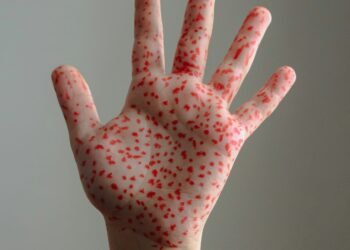

If you are in this area, or traveling to that area, watch out for measles, because South America is bracing for measles amid papal crowds as millions of faithful gather to see Pope Leo XIV. Across his November 6–17 journey through Uruguay, Argentina, and Peru, home to roughly 40% of the world’s 1.4 billion Catholics and a place where Leo ministered for two decades as a missionary priest and bishop, huge religious gatherings are colliding with a sharp regional resurgence of the virus. The Pan American Health Organization (PAHO) has rated the public health risk of measles during these mass events as “very high,” reporting 57,666 confirmed cases across 17 countries and territories in the Americas between January and the end of October 2026, nearly five times the total from the same period in 2025, along with at least 81 deaths so far this year.
Vaccination Gaps, Surging Cases, and National Responses
Because measles spreads effortlessly through the air when an infected person coughs, sneezes, or breathes and can be transmitted even before symptoms like high fever, cough, runny nose, red watery eyes, and rash appear, crowded vigils and Masses create prime conditions for rapid spread. Stopping community transmission requires at least 95% of the population to receive two doses of the measles vaccine, yet World Health Organization data shows that as of 2025, only Uruguay had reached that benchmark. Peru stood at 90% coverage for one dose and 82% for two doses, while Argentina lagged far behind at 84% for one dose and just 55% for two doses.
Health officials and governments across the three stops have taken sharply different paths as South America braces for measles amid papal crowds:
Uruguay: Following a prayer vigil and Mass led by Pope Leo XIV, Uruguay’s health ministry, led by epidemiology director Nataly Rodriguez, launched a nationwide intensified surveillance window running through November 29, three weeks after the pope’s departure, while urging families to keep routine vaccinations up to date.
Peru: Recording nearly 3,000 cases, the fourth-highest count in the Americas behind Guatemala, Mexico, and the United States, Peru has seen 170 cases across the five cities on Leo’s itinerary (Lima, Chiclayo, Cajamarca, Cusco, and Pucallpa). Working alongside PAHO immunization chief Daniel Salas Peraza, authorities rolled out campaigns targeting adolescents, border zones with Brazil, infants aged six to 11 months, and adults up to age 29, administering 1.2 million doses between April and late September with over two million more doses available.
Argentina: Officials warned in late October that up to four million people could gather in Buenos Aires province for the papal visit, even as President Javier Milei’s deep austerity cuts to healthcare budgets weakened agencies responsible for planning, financing, and tracking immunization drives. While Argentina’s health ministry noted that the federal government handles vaccine purchasing and distribution while provinces administer shots alongside general public service announcements, pediatric infectious disease specialist Dr. Marcela Lopez Yunes warned that public outreach on measles still falls short following the country’s first measles death in two decades in April 2025.
Protecting Vulnerable Communities Amid Economic Strain
Across the region, medical experts stress that babies under one year old, who typically do not receive their first dose until their first birthday, along with pregnant women and people with weakened immune systems, face the highest risk of severe complications and hospitalization. When Pope Leo XIV arrived in Argentina, he pointedly criticized Milei’s austerity measures, urging political leaders to put people ahead of the economy.
My View
It is deeply troubling that millions of families gathering for moments of faith and unity must also worry about catching a preventable disease simply because vaccination rates have slipped and public health budgets have been cut.
Measles is not a mysterious illness without answers; it is a highly contagious virus that communities can keep in check when leaders invest consistently in basic immunization, clear public health communication, and accessible care. Slashing health agencies in the name of budget austerity while a dangerous outbreak is already spreading across the hemisphere is a shortsighted gamble that puts children, infants, and working families directly in harm’s way.
As Pope Leo XIV has reminded leaders on the ground, governments exist to protect human life and put people before balance sheets. Whether in South America or anywhere else in the world, strong public health systems and honest, practical prevention must come first—especially when large crowds bring communities together.