The United States is currently facing a fiscal math problem that would make any economist sweat. As of May 2026, the national debt is rapidly closing in on the $39 trillion mark, and the cost of simply keeping the lights on has reached a staggering $3 billion a day in interest payments alone. While politicians on both sides of the aisle debate spending, a quiet transformation is happening at the Treasury. We are witnessing a literal tariff addiction, and this is why the next president can’t quit Trump’s trade war.
The $190 Billion Fix
The numbers released by the Congressional Budget Office (CBO) on May 8 tell a shocking story. In the first seven months of the 2025 fiscal year, customs duties brought in a modest $59 billion. Fast forward to the same period this year, and that number has skyrocketed by 220% to $190 billion.
While the war in Iran has sent inflation soaring to 3.8% and gas prices are squeezing families, the government is finding it impossible to walk away from the revenue generated by Trump’s global tariff agenda. As Wharton Professor Joao Gomes recently noted, once a government sees this kind of revenue, they become “addicted,” regardless of its political party.
The Hidden Tax on Every American
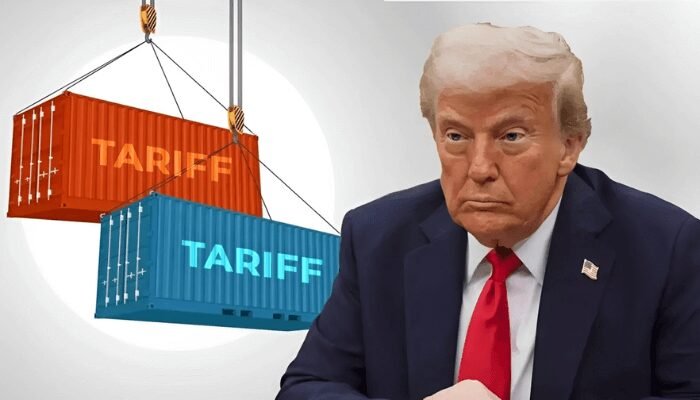
In my view, Americans are being sold a lie that “other countries” are paying these tariffs. The reality is that the $190 billion padding the Treasury’s pockets is coming directly out of the pockets of American consumers and businesses. America is using a trade war to pay the interest on its national debt, effectively creating a “shadow tax” on everything from electronics to groceries.
I find it incredibly hypocritical that America talks about “rebalancing trade” while using the proceeds to service a debt that is growing at $3 billion a day. They aren’t winning a trade war; they are just using it as a life support machine for a budget that is fundamentally broken. If the next president, Republican or Democrat, tries to end these tariffs, they will face a massive revenue hole that could send the deficit into a total tailspin. America has traded long-term economic health for a quick cash fix.
The Interest Burden vs. The Social Safety Net
The CBO report highlights a terrifying milestone in American history. The $628 billion spent on interest payments so far this year is now higher than the spending for both Medicare ($588 billion) and Medicaid ($409 billion).
•Interest: $2.96 billion per day.
•Social Security: $953 billion (still the largest outlay).
•The Debt Clock: With the debt nearing $39 trillion, interest rates remaining high due to the Iran war shocks are making the “service fee” on America’s debt the most expensive government program.
AI and Productivity
CBO Director Phil Swagel is pinning hopes on AI to save the day, projecting a modest 10-basis-point increase in productivity. But hope isn’t a fiscal strategy. While the administration is busy planning to buy 15 “Trump-class” battleships by 2055, the immediate crisis is the here and now. The strength of the dollar and the stability of the GDP are being propped up by these duties, making any talk of “free trade” a thing of the past.
The next person to sit in the Oval Office will inherit a Treasury that is functionally dependent on trade barriers. You cannot simply remove $190 billion in revenue when you are already running a nearly $1 trillion deficit for the half-year. Whether you love the “America First” policy or hate it, the fiscal reality is that the U.S. government is now hooked. The trade war is the only thing keeping the interest payments from swallowing the entire federal budget.