


The 83rd Golden Globe Awards promised a new era of glamour and relevance. While many reviews praised the return of “classic Hollywood glamour,” its red carpet, in this view, delivered mostly a parade of perplexing choices and fashion missteps.
Despite the influx of new voters and a desperate rebrand, the fashion narrative was less about groundbreaking style and more about stars trying too hard, missing the mark, or simply fading into the backdrop of the Beverly Hilton’s beige carpet. Host Nikki Glaser’s attempts at edgy humor were matched only by the equally jarring fashion statements (or lack thereof) that left critics bewildered and audiences reaching for their remote.
The overall trend was a curious blend of overwrought maximalism and forgettable minimalism. Many celebrities opted for voluminous gowns that swallowed them whole, or sleek silhouettes that were so safe they became invisible. Bold colors vied with muted tones, creating a visual cacophony that lacked cohesion or genuine inspiration. It was a red carpet that reflected the Globes’ own identity crisis: unsure if it wanted to be an avant-garde runway or a predictable industry gathering.
Then came the much-hyped “Nigerian presence,” particularly regarding their red-carpet choices. While there was anticipation for a vibrant display of African elegance or a unique fusion of cultural aesthetics, what materialized was, frankly, a profound missed opportunity.
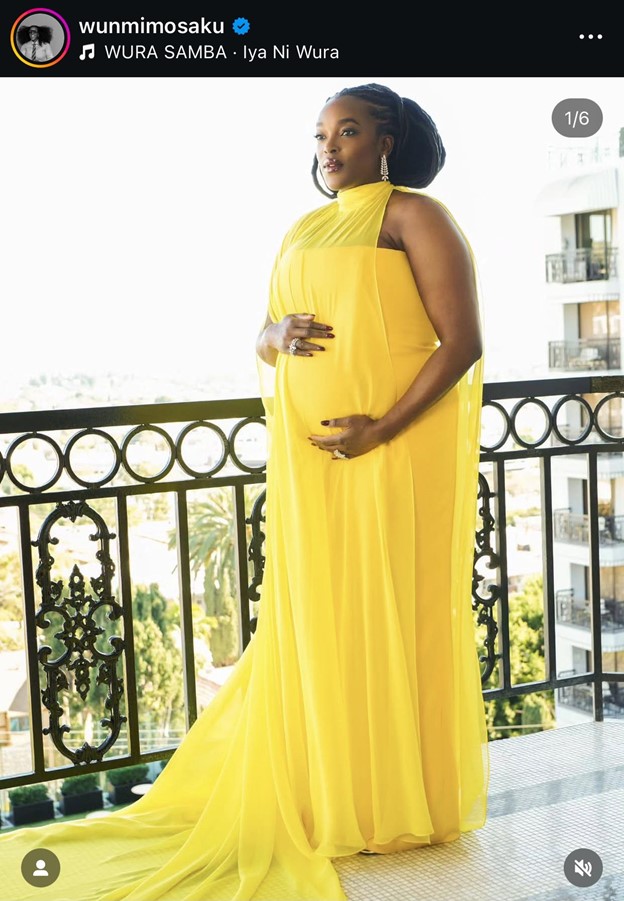
Wunmi Mosaku, the celebrated Nigerian-British actress from the nominated film Sinners, was the primary (almost sole) representative. Mosaku, making a personal statement by debuting her pregnancy, chose a custom sunshine-yellow Matthew Reisman gown.
Wunmi Mosaku
The sentiment behind the “mother is golden” Yoruba phrase (Iya ni Wúrà) is powerful and commendable. However, the dress’s execution (a safe, column silhouette) lacked the structural audacity or innovative tailoring that defines the best of Nigerian design. It was a beautiful personal moment that, stylistically, chose polite elegance over a bolder declaration of cultural fashion prowess.
But the larger critique extends beyond a single look. For an industry as dynamic and visually rich as Nollywood, the glaring absence of other prominent Nigerian celebrities on this global stage was itself a sartorial failure.
This was the real missed opportunity. Where were the breathtaking creations from Nigerian designers like Lanre DaSilva Ajayi, Lisa Folawiyo, or Deola Sagoe?
The 2026 Golden Globes red carpet was a chance to showcase Nigerian artistry beyond performance, but the industry’s collective decision to largely cede the stage (or even approach it with excessive caution) resulted in a bland, derivative affair. It proved that even with a global invitation, the boldest step is sometimes the one not taken, leaving a vibrant fashion narrative untold.