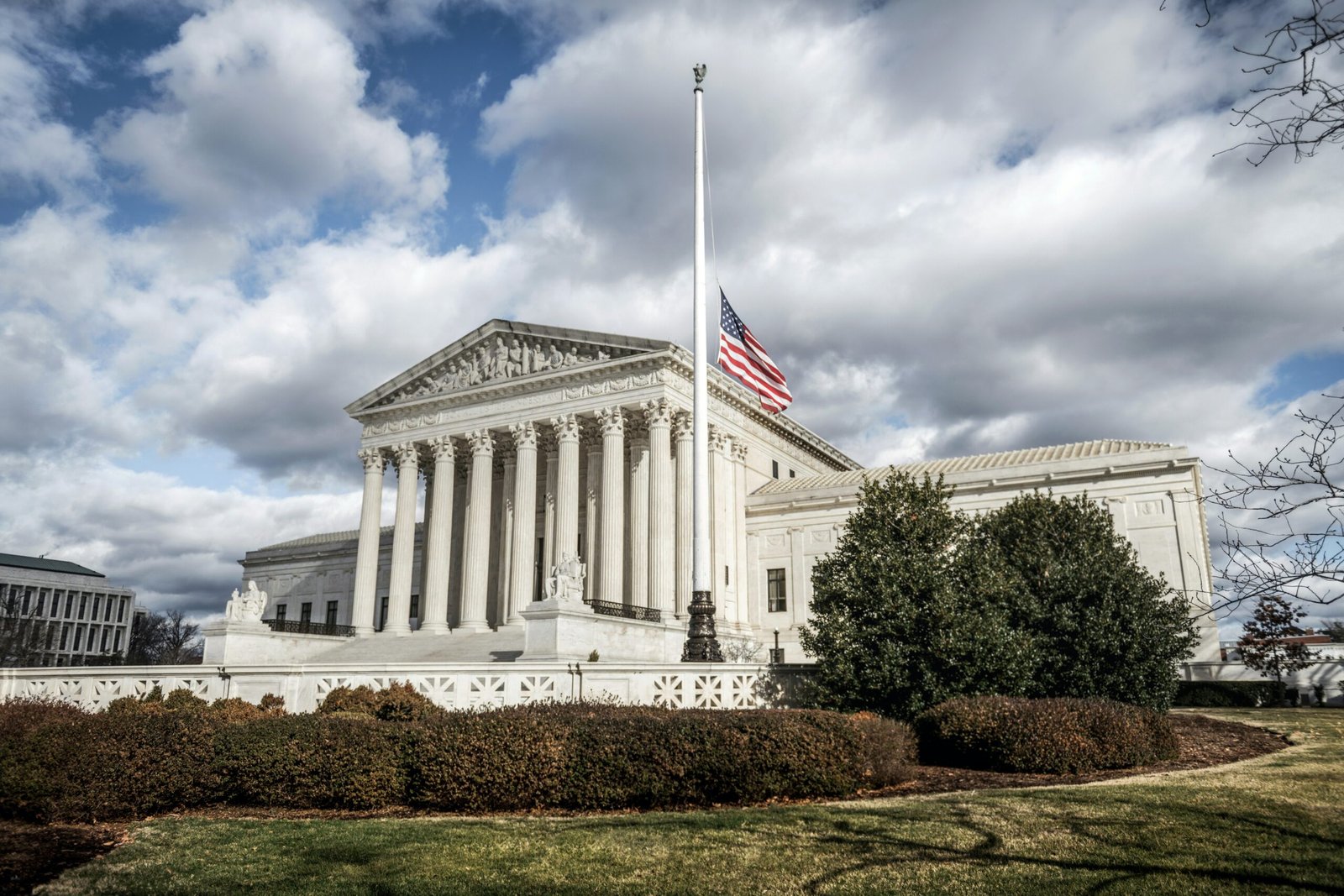

Justice Clarence Thomas has watched the Supreme Court transform over his 34 years on the bench. The docket has changed. The ideological balance has shifted. But one change, he says, has been particularly jarring: the security around him.
Thomas lamented the heightened security that has become necessary for members of the Supreme Court in recent years, telling an audience in Florida on Thursday that it is now far more difficult for him to take part in activities outside the courthouse. The observation, which he repeatedly returned to, came as the court has sought millions of dollars in additional security funding from Congress amid increasing physical and cyber threats aimed at the judiciary.
“The security concerns now are much different from the way they were when I first became a circuit justice,” Thomas told a conference organized by the 11th US Circuit Court of Appeals. “That’s really one of the big changes since I’ve been on the court — that it’s become very, very dicey.”
A Justice Confined
Thomas, the most senior associate justice and a member of the court’s conservative wing, made similar remarks earlier this year at an event at American University in Washington. He had been scheduled to attend in person but switched to a remote appearance, explaining the change as a response to security concerns. “The reason we’re sitting here, I think, unfortunately, shows a direction — and rather than sitting with these good people — shows a direction that we have traveled … demonstrates how far we have come,” he said at the time. “We have come a long way in the wrong direction.”
His remarks in Florida were mostly breezy. He talked about his love for barbecue — pulled pork, specifically. He briefly discussed his support for the University of Nebraska sports but noted he did not get to games as much as he wanted. “And as I said, because of the security concerns, I’m not able to move around as much as I used to,” he said.
For years, judiciary officials have warned about a dramatic increase in threats aimed at federal judges and prosecutors. The danger was driven home for the Supreme Court in 2022 when a person attempted to kill Justice Brett Kavanaugh following the leak of a draft decision overturning Roe v. Wade.
The Weight of Longevity
Thomas, 77, was interviewed Thursday by a former clerk, Kasdin Mitchell, whom President Donald Trump recently nominated for a federal judgeship in Texas. When Mitchell repeatedly mentioned Thomas’ longevity — he this month became the second-longest serving Supreme Court justice — the justice broke into laughter.
“Thanks for letting me know that,” Thomas quipped. “You keep bringing that up.”
Assuming he stays on the court — and there are no signs he is considering retirement — Thomas would become the longest-serving justice in 2028.
While his security remarks were sobering, his broader comments avoided controversy. He ripped on the nation’s capital briefly but was far less acerbic than two years ago, when at the same conference he described Washington as a “hideous place.”
The Bottom Line
Justice Clarence Thomas told an audience in Florida on Thursday that heightened security threats have made it “very, very dicey” for Supreme Court justices to move freely and participate in outside activities. He lamented the direction the country has traveled on security, noting that he now attends games and events far less often. The court has sought millions in additional security funding from Congress amid increasing threats. Thomas, 77 and the second-longest serving justice in history, showed no signs of considering retirement.
For a justice who joined the bench in 1991, the world outside the courthouse has changed dramatically. And not, in his view, for the better.