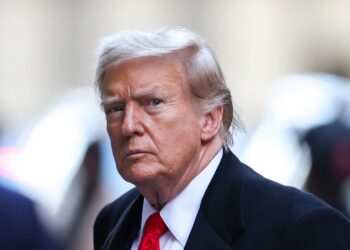


In a typical display of political brutality that has ruptured his own party, President Donald Trump has savaged the late Hollywood director Rob Reiner in the immediate wake of his murder, repeating claims that the Democrat’s obsession with him was linked to his death and declaring the filmmaker “very bad for our country.”
The president’s remarks, first made on Truth Social and then repeated in the Oval Office, represent a shocking escalation of his long war against critics, this time targeting a man whose son has been arrested for the stabbing deaths of both Reiner and his wife, Michele. With no evidence of a political motive, Trump suggested Reiner’s death was “reportedly due to” what he calls “Trump derangement syndrome,” labeling his lifelong foe a “deranged person.”

The GOP Rebellion: ‘Inappropriate and Disrespectful’
For perhaps the first time since his return to power, Trump’s comments sparked an immediate, direct, and public rebellion from within the Republican ranks, as lawmakers struggled to condemn a grotesque politicization of a family tragedy.
“Regardless of how you felt about Rob Reiner, this is inappropriate and disrespectful discourse about a man who was just brutally murdered,” wrote Kentucky Representative Thomas Massie, a Republican who has clashed with Trump. He challenged his colleagues to defend the remarks, asking, “I guess my elected GOP colleagues, the VP, and White House staff will just ignore it because they’re afraid?”
The condemnation was not isolated. Georgia’s Marjorie Taylor Greene, a former staunch ally turned frequent critic, stated plainly: “This is a family tragedy, not about politics or political enemies.” Even loyalists like Louisiana Senator John Kennedy subtly rebuked the president, saying, “I think President Trump should have said nothing.”
Trump’s ‘Raging Obsession’ Theory vs. a Son’s Arrest
In his initial social media post, which perfunctorily called the deaths “very sad,” Trump pivoted instantly to attack, writing that Reiner “was known to have driven people CRAZY by his raging obsession of President Donald J. Trump.” This theory finds no support in the police investigation, which has arrested the couple’s 32-year-old son, Nick Reiner, on suspicion of murder and has not suggested any political motive.
The comments fit a long-established pattern for Trump, who has repeatedly insulted political foes after their deaths, from Senator John McCain to Congressman John Dingell, about whom he once quipped the late lawmaker might be “looking up” at him from hell.
A Lifelong Feud Turned Post-Mortem Attack
Reiner was a lifelong Democrat and a prominent, vocal critic of Trump, calling him “mentally unfit” for office and, as recently as October, warning he was ushering in an age of “full-on autocracy.” Trump’s Oval Office remarks sought to settle the score, calling Reiner a “deranged person” and claiming he was partly “behind” the Russia collusion investigation.
The president’s decision to attack in the shadow of a horrific crime has achieved something his policy disputes rarely do: uniting factions of his party in public disgust. They are not defending a liberal filmmaker; they are defending the basic decency that politics should pause when a family is shattered by violence. For a moment, the most loyal Republicans looked at their leader’s words and saw not strength, but a profound, shameful weakness.