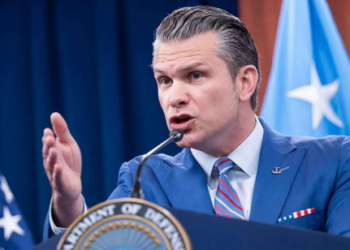
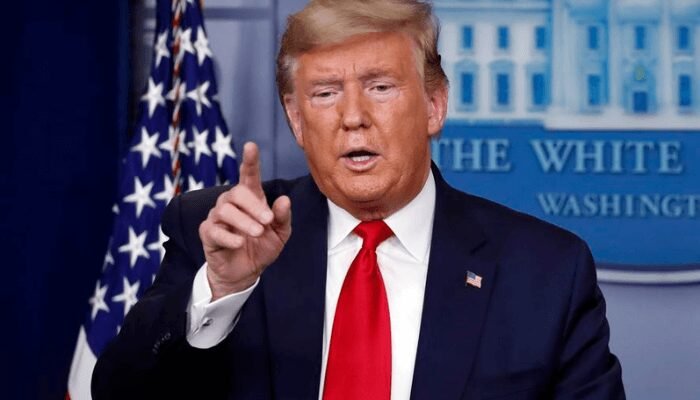
When US service members were killed in missile and drone attacks over the weekend, Trump vowed Iran would pay “many times over” for targeting American forces. President Donald Trump issued a stern directive to Secretary of War Pete Hegseth and military leadership, making it clear that the U.S will retaliate sharply against Tehran. The directive follows a weekend of heavy strikes in Jordan and Iraq, where at least three American troops died during ongoing regional combat. With 17 US military deaths reported since the conflict broke out earlier this year, the White House is signaling that the American military campaign in the region is set to intensify.
Military Escalation as Trump Vows Iran Will Pay
The latest casualties mark a dangerous turn in the ongoing war between Washington, its regional allies, and Tehran. US military officials identified troops killed while defending against Iranian ballistic missiles and drone barrages at Muwaffaq Salti Air Base in Jordan, alongside additional casualties in Iraq. In response, American forces launched extended waves of airstrikes against Iranian command centers, air defenses, and missile sites around major cities like Tabriz and Bushehr.
The consequences of this back-and-forth conflict are spilling over into key global trade routes and neighboring countries.
Iranian drone and missile strikes have targeted bases and infrastructure in Kuwait and Bahrain, temporarily damaging air traffic control systems.
Attacks near the Strait of Hormuz have pushed global oil prices higher, driving US gasoline prices back up to an average of $4 a gallon. Houthi forces in Yemen declared a naval embargo on Saudi ports, further complicating energy shipments and maritime trade through the Red Sea.
While diplomats from third-party nations are attempting to broker temporary ceasefires, the military operations on both sides continue to expand daily.
My Opinion
We are watching a predictable disaster unfold, and simple warnings are not going to solve it.
Every time a military crisis reaches this point, leaders rely on tough talk and quick airstrikes to show strength. But promising that an adversary will pay “many times over” doesn’t change the hard reality on the ground. When you enter a full-scale regional conflict without a clear, defined endgame, you get stuck in an endless loop of retaliation. One side strikes, the other hits back harder, and the people who pay the real price are the troops on the front lines and civilians caught in the middle.
Looking at how fast this conflict has spread to Jordan, Iraq, Kuwait, and the Red Sea proves that localized strikes don’t stay localized. Bouncing between high-stakes military strikes and vague diplomatic side-channels isn’t a strategy; it’s a risk. Gasoline prices are climbing, international shipping is choked off, and military personnel are losing their lives while both sides claim they want to avoid a wider war.
If the goal is long-term stability and protecting American lives, military statements alone won’t get it done. True strength requires either a firm, decisive exit strategy or real, unyielding diplomatic pressure that stops the shooting. Right now, we have neither, and that is why this crisis keeps getting worse.
What Happens Next as Trump Vows Iran Will Pay
The reality on the ground is stark as Trump vows Iran will pay for every American life lost in the region. With military commanders holding orders to strike back harder after every attack, the conflict shows no sign of cooling down soon. Until diplomatic channels produce a meaningful, enforced ceasefire, both American service members and regional allies remain directly in the crosshairs of an expanding war.