
American technology giants face fresh uncertainty over their global expansion plans as Trump warns US tech firms against building overseas, threatening massive taxes and penalties on companies that construct artificial intelligence data centers outside the United States.
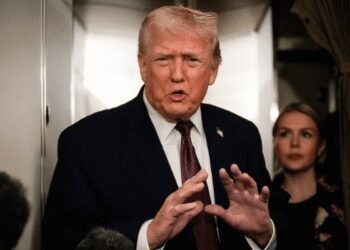
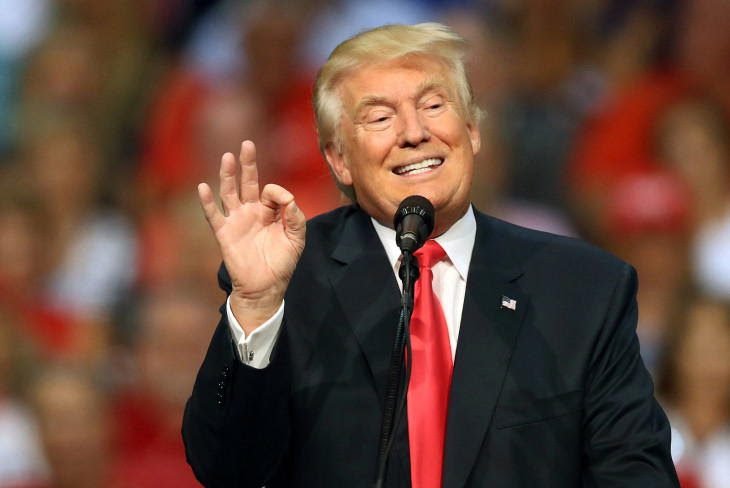
Speaking during a wide-ranging White House briefing room press conference on Friday after returning from Asia, President Donald Trump declared that U.S will not allow American firms to locate datacenters in foreign countries out of fear that China will absorb or exploit that computing infrastructure.
Although Trump acknowledged he had not yet briefed his own administration officials on the proposal and offered no specifics on enforcement or legal authority, his warning immediately raised questions for Silicon Valley firms already operating extensive server networks across Europe and Asia.
Domestic Backlash, Chip Export Scrutiny, and the Nvidia Scandal
Trump’s push to keep data center construction strictly on American soil collides with growing grassroots resistance across U.S. communities worried about electricity bills, water consumption, and noise. Addressing local pushback, the president urged towns and cities not to block projects outright, advising residents instead to demand financial concessions, utility relief, and community payments from cash-rich developers.

The announcement also arrives amid heightened scrutiny over how U.S. computing power reaches foreign rivals.
Earlier this week, the administration unveiled new restrictions on remote access to advanced U.S. computing chips and servers, even as a congressional committee disclosed that U.S. had signed off on nearly 900,000 AI chip sales to China over six months. Scrutiny of China’s access to American hardware has intensified following the ouster and resignation of Nvidia chief executive Jensen Huang over undisclosed affairs, including one with a woman suspected by U.S. intelligence of spying for China. As an old saying goes, “something must kill a man, and it’s a woman,” and in Huang’s case, personal indiscretions helped topple one of Silicon Valley’s most powerful leaders right in the middle of a national security storm.
Foreign Policy Remarks on Iran, Putin, Xi, and Democratic Leaders
Beyond technology policy, Trump touched on several pressing national security and political issues during Friday’s press conference. Trump dismissed reports that Iran was plotting to detonate a radioactive “dirty bomb” in Washington, D.C., as an unverified rumor while warning that the U.S. would respond forcefully if attacked. He also backed Vice President JD Vance’s assessment that the ongoing Iran war hurt Republicans in the midterm elections, though Trump insisted he would order the strikes again to stop Tehran from acquiring nuclear weapons. Following Thursday’s trilateral meeting at the APEC summit, Trump praised his personal rapport with Russian President Vladimir Putin and Chinese President Xi Jinping as “fantastic relationships” that keep America safe, while repeating complaints about the DOJ investigation into 2016 Russian election interference.
Trump struck a surprisingly cordial tone toward Texas Governor-elect Gina Hinojosa after a phone call on border security, and described incoming House Speaker nominee Hakeem Jeffries as a “smart” and “streetwise” politician.
With tech stocks already rattled by policy unpredictability and community opposition mounting at home, Trump warns US tech firms against building overseas in a move that leaves corporate planners guessing whether concrete legislation or executive action will actually follow.
My View
Announcing sweeping penalties on major American industries from a podium before even informing your own cabinet officials is no way to run serious economic or national security policy.
Technology companies spend billions of dollars and years of engineering planning before breaking ground on a single data center, while everyday American communities are legitimately asking who pays for the massive strain those facilities place on local power grids and water supplies. Turning complex infrastructure and supply-chain decisions into sudden, undefined tax threats only creates confusion in financial markets while doing nothing to solve real problems on the ground.
If U.S. truly wants to protect sensitive computing technology and encourage domestic investment, it needs clear, consistent laws, genuine protections for local communities, and serious oversight of chip exports rather than improvising major policy on live television.