

American economists Robert E. Hall and Michael Woodford have been awarded the Nobel Memorial Prize in Economics for their research on economic models that have helped governments and central banks respond to crises, including energy shocks and inflation.
The Royal Swedish Academy of Sciences announced the winners in Stockholm on Monday, recognising their contributions to understanding how consumers make decisions about saving and spending. Their work has provided policymakers with theoretical tools to manage economic disruptions and stabilise economies.
In a paper explaining the significance of their research, the Nobel committee said, “The laureates’ research has made it possible to manage major macroeconomic crises far more effectively than before.”
It added, “It has been hugely beneficial during the pandemic and the energy crises of recent years.”
Hall is affiliated with Stanford University in California, while Woodford works at Columbia University in New York.
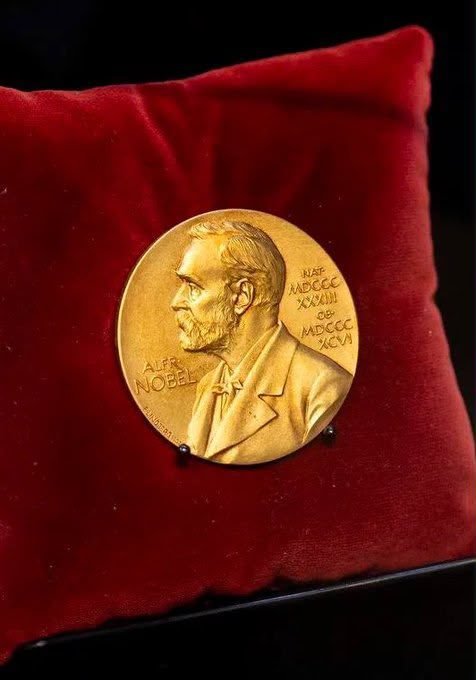
Reacting to the award in a telephone conversation with the Nobel committee from New York, Woodford described the recognition as unexpected.
“It’s a tremendous honor. It’s a surprise,” he said.
Duo Challenged Earlier Economic Assumptions
For decades, governments relied on economic policies associated with British economist John Maynard Keynes to address major financial disruptions.
The Keynesian approach typically involves government intervention through measures such as reducing interest rates and taxes while increasing public spending. The aim is to encourage households and businesses to spend and invest, thereby stimulating economic activity and restoring growth.
However, the Nobel committee said the effectiveness of this approach has not been consistent in every situation.
Timo Boppart, a member of the Nobel economics committee, explained the limitations of the traditional approach, saying, “This is the Keynesian recipe and it worked well — until it didn’t.”