
The conflict with Iran expanded dramatically across two continents Wednesday, as a U.S. submarine torpedoed and sank an Iranian warship in the Indian Ocean, while NATO air defenses intercepted a ballistic missile heading toward Turkey — marking a significant escalation of the five-day-old war.
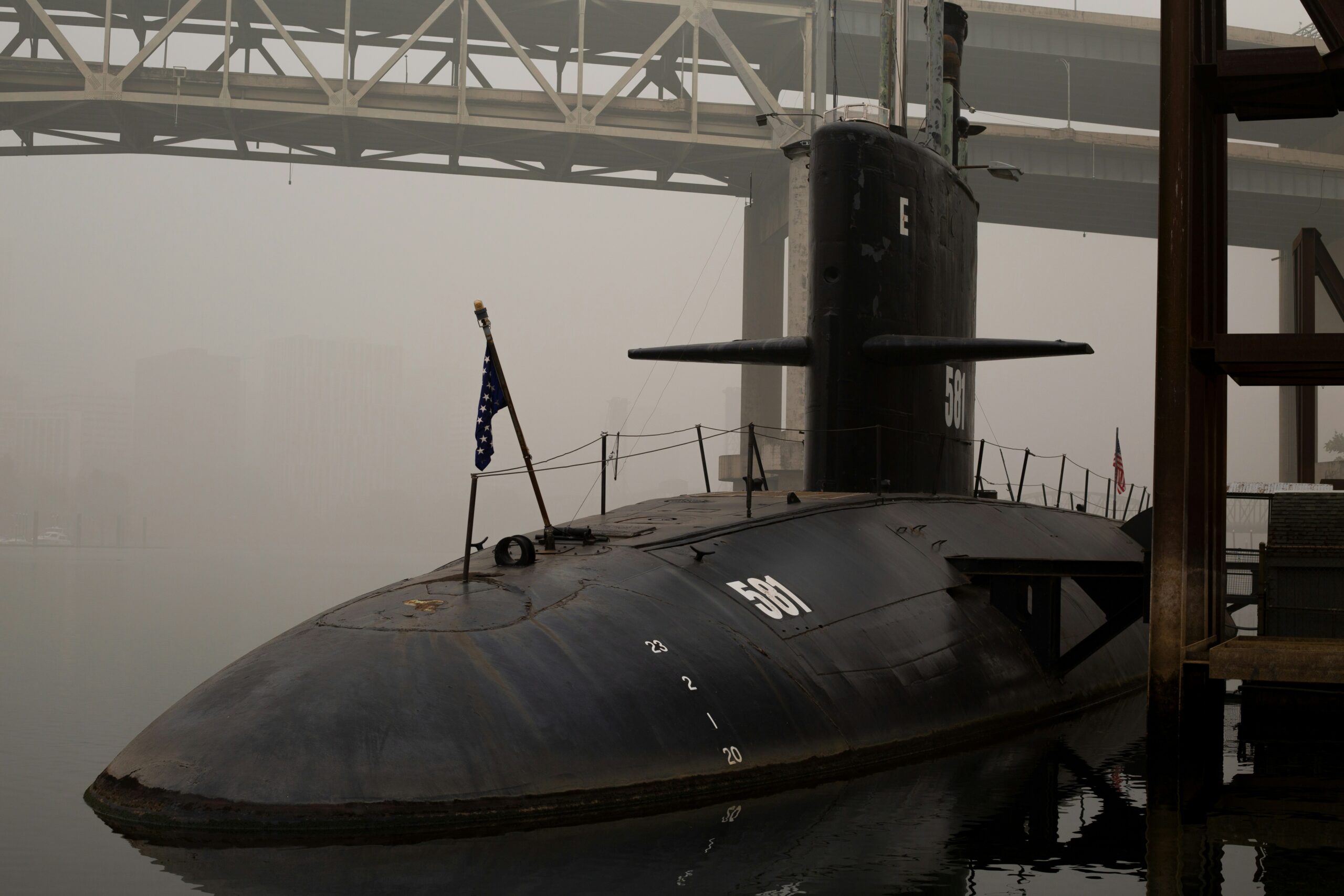
Defense Secretary Pete Hegseth confirmed at a Pentagon briefing that a U.S. Navy fast-attack submarine used a single Mark 48 torpedo to sink the Iranian frigate IRIS Dena, approximately 74 kilometers off the southern coast of Sri Lanka.
“An American submarine sank an Iranian warship that thought it was safe in international waters. Instead, it was sunk by a torpedo. Quiet death,” Hegseth said.
The attack represents the first time since World War II that a U.S. submarine has sunk an enemy combatant ship with a torpedo. Gen. Dan Caine, chairman of the Joint Chiefs of Staff, confirmed the submarine used a single Mark 48 torpedo in the strike.

The Sinking
The IRIS Dena, a 95-meter Moudge-class frigate displacing approximately 1,500 tons, was returning from the “Milan” multinational naval exercise in the Bay of Bengal when it was struck. It sent out a distress call at 5:08 a.m. local time, roughly 40 nautical miles from the Sri Lankan port of Galle.
Pentagon-released video shows the torpedo detonating under the ship’s stern, lifting it from the water and causing it to begin sinking. Sri Lankan authorities launched an immediate search-and-rescue operation.
Deputy Foreign Minister Arun Hemachandra said at least 80 bodies had been recovered, with 32 sailors rescued and receiving treatment at Karapitiya Hospital in Galle. An estimated 60 to 101 crew members remain unaccounted for from an original complement of approximately 180
Sri Lanka Navy spokesman Commander Buddhika Sampath said rescue boats reaching the location observed only an oil slick. “We found people floating in the water and rescued them,” he told reporters. “Later on, we found upon inquiring that they belonged to the Iranian ship”.
The commander of the warship and some senior officers were among the survivors, two Sri Lankan sources told Reuters.
NATO Intercepts Missile Over Turkey
Hours later, NATO air and missile defense assets in the Eastern Mediterranean intercepted an Iranian ballistic missile heading toward Turkey, alliance officials confirmed.
The Turkish Defense Ministry said the missile was detected after launch from Iran, tracked through Iraqi and Syrian airspace, and neutralized before it could enter Turkish airspace. Debris recovered in the Dörtyol district of Hatay province was identified as belonging to the interceptor used to neutralize the threat, not the incoming missile itself.
No casualties or injuries were reported.
Pentagon officials declined to specify which platform conducted the interception but noted the presence of several U.S. naval assets in the Eastern Mediterranean, including six guided-missile destroyers assigned to the European missile defense system. The Gerald R. Ford Carrier Strike Group and its escort ships are also operating in the region.
NATO spokesperson Allison Hart condemned the attack. “We condemn Iran’s targeting of Turkey. NATO stands firmly with all Allies, including Turkey, as Iran continues its indiscriminate attacks across the region,” she said.
Hegseth told reporters that the incident was unlikely to trigger NATO’s Article 5 collective defense clause. “No sense that it would trigger anything like Article 5, no,” he said.
The Turkish Defense Ministry reserved the right to respond, stating: “We reiterate that we reserve the right to respond to any hostile act directed at our country”.
The War Widens
The dual attacks mark a significant geographic expansion of the conflict, which began Saturday with U.S.-Israeli strikes on Iranian nuclear and military facilities. Since then, the U.S. military has struck or sunk more than 20 Iranian naval vessels, according to Central Command.
“We’ve effectively neutralized, at this point in time, Iran’s major naval presence in theater,” Gen. Caine said at the Pentagon briefing.
Hegseth declared that “America is winning” and suggested that within a week, the U.S. and Israel “will have complete control of Iranian skies, uncontested airspace”. He said the U.S. could sustain military action “for as long as we need to,” noting that Iran “can no longer shoot the volume of missiles they once did”.
The Pentagon continues to deny responsibility for Saturday’s strike on a girls’ school in Iran that reportedly killed 168 people. “All I can say is that we’re investigating, and that we, of course, never target civilian targets,” Hegseth said.
Regional Fallout
The conflict has triggered widespread displacement and economic disruption. In Lebanon, more than 83,000 people have been uprooted, including nearly 18,000 children in the last 24 hours alone. Israeli strikes have targeted Hezbollah strongholds in Beirut’s southern suburbs, with Lebanon’s Health Ministry reporting dozens killed.
The Strait of Hormuz remains effectively closed following Iranian threats to attack any ship attempting passage, sending oil prices surging to $85 per barrel — the highest level since July 2024.
The U.S. State Department has ordered non-emergency staff and their families at consulates in Pakistan’s Lahore and Karachi to leave due to safety concerns.
Iranian President Masoud Pezeshkian addressed neighboring countries on X, stating that Tehran had pursued diplomacy but was forced into self-defense following U.S. and Israeli attacks. “We respect your sovereignty,” he wrote, adding that regional stability must come through collective efforts.
What Comes Next
Gen. Caine signaled the campaign would intensify. “We will now begin to expand inland, striking progressively deeper into Iranian territory, and creating additional freedom of maneuver for US forces,” he told reporters.
The White House said there are currently no plans to deploy U.S. ground troops into Iran, though press secretary Karoline Leavitt declined to remove that option from the table.
For the families of the 80 Iranian sailors now confirmed dead, for the NATO allies suddenly drawn into direct engagement, and for a region bracing for what comes next, the war has entered a dangerous new phase. The bombs are no longer falling only on Tehran — they are landing in the Indian Ocean, over Turkish skies, and across the Middle East.