
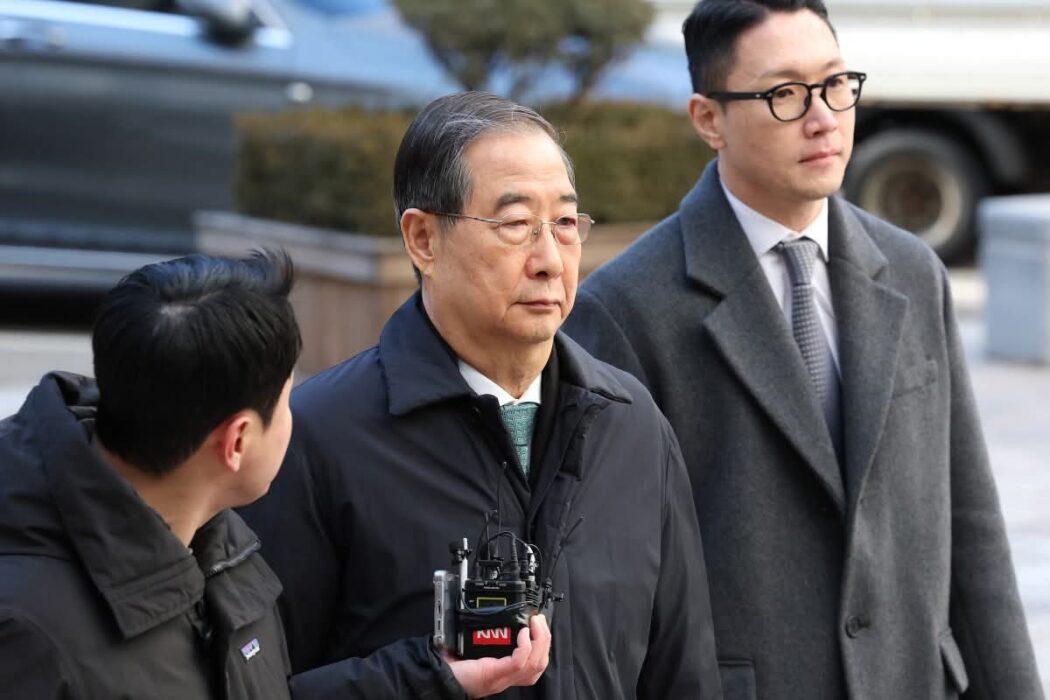
A South Korean court delivered a judgment to the nation on Wednesday, sentencing former Prime Minister Han Duck-soo to 23 years in prison and providing a damning legal explanation for why one of the country’s most respected technocrats will likely die behind bars: he was a key architect of a “top-down insurrection” that nearly returned the nation to dictatorship.
The Seoul Central District Court convicted the 76-year-old Han, who served under five presidents, on charges of insurrection, perjury, and falsifying documents for his pivotal role in the chaotic hours of December 3, 2024. On that day, then-President Yoon Suk Yeol declared martial law in a desperate bid to cling to power. The court ruled that Han’s crime was not mere compliance, but active, indispensable facilitation, making him the first cabinet minister convicted for crimes directly tied to the martial law crisis.
The ‘Why’: From Prime Minister to ‘Insurrection’ Architect
The court’s ruling meticulously detailed Han’s fatal transition from head of government to accomplice in subversion. The judge stated that Han was “instrumental in setting up the outward appearance of a cabinet meeting” that lent a false veneer of constitutional legitimacy to Yoon’s illegal power grab. By convening ministers and drafting the formal documents, Han did not just witness the insurrection; he constructed its legal facade.
“The defendant was a prime minister who had been indirectly given democratic legitimacy and responsibility. Nevertheless, the defendant chose to turn a blind eye and participate as a member of the December 3 insurrection,” the judge declared. Han’s defense—that he regretted not stopping Yoon but “never agreed to it or tried to help”—was obliterated by the court’s finding that he discussed plans to paralyze parliament, the heart of South Korea’s democratic order.
A Sentence That Speaks Volumes: 23 Years vs. 15
The severity of the sentence itself is part of the “why.” In an extraordinary rebuke, the court handed down a 23-year term—eight years longer than the 15-year sentence prosecutors had requested. This upward adjustment signals the judiciary’s view that Han’s betrayal of his office was even more grave than the state’s own attorneys argued. For a nation with a traumatic history of military dictatorships, the message was clear: those in the highest positions of public trust who enable a return to that “dark past” will face the harshest conceivable punishment.
Han, clad in a suit and green tie, was detained immediately after the ruling. “I will humbly follow the judge’s decision,” he said, his words a stark contrast to the court’s fiery condemnation that he had put South Korea in danger of “preventing them from escaping dictatorship for a long time.”
Why It Matters
Han’s case is not an isolated event but the first major domino in this historic legal reckoning. His sentencing comes just a week after ex-President Yoon was handed a five-year term for related charges, and as Yoon awaits a February 19 verdict on the charge of “masterminding an insurrection,” for which prosecutors are seeking the death penalty. Han, the consummate insider, has become the benchmark, the “bellwether” for how the courts will treat other officials implicated in the crisis.
Public reaction captured the verdict’s symbolic weight. “This ruling is something that citizens who oppose martial law can fully accept,” said 23-year-old Kim Su-hyeon. An older commuter, 79-year-old Kim In-sik, mused, “I don’t know whether this elderly man meant to devote himself to the people but the outcome wasn’t good.”
The answer to “why” Han is getting 23 years is now a matter of court record. He is not jailed for a simple mistake or passive failure. He is imprisoned for actively using the authority of the prime minister’s office to help dismantle the democracy it was sworn to protect, a crime the court believes merited adding years to his life sentence to ensure the nation’s future.