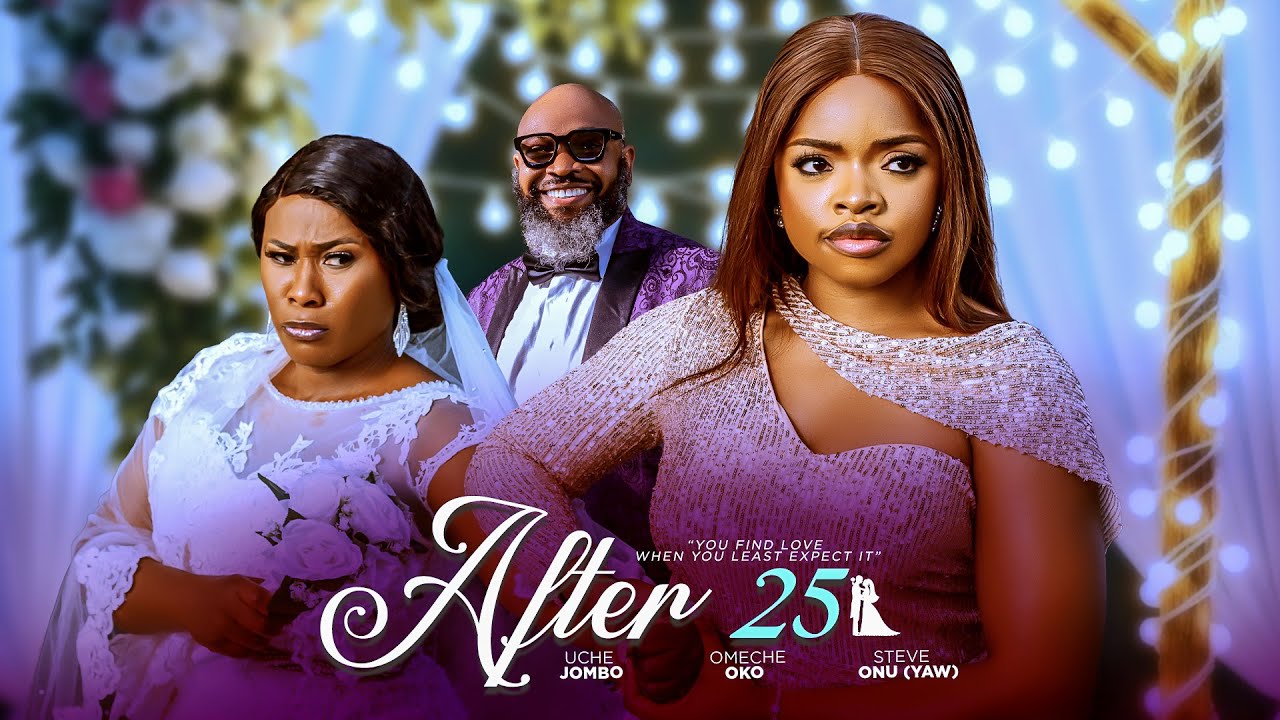
For viewers who watched Almost 25 and were left with lingering questions, After 25 arrives as the continuation that finally ties up loose ends. Streaming on Chinneylove Eze TV on YouTube, the sequel revisits familiar characters and themes, but with deeper clarity and a stronger message about life, relationships, and personal responsibility.
Starring Uche Jombo, Omeche Oko, Temitope Aje, Steve Onu, Peace Adegoke, and other notable faces, the film runs for one hour and forty-three minutes. Rather than relying on suspense or mystery, After 25 leans into reflection and resolution, asking viewers to reconsider long-held assumptions about delay, destiny, and so-called spiritual battles.
No Curse, Just Timing and Choices
One of the most striking revelations in After 25 is the dismantling of the “family curse” narrative that dominated Almost 25. From the opening scenes, the story gently steers the audience toward a different truth: the delay in marriage was never mystical. It was about timing, environment, and decisions.
Aunty Sochi remains convinced that something spiritual is wrong with the family simply because she and her sister, Aunty Oby, were unmarried at a certain age. Her fear-driven conclusions reflect a mindset common in many societies, where age and marital status are quickly linked to spiritual failure.
However, Oby confronts this belief head-on. She openly admits that her delay had more to do with her character and personal growth than any curse. This moment is powerful because it shifts responsibility back to the individual rather than unseen forces. Oby’s honesty becomes one of the film’s strongest messages.
Environment Can Shape Destiny
Oby’s relocation plays a critical role in her transformation. Once she leaves her former environment, her perspective changes completely. Had she remained, she might have continued to believe she was under spiritual attack. Instead, distance gives her clarity.
The film subtly suggests that sometimes, growth requires a change of space. Location is not just physical; it affects mindset, confidence, and opportunity. This lesson is especially relevant to young women navigating societal pressure and self-discovery.
Family Pressure Disguised as Spiritual Concern
Another underlying issue explored in After 25 is family interference. The uncles’ unrealistic demands from potential suitors created unnecessary barriers, pushing eligible men away and reinforcing the illusion that something supernatural was at play.
In reality, it was poor judgment and rigid expectations. The film does well to show how family behavior can delay progress while blaming invisible forces for the consequences.
Men, Accountability, and Standing Firm
The character of Ikenna brings balance to the narrative by highlighting the importance of personal responsibility, especially for men. When faced with opposition from his family over his relationship with Oby, Ikenna refuses to waver. He knows what he wants and stands by it.
Even when people attempt to link the collapse of his building project to his relationship, Ikenna refuses to buy into fear-based interpretations. The building failed because of substandard materials, not spiritual retaliation. That scene delivers a clear reminder: not every setback is a sign or warning. Sometimes, mistakes simply have practical causes.
Faith Versus Fear
After 25 draws, a clear line between faith and fear. Characters like Aunty Onwa and Aunty Sochi represent the dangers of overspiritualising life events. Their constant suspicion and negativity drain energy and create confusion.
As viewers, we are encouraged to think critically, trust God without panic, and avoid people who turn every challenge into a spiritual crisis.
Lingering Questions
While the film delivers satisfying closure, a few unanswered questions remain. Aunty Onwa repeatedly mentions Ikenna expecting a grandchild, leaving viewers wondering who exactly she had in mind. The pastor at the wedding also raises eyebrows, appearing unprepared and out of place for such a significant moment. Additionally, Kasinma’s romantic storyline seems abandoned, as her partner never fully appears or is resolved.
Final Thoughts
Overall, After 25 succeeds as a thoughtful sequel that replaces fear with understanding and superstition with self-awareness. It educates without preaching and resolves its central conflict with maturity.
Rating: 5/10
If you’ve seen After 25, your perspective may differ. Did the film answer the questions you had from Almost 25, or did it leave you wanting more?