Hours after the Supreme Court dealt him a stinging defeat, Donald Trump signed a proclamation imposing new 10% tariffs on nearly all imports—a swift end-run around the justices that tests whether a president stripped of one power can simply reach for another.
The Friday ruling struck down the sweeping global tariffs Trump had imposed under a 1977 emergency law, the International Emergency Economic Powers Act. The court said Congress, not the president, holds the power to create new taxes, and that IEEPA did not authorize raising revenue.
Trump’s response came within hours: a new 10% tariff on goods from all countries, this time under Section 122 of the Trade Act of 1974—a law never before used for this purpose.
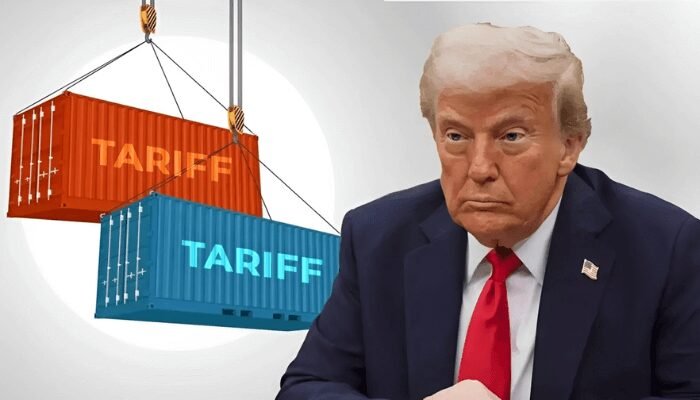
How the New Tariffs Work
Starting February 24 at 12:01 a.m. EST, the 10% levy applies to almost all imports, regardless of origin. Countries that struck trade deals with the U.S.—including the UK, India, and the European Union—will face the same rate rather than the concessions they previously negotiated. The administration expects them to keep abiding by those deals anyway.
The tariffs are temporary. Section 122 allows them for a maximum of 150 days, at which point Congress must step in. But there may be a workaround: the law does not explicitly forbid the president from letting tariffs lapse and then declaring a new emergency to bring them back.
Meanwhile, the administration is launching Section 301 investigations that could lead to permanent tariffs once the temporary measure expires. Combined with existing Section 232 tariffs on steel, aluminum, and automobiles, Treasury Secretary Scott Bessent said the new regime will “result in virtually unchanged tariff revenue in 2026.”
What’s Exempt
Some goods escape the tax “because of the needs of the U.S. economy” or to better target the duty, according to a White House fact sheet:
· Critical minerals and metals
· Energy products and natural resources
· Food crops and pharmaceuticals
· Electronics, cars, trucks, and aerospace products
· “Informational materials” like books, donations, and accompanied baggage
Goods covered by the USMCA trade agreement—between the U.S., Mexico, and Canada—remain exempt. Textiles from Costa Rica, the Dominican Republic, El Salvador, Guatemala, Hondura,s and Nicaragua also keep their duty-free status under the Dominican Republic-Central America Free Trade Agreement.
The exemptions are broad, and many categories lack specific definitions.
Trump also kept in place last year’s elimination of the “de minimis” exemption, which had allowed goods valued at $800 or less to enter the U.S. tariff-free.
The Refund Question
The Supreme Court left unresolved whether the estimated $130 billion collected under the now-invalid IEEPA tariffs must be returned. That question now heads to the U.S. Court of International Trade.
Trump told reporters he expects any potential refunds to be locked in litigation for years. Bessent agreed, saying the issue could drag on. Larger companies are most likely to recoup money, experts say, as smaller businesses lack resources to navigate the application process.
More than 1,000 businesses had already requested refunds before the ruling, according to Alex Jacquez of the progressive Groundwork Collective. That number is likely to grow.
Illinois Democratic Governor JB Pritzker demanded the White House issue a $1,700 refund check to every American household—an idea Trump himself has publicly teased.
What Tariffs Remain
The IEEPA tariffs are gone. But Trump has layered other levies over the past year that remain in place:
· Section 232 tariffs on steel, aluminum, lumber, and automobiles, citing national security concerns
· Industry-specific duties imposed under the same law that Trump used heavily in his first term
· The new Section 122 tariffs are taking effect on Monday
The administration argues that combining these authorities will maintain pressure on trading partners while staying within the legal bounds the Supreme Court just drew.
What Comes Next
The 150-day clock is ticking. If Congress does not act by late July, the Section 122 tariffs expire—unless Trump finds a way to renew them. The administration’s Section 301 investigations could yield permanent tariffs by then, creating a seamless transition.
For America’s trading partners, the message is mixed: the emergency tariffs are gone, but the new ones are here. Negotiating with a president whose powers have been curtailed may prove different than negotiating with one who could act unilaterally.
For Trump, Friday’s ruling was a defeat. Monday’s tariffs are a response. And the question hovering over both is whether the courts will let this new structure stand—or whether the president who lost one power has simply found another the justices haven’t considered yet.