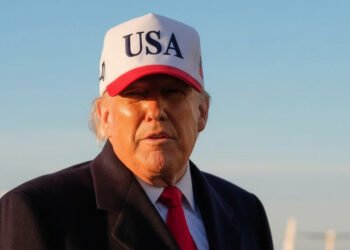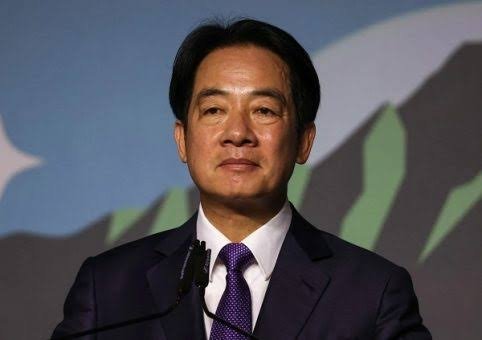

Taiwan President Lai Ching-te would be “happy” to speak with President Donald Trump, Taiwan’s foreign ministry said Thursday. The statement came after Trump said twice in the past week that he would be open to a call with Lai.
“It’s not clear whether there are any concrete plans for a call,” but Trump told reporters Wednesday, “I’ll speak to him. I speak to everybody.”
The comments followed Trump’s two-day state visit to China last week, where Taiwan was a central topic in talks with Chinese leader Xi Jinping.
Breaking Decades of Protocol
No sitting U.S. president has spoken directly with the president of Taiwan since Washington switched diplomatic recognition from Taipei to Beijing in 1979. The U.S. has no formal relations with Taiwan, a self-ruling democracy about 100 miles off China’s coast, but remains its most important backer and arms supplier.
China opposes U.S. arms sales to the island and has not ruled out the use of force to bring Taiwan under its control. Xi warned Trump during their Beijing summit that disagreements over Taiwan could lead to “clashes and even conflicts” if mishandled.
Arms Sales and Independence in Dispute
Though Trump said U.S. policy on Taiwan is unchanged, he has unsettled Taiwan supporters by saying he is undecided on a pending $14 billion arms sale and calling it a “very good negotiating chip” with China. U.S. policy has long prohibited discussing Taiwan arms sales with Beijing.
Beijing has been pressing Washington to shift its stance from “not supporting” Taiwan independence to outright “opposing” it. Trump said after the summit he wanted both sides to “cool down” and that he was “not looking to have somebody go independent.”
Lai now faces pressure from both sides. In a speech Wednesday marking the second anniversary of his inauguration, he said Taiwan’s future can be decided only by its 23 million people, not by “external forces.” He said Taiwan is open to talks with China but not if they “package unification as peace.”
At a news conference afterward, Lai said he would tell Trump that it is China, not Taiwan, undermining peace and stability in the region. He also said U.S. arms sales should continue as a “necessary means to maintain peace and stability across the Taiwan Strait.”
Military Pressure Continues
Taiwan’s Ministry of National Defense said Thursday it had detected seven Chinese warplanes, seven naval vessels, and one “official ship” operating around the island in the previous 24 hours.
Asked about a potential Trump-Lai call, China’s foreign ministry said Beijing opposes any official exchanges between the U.S. and Taiwan and urged Washington to handle the issue with “utmost prudence.”
This would not be Trump’s first conversation with a Taiwanese leader. In December 2016, after winning the election but before taking office, he spoke by phone with then-President Tsai Ing-wen, drawing sharp reactions from both Washington and Beijing.
Analysts See Low Odds Soon
Analysts say the political context has shifted since 2016. “Trump appeared to have taken on Xi’s framing of Taiwan and its leadership since leaving Beijing, talking about Taiwan as ‘a problem that needs to be solved,’” said Lev Nachman, a political science professor at National Taiwan University.
Nachman said a call is unlikely in the near term, especially with Trump aiming to keep U.S.-China relations stable ahead of a planned visit by Xi to the U.S. this fall. “I can’t imagine they would be particularly thrilled about him speaking to Lai,” he said.
Bottom Line
A Trump-Lai call would be the first between a sitting U.S. and Taiwan president since 1979. Taiwan says it’s open, but with Trump seeking stability with Beijing and viewing Taiwan as leverage, the chances of it happening soon remain low.