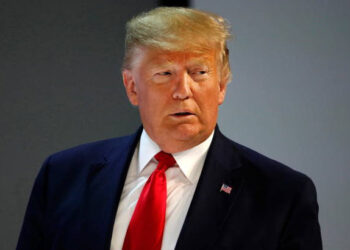

The U.S. Supreme Court has ruled in favor of the Trump administration, shutting down a free-speech challenge brought by federal immigration judges. The high court’s unsigned ruling, handed down on Tuesday, May 26, 2026, successfully muzzles the nation’s roughly 750 immigration judges, blocking them from publicly speaking out about the inner workings of the highly volatile U.S. immigration system without explicit permission from the White House.
The Prior Restraint Battleground
The long-running lawsuit, originally filed by the National Association of Immigration Judges (NAIJ) back in 2020, challenged a strict “prior restraint” policy. The policy dictates that immigration judges must secure prior administrative approval before participating in any public speeches, panel discussions, or academic events that relate to their official duties.
Unlike constitutional federal judges, immigration judges are technically administrative employees under the direct payroll and command of the Department of Justice (DOJ). While the strict speech limits were originally enacted during Donald Trump’s first term in office, the policy was quietly reviewed, approved, and left entirely intact by the Biden administration before being inherited by the current Trump administration.
The Procedural Bypass
The 4th U.S. Circuit Court of Appeals had previously allowed the judges’ First Amendment lawsuit to proceed in federal court, raising flags that Trump’s direct firing of independent agency watchdogs had fundamentally broken the internal government complaint system. The Supreme Court decisively wiped that lower court ruling away.
The Death of Transparency in a Broken System
Let us cut through the legalese and look at the terrifying reality of what just happened. The Supreme Court didn’t just rule on a procedural technicality; they effectively gave the executive branch a green light to run a secretive, unaccountable shadow court system. The National Association of Immigration Judges hit the nail on the head when they warned that justice cannot endure when judges are intimidated into silence.
The people who handle our nation’s absolute worst border and asylum crises are the only ones with the front-row data to tell the public what is actually working and what is broken. By forcing these judges to run every single public statement past a political handler at the Department of Justice, the Supreme Court has guaranteed that we will only ever hear state-approved propaganda. What makes this ruling truly insidious is that the Supreme Court told the judges their only recourse is to file complaints through the Merit Systems Protection Board (MSPB), the exact same independent oversight board that the Trump administration has been systematically gutting by firing its top officials. Telling employees to seek justice from an agency the President just kneecapped isn’t a legal remedy, it’s a sick joke.
Clarence Thomas Rebukes “Political” Lower Courts
The procedural victory was accompanied by sharp warnings from the court’s conservative heavyweights regarding the politicization of the judiciary.
Justice Clarence Thomas, writing a separate opinion joined by Justice Amy Coney Barrett, leveled a harsh rebuke at the lower appeals court, accusing them of overstepping their bounds to rule on the “political controversies of the day” rather than sticking to strict jurisdictional boundaries. This decision serves as a massive preamble to an even larger case currently looming on the Supreme Court docket regarding the President’s ultimate authority to fire the heads of independent agencies, including members of the MSPB.
First Amendment advocates, including the Knight First Amendment Institute at Columbia University, expressed deep worry that the ruling allows unconstitutional censorship to thrive precisely at a time when transparent insights into the immigration system are most critically needed.
A Masterclass in Bureaucratic Gagging
By successfully arguing that federal immigration judges do not have the immediate right to sue the government in a traditional courtroom over their constitutional rights, the Trump administration has effectively insulated its border policies from internal whistleblowers. Acting Attorney General Todd Blanche immediately celebrated the decision, telling lower courts they must accept that the law is the law. For now, the inner workings of America’s immigration courts will remain locked behind a heavy iron curtain of administrative approvals.