
On Saturday, May 9, hours before the first award was handed out at Eko Hotel and Suites in Lagos, the 12th edition of the AMVCA red carpet delivered exactly what it promised: drama, creativity, and conversation. Fashion commentators have since described this year’s event as one of the strongest red carpet displays in recent years, blending African cultural identity with global fashion influence.
Hosted by Nigerian comedian Bovi Ugboma and South African actress Nomzamo Mbatha, the event drew celebrities from across the continent who transformed the awards show into a spectacle of style.
This year’s red carpet leaned fully into excessive, theatrical fashion — with several celebrities walking in with entourages helping carry oversized outfits through crowds of photographers. Below is a fact-based look at the most talked-about appearances, categorized by the conversations they sparked.
The Viral Sensation: Queen Mercy Atang’s Bread Dress
What she wore: Reality TV star Queen Mercy Atang arrived in a dress made from over 500 loaves of bread. Surrounded by two maidens carrying trays of bread and several assistants helping carry the outfit across the carpet, Atang struggled to move freely.
The inspiration: Speaking to the BBC, Atang said the outfit was designed to promote her bread-baking business. “What other place is better to advertise my business than the AMVCA?” she told the BBC. The dress was designed by Toyin Lawani of Tiannah’s Empire, who commented on Instagram that she is beginning a trend of “everyone wear your business”. One report noted that Atang used “100 breads to make cloth”.
The reaction: The look immediately became one of the night’s biggest social media talking points. Some fans hailed the design as “a true definition of carrying your business on the head”. However, not all were impressed — some criticized the display as a waste of food, a suggestion Atang rejected.
The Engineering Marvel: Idia Aisien’s Wristwatch Gown
What she wore: Actress Idia Aisien wore a form-fitting dress made entirely from real wristwatches sewn into the fabric — not printed designs, but actual vintage watches. Constructed on a nude-brown, skin-tight column base, the gown was covered head-to-toe in hundreds of real wristwatches in gold, silver, rose gold, square and round dials, and Roman numerals — all hand-sewn in a mosaic pattern from the square-neck bodice to the hem. Even the straps were made of tiny watch faces.
The designer: The gown was created by Lagos-based couturier Ambaosa.
The presentation: A detachable dramatic black tulle overskirt — sheer, voluminous, flowing like smoke — provided breathtaking contrast against the hard metal of the watches. A steampunk fantasy set by photographer Felix Crown featured Idia inside an all-glass clock tower, complete with a giant golden timepiece reading “POR AMOR”. As one report noted: “On Idia Aisien — the woman who owns time rather than chases it — Ambaosa turned her into living, ticking art”.
The Mermaid: Bisola Aiyeola
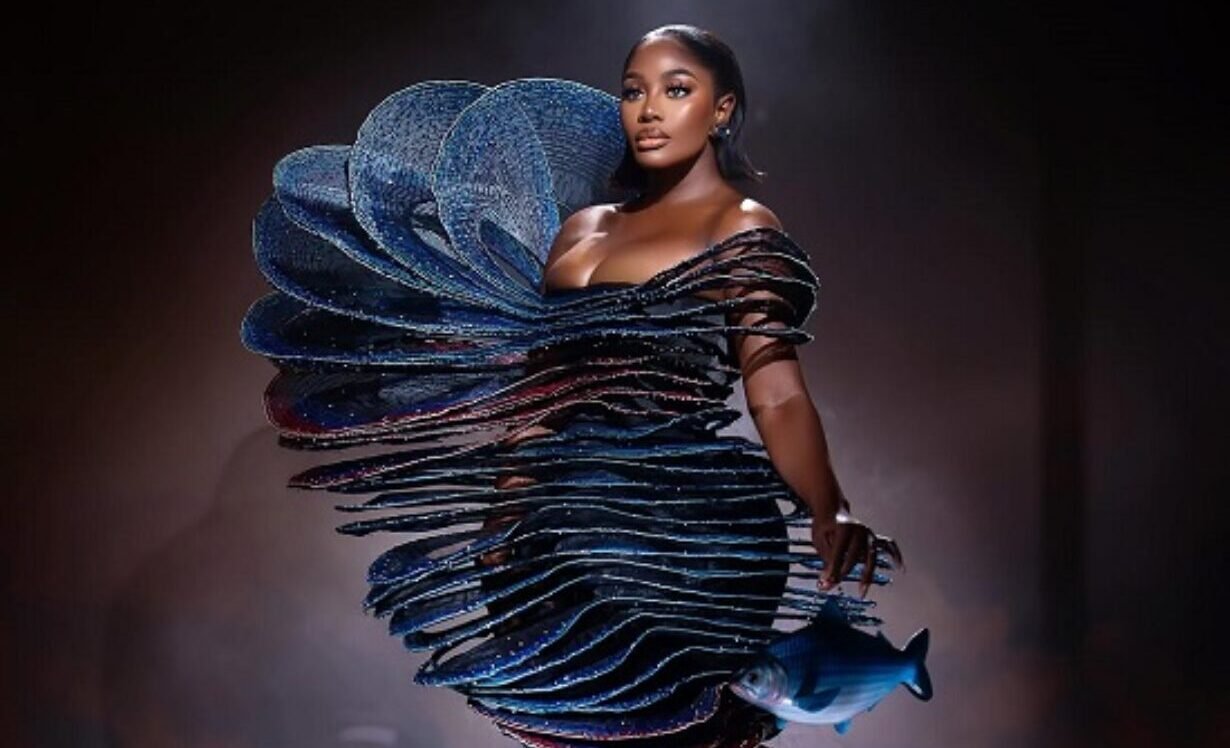
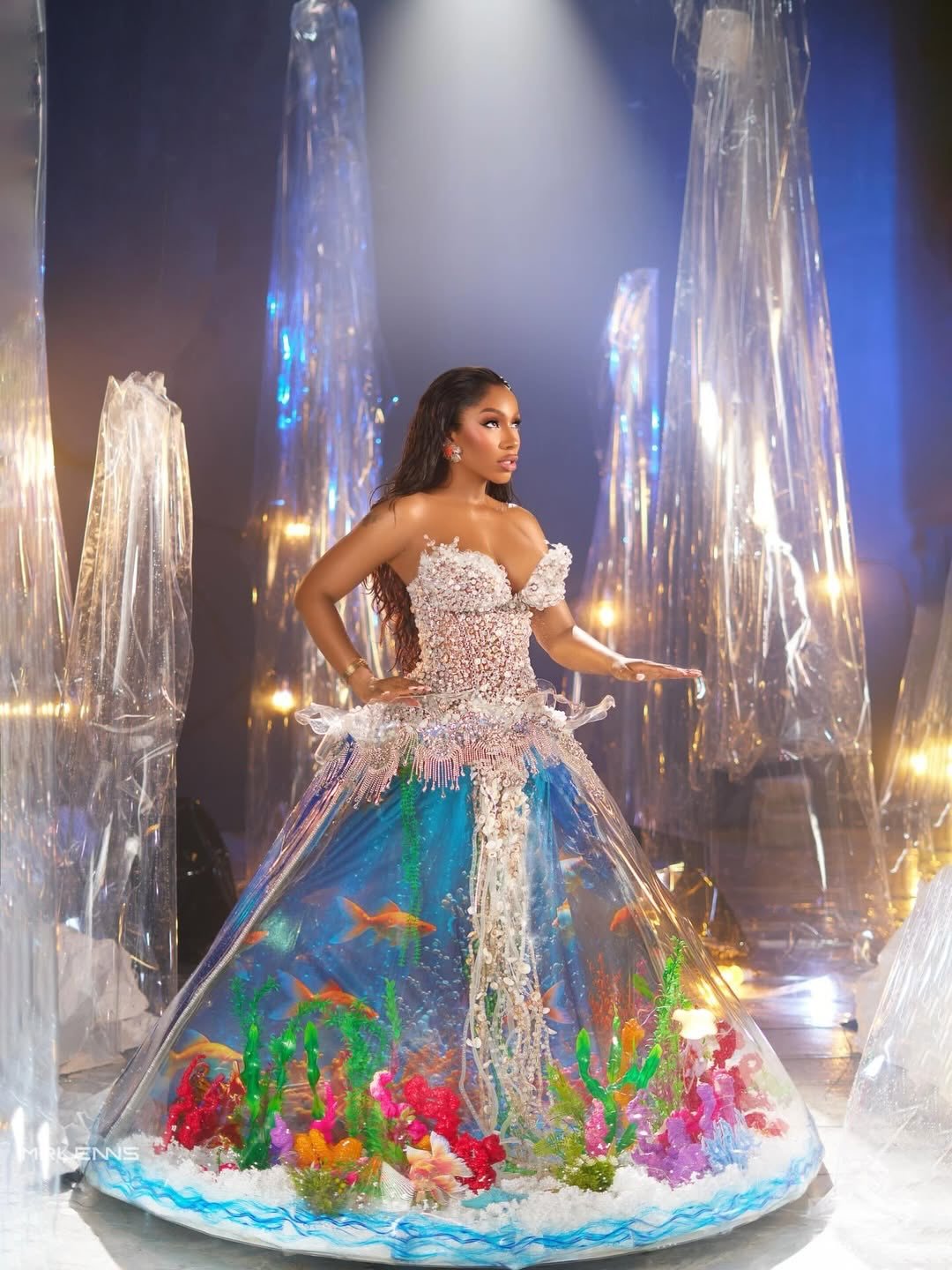
What she wore: Bisola Aiyeola stunned audiences in a futuristic metallic silver gown with dramatic shoulder structures and glittering details. Multiple sources confirm her look evoked mermaid/ocean energy — with her hair styled to mimic seaweed and her makeup described as pearly and iridescent.
The reaction: Fashion commentators noted her ensemble was one of the most striking on the red carpet, with the silver scales and flowing design drawing comparisons to a mythical sea queen.
The Cathedral: Nana Akua Addo’s Architectural Masterpiece
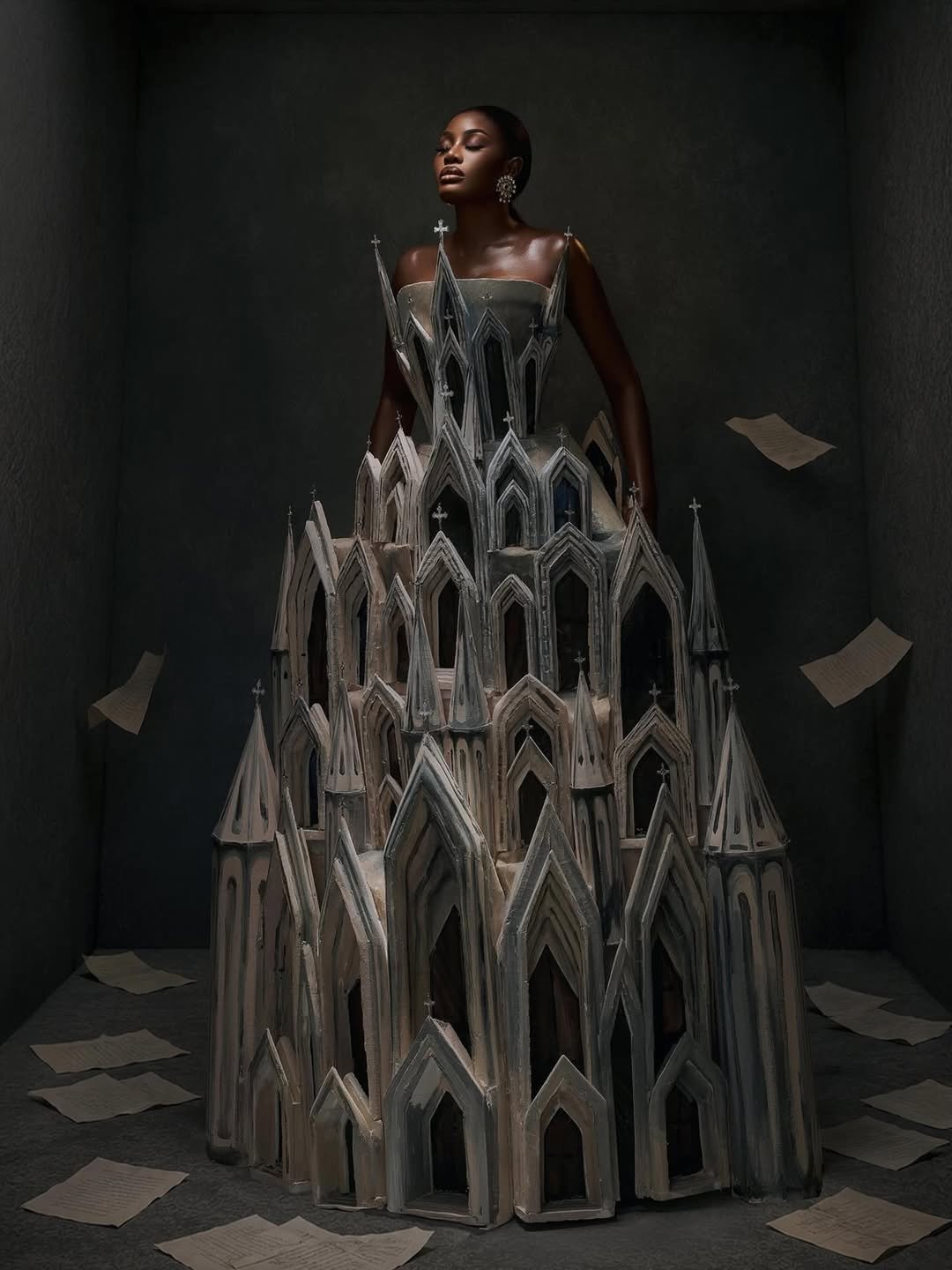
What she wore: Ghanaian actress Nana Akua Addo arrived in a breathtaking architectural ensemble inspired by Gothic cathedrals. The dramatic gown featured dozens of towering silver and grey spires with pointed arches and delicate cross details rising from the floor to her waist, creating the illusion that she was standing within a majestic cathedral. The upper part featured a sleek strapless bodice in a muted metallic tone, contrasting with the elaborate sculptural skirt.
The reaction: Fans and fashion enthusiasts quickly hailed the look as “Met Gala-worthy”. Addo has previously stated that she treats the Nigerian red carpet like the Met Gala, and she proved that again on Saturday night.
The Sculpted Gold: Nancy Isime
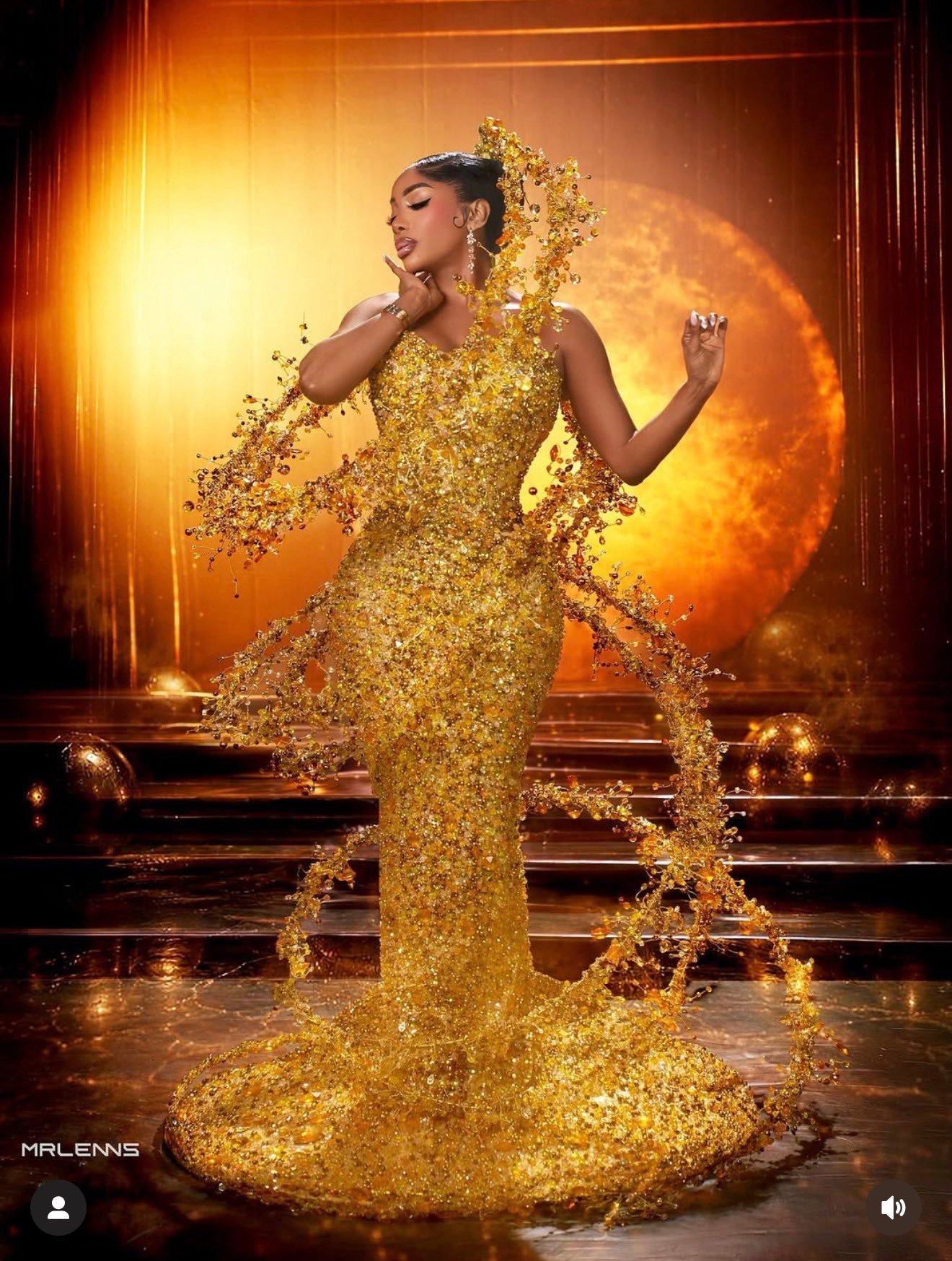
What she wore: Nancy Isime appeared in a sculpted gold dress with flowing cape details. The look quickly became one of the most shared fashion looks on social media, with the metallic sheen and dramatic silhouette drawing significant attention.
The Edo Royalty: Mercy Eke
What she wore: Mercy Eke dressed in Edo tribe-inspired attire with a custom outfit designed by Amy Aghomi. She wore a floor-length mermaid gown in bright red, which featured finely tailored 3D textured beadwork that mimicked traditional coral bead patterns, a flared skirt, and an asymmetrical shoulder design. Her accessories included a multi-layered Ivie necklace, bracelets, and matching rings, with her Okuku styled by Casablanca Glam.
The Men’s Bold Fashion Statements
The 2026 red carpet also saw Nigerian men moving definitively beyond traditional suiting:
- Lateef Adedimeji and Adebimpe Oyebade attracted attention with coordinated royal Yoruba attire featuring luxurious embroidery, beads, and regal accessories.
- Uzor Arukwe wore a black velvet tuxedo with gold embroidery accents and polished black shoes, creating one of the night’s most elegant male fashion appearances.
- Stan Nze captivated audiences in a regal Cultural Day outfit with a skirt-like appearance.
- Deyemi Okanlawon generated attention with his samurai-inspired ensemble.
- Tobi Bakre stunned in a lace agbada, blending traditional masculinity with delicate texture.
- Akin Faminu appeared in an opulent traditional ensemble inspired by Itsekiri royalty.
The Elegant Standouts: Other Notable Female Looks
- Linda Ejiofor wore a dazzling emerald green couture gown with crystal embellishments and a dramatic, flowing train, featuring subtle African-inspired detailing.
- Funke Akindele appeared in a fitted black couture dress decorated with silver stones and layered textures, described as classy and timeless.
- Uche Jombo channelled bridal chic in a white mermaid dress by designer Oga Okoro.
- KieKie (Bukunmi Adeaga-Ilori) dazzled in a richly embellished golden ensemble celebrated for its luxurious detailing.
- Osas Ighodaro arrived in a sculptural crimson gown by Veekee James featuring structured bands arranged in a spiral pattern around her body, with crystals lining each band and a towering geometric headpiece framing her face.
- Bola Ogunmola, Dorathy Bachor, Etinosa Idemudia, and Juliana Olayode also made appearances on the red carpet..
The Cultural Day Pre-Event (May 8)
Prior to the main awards ceremony, the AMVCA Cultural Night was held on Friday, May 8, at the Balmoral Convention Centre under the theme “Honoring Craft, Celebrating Culture“. This night focused on traditional attire reflecting African heritage, with celebrities leaning into deep regal colours like forest green, burnt orange, and crimson red, featuring Aso-Oke, intricate beadwork, and structural designs.
Actress and reality TV star Liquorose emerged as the winner of the Best Dressed Female category after stunning guests in a regal blue-orange outfit, while actor Prince Nelson Enwerem claimed the male category with his Benin royalty-inspired appearance. Both stars received a cash prize of N1 million.
Fashion as Business: The Deeper Conversation
Beyond the individual looks, two significant themes emerged from the 2026 red carpet:
- Celebrities using fashion to promote businesses — Queen Mercy Atang explicitly stated her bread dress was a marketing move. Designer Toyin Lawani doubled down: “Everyone wear your business”.
- High costs and pressure — The fashion arms race at the AMVCAs has become so intense that industry figures have begun questioning its sustainability. The pressure to appear in multi-million naira outfits is increasingly seen as a financial burden, with some suggesting the AMVCA risks becoming more about fashion than film.
Final Takeaways
The 2026 AMVCA red carpet demonstrated that African entertainment is now defined as much by what appears on the red carpet as what appears on screen. From bread loaves and wristwatches to cathedral spires and mermaid scales, this year’s fashion was characterized by:
- Excess and theatricality — Outfits required entourages to manage
- Cultural pride — Edo, Yoruba, Itsekiri, and other heritages were prominently displayed
- Men taking risks — Lace agbadas, velvet tuxedos with gold embroidery, and samurai-inspired looks
- Social media driving the conversation — Each major look became a meme, tweet, or headline within minutes.
As one report noted: “Fashion commentators described AMVCA 2026 as one of the strongest red carpet editions in recent years because of the blend of African culture and international fashion influence”.