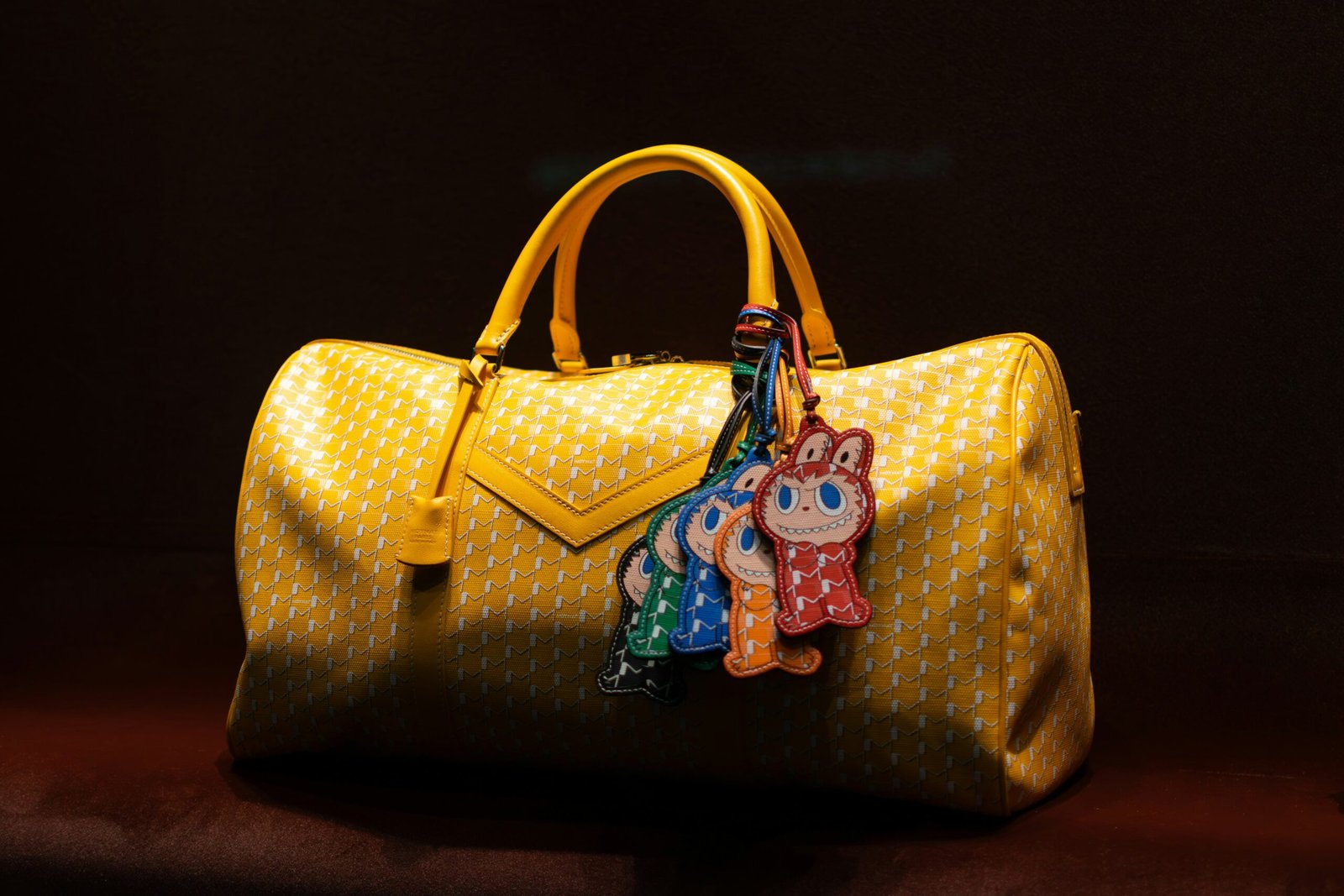

Two years ago, bag charms were a niche obsession for people who carried tiny toy dinosaurs in clear PVC totes. Now? Your best friend likely has one clipped to her work bag. Your CEO has one dangling from her briefcase. Even the woman selling fried yams at the bus stop has a miniature fluffy duck swinging from her handbag strap.
The bag charm is no longer a cute add-on. It has surprisingly become a full-blown industry.
What started as a playful way to personalize luxury handbags has exploded into a global trend with serious money behind it. From $50 leather book charms to $250,000 diamond-encrusted pieces, bag charms are everywhere in 2026.
Here is what you need to know.
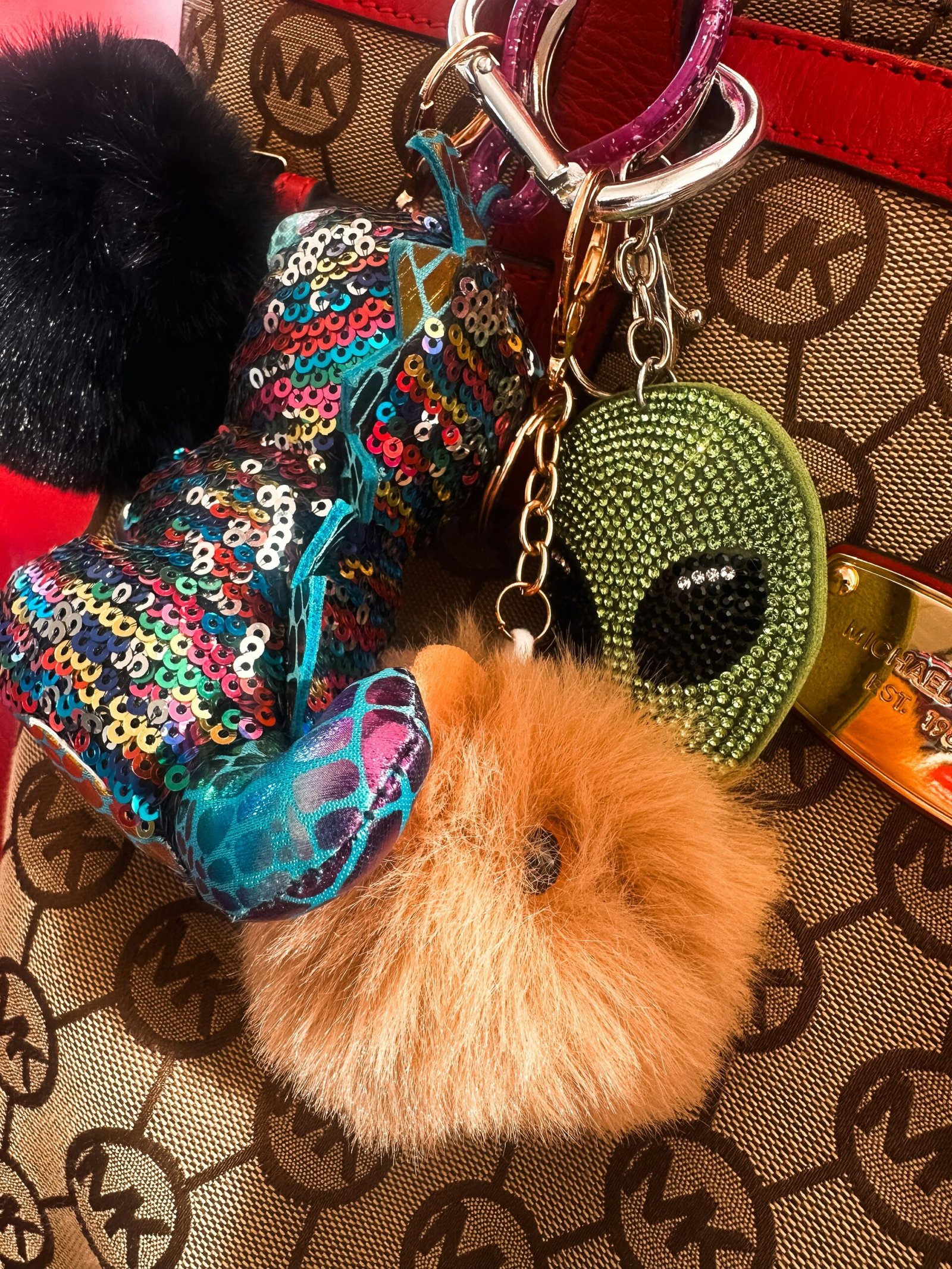
The Numbers Are Staggering
The data reveals that this is not a niche trend anymore.
Global search interest for bag charms has surged. Google Trends reported a 168% increase in searches, while Pinterest saw a 700% spike. On JOOR, a fashion wholesale platform, sales of bag charms grew to 12 times their previous levels.
In China alone, live-streaming e-commerce platforms sold over $400 million worth of bag charms in 2025, with year-on-year growth exceeding 154%. In early 2026, plush toy keychains on Douyin (China’s TikTok) saw sales jump by 114%.
Across Southeast Asia, particularly Vietnam, the trend is accelerating rapidly. Vietnam’s young population—over 50% under 35 years old—is driving demand for personalized fashion accessories.
The Entry Level: Affordable and Viral
At the lower end of the market, bag charms have become a clever way for brands to drive repeat purchases.
Coach launched a collection of book-themed bag charms in February 2026. Priced at $95 each, the miniature replicas of classics like Jane Austen’s Sense and Sensibility and Maya Angelou’s I Know Why the Caged Bird Sings sold out almost immediately.
The charms are reportedly readable—actual tiny pages inside—and Coach described them as inspired by Gen Z’s embrace of long-form storytelling as “a refuge” from digital overload.
According to Coach CEO Todd Kahn, the economics of bag charms are “really compelling.” They shorten the purchase cycle to just a few weeks, as customers return to personalize their bags with new pieces.
GANNI also entered the space, promoting playful printed keyrings as part of its Spring/Summer 2026 accessories lineup.
The Luxury End: $250,000 Bag Charms
While affordable charms drive volume, the real money is at the top.
A new category has emerged at the intersection of jewellery and accessories: fine jewellery designed specifically for handbags. These are not mass-produced trinkets. They are high jewellery commissions, often clipped onto Hermès Birkins and Kellys.
Ashna Mehta, a Dubai-based designer who comes from a family with over 60 years in the diamond trade, leads this space. Her brand, Bag Bijoux, creates diamond-encrusted bag charms that typically start around $5,000 and can climb to $250,000.
“The most expensive piece I’ve done that I can talk about is around a quarter of a million dollars,” Mehta told Glossy. “And there are others that go even higher”.
Mehta’s designs gained global attention after appearing at the Anant Ambani wedding in 2024—the multi-month celebration hosted by one of India’s wealthiest families. Diamond-set initials clipped onto handbags circulated among ultra-wealthy guests, including Mark Zuckerberg, Kim Kardashian and Bill Gates.
Even at the luxury level, personalisation drives demand. “A lot of people come to me with very specific ideas,” Mehta said. “It could be their initials, their dog, something from their culture or something that represents their life”.
For ultra-wealthy consumers in the Middle East—a region that accounts for roughly 6–8% of global luxury demand—these pieces have become a status symbol. Despite regional volatility, spending at the very top end has remained resilient.
Hermès itself sells leather bag charms like the Rodeo Pegase PM, which retails for around $800.
How to Style Bag Charms in 2026
The trend has clear styling rules, thanks largely to tastemakers like Hailey Bieber.
Bieber has been spotted carrying oversized Chanel totes and sling bags adorned with gold charms and metallic hardware. The look pairs bold bags with pared-down basics—cargo pants, hoodies, neutral winter coats.
Key styling tips from Elle India include:
- Go big with bags: Oversized silhouettes dominate 2026. The roomier the bag, the better the charm displays.
- Let jewellery act as hardware: Chunky clasps, gold charms, and fine metal details function as the jewellery for your outfit.
- Keep the rest minimal: Pair statement bag charms with neutral ensembles to let the accessory shine.
Soft, unstructured bags are also trending for Fall/Winter 2026. These pliable leather bags—often carried crushed under the arm—showcase material quality and create an abstract, modernist silhouette.
African Perspectives: Bag Charms as Cultural Objects
The bag charm trend has also found unique expression in African fashion.
Hertunba’s Akaorụ Collection 2026, released in April 2026, centres on the IGI Bag—a sculptural handbag carved from upcycled mahogany by master wood carvers. The bag features Nsibidi-inspired markings and takes 14 working days to produce.
While not a charm in the traditional sense, the IGI Bag embodies the same philosophy: accessories as personal, meaningful objects rather than disposable fashion.
A more unconventional example comes from the streets of Africa, where Chinese takeaway bags—bright red and yellow from brands like “Wanglaoji” and “Nao Baijin”—have been repurposed as everyday carryalls. Durable and waterproof, these discarded delivery bags have become a practical fashion item, selling for around $1 each.
Why Bag Charms Matter Now
The rise of bag charms reflects a broader shift in consumer behaviour.
According to Bernstein analyst Luca Solca, the luxury market is increasingly shaped by a “K-shaped economy”—affluent consumers continue to spend on high-end products while lower-income shoppers pull back. Bag charms, available at both $50 and $250,000, span the entire spectrum.
The trend is also about personalization. In an era of mass production, consumers want something that feels uniquely theirs. “Everyone wants something that feels like theirs,” Mehta said. “When you combine that with high jewellery, it becomes very special”.
Richemont, which owns Cartier and Van Cleef & Arpels, pointed in its latest earnings call to jewellery’s ability to appeal across both aspirational and ultra-wealthy consumers as a long-term advantage.
The Bottom Line
Bag charms are not going away. From $95 miniature books to $250,000 diamond initials, this accessory category has proven its commercial power.
For the average shopper, the entry point is lower than ever—and the styling inspiration is everywhere, from Hailey Bieber’s Instagram to the Coach website.
For the ultra-wealthy, bag charms have become a new canvas for high jewellery commissions, blending personal storytelling with luxury craftsmanship.
And in Nigeria and across Africa, the trend takes on unique forms—from hand-carved wooden bags to repurposed takeaway totes.
The tiny accessory is having a very big moment. Would you be joining or have you already hopped on the trend?