
New research has uncovered evidence suggesting that a British trading company linked to some of the largest recipients of slavery compensation continued the illegal trafficking of Africans years after Britain abolished slavery.
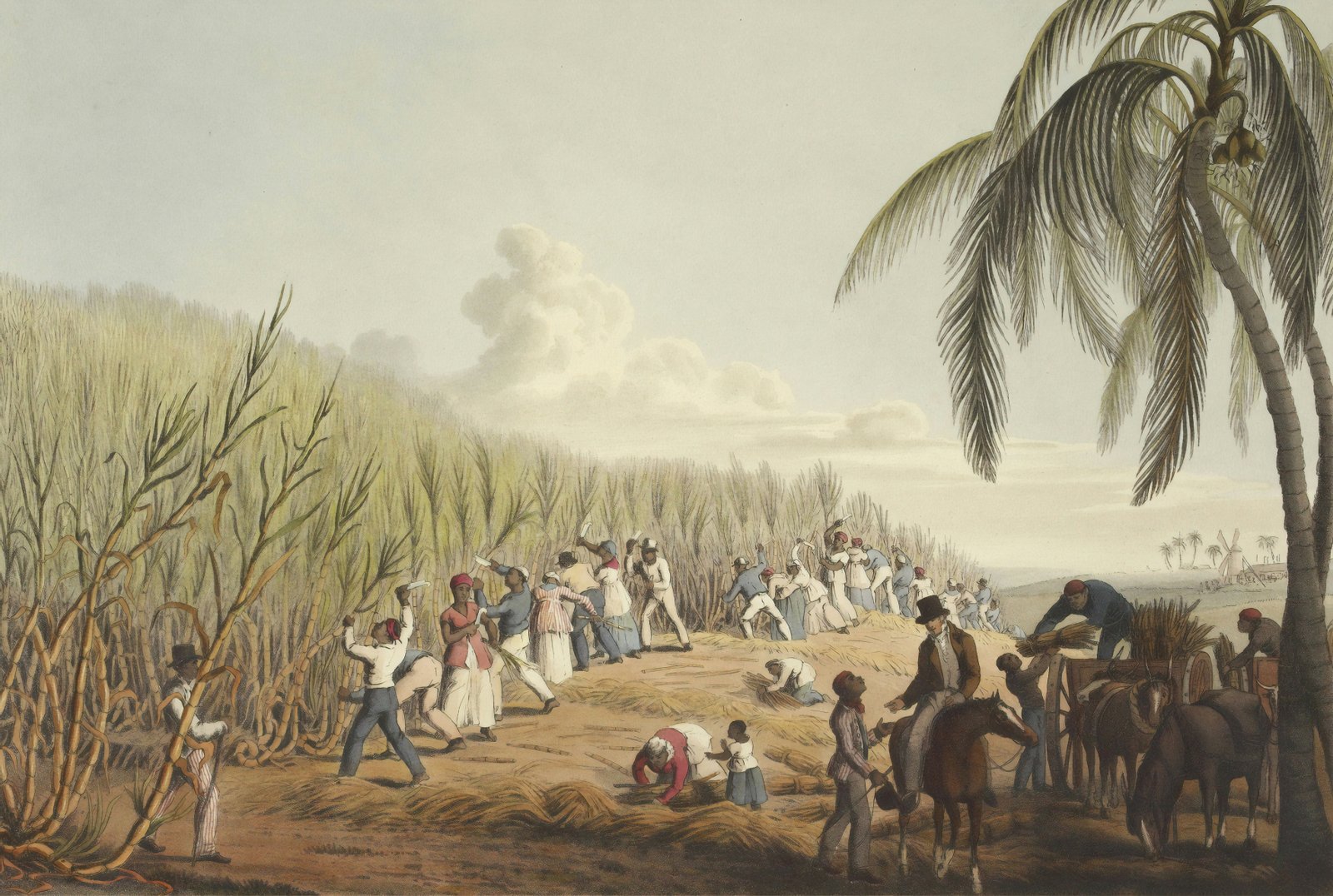
The findings centre on Sandbach, Tinne and Company, a Liverpool-based firm with strong connections to the Sandbach, Tinne and Gladstone families, who were major figures in the sugar trade in Demerara, present-day Guyana.
The discovery is documented in Searching for My Slave Roots, a book by researcher Malik Al Nasir, who has been investigating his family history. His research has now inspired a new project, Overwriting-Underwriting, which seeks to examine the financial networks that supported and profited from enslavement.
Britain abolished the transatlantic slave trade in its territories in 1807 before passing the Slavery Abolition Act in 1833, which ended slavery across most of the British Empire.
However, an 1847 letter sent to Sandbach Tinne’s Liverpool office by Peter Miller Watson, who oversaw the company’s interests in Demerara, described a vessel from the firm’s fleet arriving with what he called a “cargo of negroes”.
The ship, identified as the Parker, was reportedly carrying “115 adult males, 86 adult females, 82 under 14 years, and 41 under 4 years”.
Watson also wrote: “There have been only three casualties during the passage – 1 man and 2 children – which Captain R. says may be attributed to the wretched state in which they had lived ashore.”
Al Nasir argued that the language used in the letter strongly indicates that the Africans were being illegally trafficked rather than transported as indentured workers or liberated Africans.
“Slavery had been abolished, so how do we know the people on the Parker weren’t indentured, or Africans liberated by the Royal Navy? Firstly, Watson specifically refers to them as cargo, and not passengers, when liberated Africans were not regarded as cargo, enslaved people were called cargo,” he said.
He added: “In referring to the ‘wretched state’ in which they had lived ashore, he’s saying they were shipped from land and are the architects of their own condition – if they had been previously enslaved blame would have been on their former masters, and they would not have been bought if they were sick. When [Watson] talks about casualties, he’s attributing the deaths as a loss of property. By process of deduction, we can see these are people illegally trafficked from Africa.”
Watson was a distant relative of former British Prime Minister William Gladstone and the father of Andrew Watson, who became the first Black international footballer after captaining Scotland in the 1880s.
Sandbach Tinne, which ceased operations in 1975, was controlled by the Sandbach and Tinne families, who, alongside members of the Gladstone family and other associates, played major roles in the Demerara sugar industry.
By the time the 1847 letter was written, Sandbach Tinne and companies connected to it had already benefited from compensation payments made to former enslavers following abolition.
Although Samuel Sandbach left the partnership in 1833, his son William Robertson Sandbach and son-in-law Charles Stuart Parker Jr were among the firm’s principal shareholders in 1847.
British taxpayers only finished repaying the debt used to fund compensation payments to enslavers in 2015.
“John Gladstone, the father of William Gladstone who owned plantations in Guyana and Jamaica, got the biggest single individual payout, while Sandbach Tinne got the second largest on aggregate – both were among architects of the compensation scheme,” Al Nasir said.
The research also highlights the wider challenges faced by efforts to suppress the illegal slave trade. Britain’s Royal Navy West Africa Squadron began intercepting suspected slave ships in 1808, but historical estimates suggest that fewer than 10 per cent of vessels involved in trafficking were successfully stopped.
An 1847 missionary account cited by Al Nasir also described continued unregulated trafficking “south of the line”, referring to areas below the equator, including parts of Angola where traffickers sought to evade British naval patrols.
Even Africans rescued by British forces faced difficult circumstances, with some subjected to military recruitment and unpaid labour through systems including apprenticeship and indenture.
The Overwriting-Underwriting project will launch at the Museum of Liverpool on Sunday, with Jamaican academic Professor Verene Shepherd delivering the keynote address.
The initiative, involving Al Nasir and University of Liverpool researcher Lucy Moynihan, is being developed as a pilot for the Connector project, a National Museums Liverpool initiative examining the continuing legacies of transatlantic slavery.
The project is supported by a £1 million grant from the Lloyd’s Register Foundation. Lloyd’s Register apologised last year for its historical links to transatlantic slavery, while descendants of both the Sandbach and Gladstone families have also apologised for their ancestors’ involvement in slavery.