For years, Cuba has weathered sanctions, blackouts, and economic isolation. The assumption was simple: the regime would survive, as it always had, by tightening its grip and blaming Washington for every shortage.
Now, Marco Rubio is testing whether that assumption still holds.
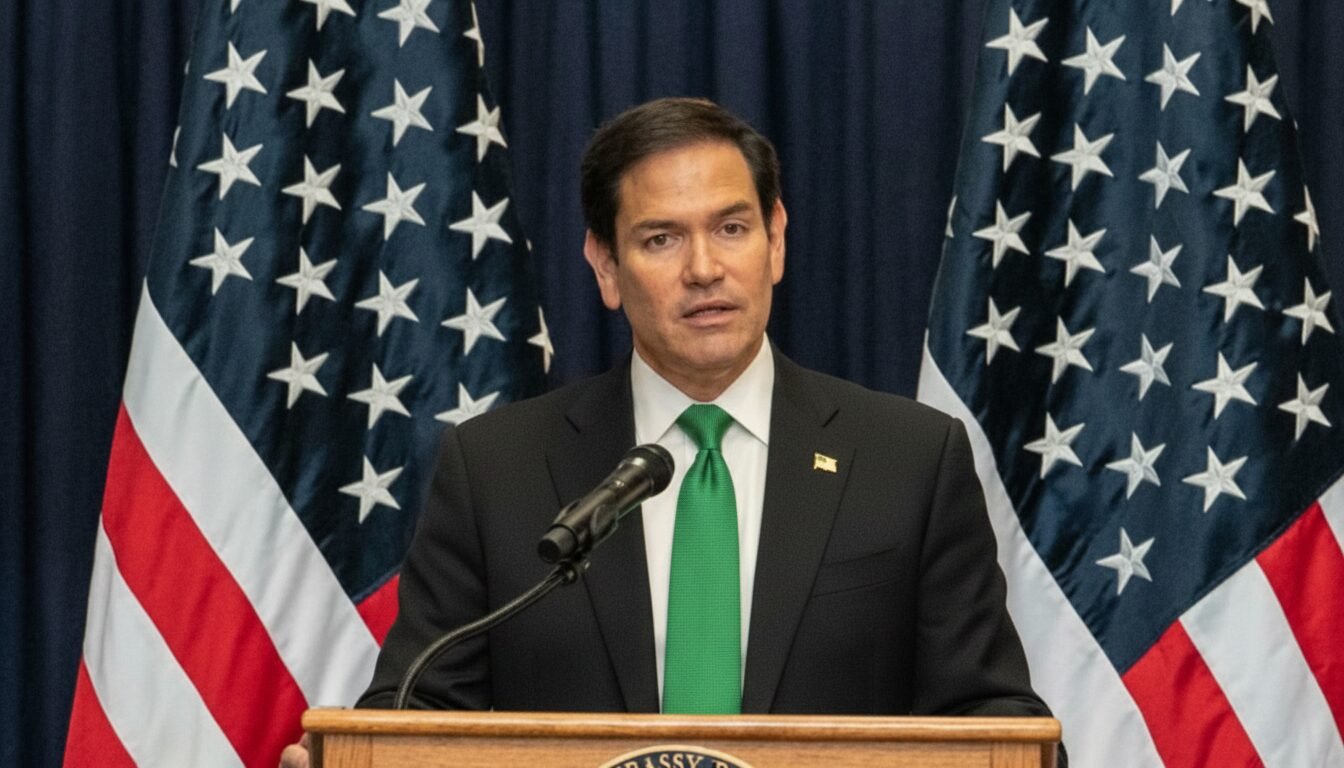
Secretary of State Marco Rubio announced new sanctions Thursday on Cuba’s military-industrial enterprise, its leadership, and a state-owned natural resources company. The move is the latest in a sustained campaign to strangle the Cuban economy and force political change on the island.
The question is no longer whether the Trump administration wants regime change in Cuba. It has made that clear. The question is whether these new sanctions will finally achieve what decades of U.S. policy have not.
The New Targets
Rubio’s sanctions target three specific areas. First, Cuba’s military-industrial enterprise, which controls much of the country’s economy and generates hard currency for the regime. Second, the island’s leadership — a direct hit on the individuals who make decisions in Havana. Third, a state-owned natural resources company that provides critical revenue.
By going after these entities, Washington is aiming directly at the financial arteries that keep Cuba’s leadership alive. The strategy is surgical in theory. But the patient may not survive the operation.
The new sanctions show the Trump administration is pushing forward for regime change in Cuba — a long-held goal of Rubio and President Trump. Both men have made no secret of their desire to see the end of communist rule in Havana. And with these sanctions, they are translating that desire into policy.
The Cuban Reality
Cuba is already in crisis. The island is suffering from severe shortages of food, medicine, and fuel. Blackouts are routine. Inflation is spiraling. And emigration is at record levels, with thousands of Cubans risking dangerous journeys to reach the United States.
Each new round of U.S. sanctions deepens the crisis. The regime has less money to import food, less fuel to run power plants, and fewer resources to pay security forces. The humanitarian situation worsens. And the pressure on ordinary Cubans — already unbearable — grows heavier.
The Trump administration sees the sanctions as leverage. The goal is not just punishment but eventual capitulation. Regime change, in their view, is not a slogan. It is a strategy.
The Rubio Factor
Marco Rubio has waited years for this moment. A Cuban-American senator who has spent his political career advocating for a harder line on Havana, he is now in a position to implement the policies he has long championed. As Secretary of State, he has the authority — and the president’s backing — to turn up the heat.
Whether the strategy will succeed remains an open question. Cuba’s regime has survived for more than six decades. It has outlasted ten U.S. presidents, a Soviet collapse, and an economic embargo that has cost the island billions. The Castro brothers are gone, but the system they built remains.
The Trump administration is betting that enough pressure, applied at the right time, will finally break the regime. Critics argue that the only thing breaking is the Cuban people — and that regime change, if it comes, will not look like Washington imagines.
The Bottom Line
Secretary of State Marco Rubio announced new sanctions Thursday on Cuba’s military-industrial enterprise, its leadership, and a state-owned natural resources company. The move shows the Trump administration is pushing forward for regime change in Cuba — a long-held goal of Rubio and President Trump.
Cuba is already suffering from severe shortages of food, medicine, and fuel. Blackouts are routine. Inflation is spiraling. Emigration is at record levels. The new sanctions will deepen the crisis.
The question is no longer theoretical: will economic pressure finally topple the Cuban regime? Or will it simply make life more unbearable for ordinary Cubans — while the leadership in Havana waits for the next election to change Washington’s course?