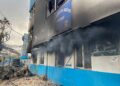

Two drones came down near Dubai International Airport on Wednesday, injuring four people, as the Iran conflict entered its 12th day with attacks on Gulf infrastructure showing no signs of abating.
“Authorities confirm that two drones fell in the vicinity of Dubai International Airport (DXB) a short while ago,” Dubai’s media office posted on X, adding that air traffic is operating as normal.
The attack resulted in minor injuries to two Ghanaian nationals and one Bangladeshi national, as well as moderate injuries to one Indian national, officials said.

The World’s Busiest Airport Under Threat
Dubai International is the world’s busiest airport for international passengers, handling nearly 100 million travelers last year. It serves as the global hub for Emirates airline, connecting East and West through one of the most congested airspaces on earth.
Wednesday’s drone strike marks a renewed hit to DXB, which has already suffered significant disruption since the crisis began. UAE airlines like Dubai’s Emirates and Abu Dhabi’s Etihad have resumed some flights since February 28, but they are still operating below capacity.
The outbreak of the U.S.-Israel war against Iran has led to flight cancellations, rescheduling, and rerouting for airlines across the globe, as most airspaces in the Middle East, including Qatar, remain shut over missile and drone concerns.
The Broader Crisis
The attack on Dubai comes as the conflict continues to spread across the Gulf region. Iran has launched waves of missiles and drones at U.S. assets and critical infrastructure in multiple countries since the war began:
· Kuwait: An 11-year-old girl was killed by falling shrapnel. Nine other people — six U.S. service personnel, two Kuwaiti army soldiers, and one other civilian — have died in Kuwait since the conflict began.
· Qatar: Explosions were reported in Doha, with Qatar’s defense ministry confirming it “successfully countered a number of attacks” targeting the country’s territory.
· Bahrain: Salman Port was hit by an Iranian missile.
· Saudi Arabia: The Ras Tanura refinery, the kingdom’s largest oil facility, was targeted by drones.
· Turkey: NATO air and missile defense systems intercepted an Iranian ballistic missile heading toward Turkish airspace.
· Cyprus: A drone struck the runway at RAF Akrotiri, the British air base on the island.
The Energy Crisis
The conflict has also triggered an energy crisis that has sent fuel prices soaring. The Strait of Hormuz remains effectively closed to shipping, cutting off about a fifth of global oil supplies. Qatar’s energy minister has warned that all Gulf oil and gas production could stop within days, potentially bringing down the world economy.
What Comes Next
For now, Dubai International remains open. Flights are operating. Passengers are moving. But the message from Wednesday’s drone strike is unmistakable: no corner of the Gulf is safe.
The world’s busiest airport is now a target. The question is how long authorities can keep saying “operating as normal” before normal ceases to exist.