After leaving Haiti in 2019, Petit Frere travelled from Brazil and made the difficult trek through the dense jungle in Panama to reach Mexico, hoping to eventually enter the United States and join relatives in Florida. However, she later discovered that the American Dream she had pursued was not within reach, while Mexico offered her a chance to start over.
The name of her restaurant reflects a concept in Haitian culture that represents community, connection and a place where people feel accepted. Inside, framed messages displayed in Spanish, English and Creole highlight that the venue is more than a place to eat — alongside serving traditional Haitian meals such as fish with plantain, rice and beans, it also creates a welcoming space for people to feel at home.
“Every dish tells a story, every detail connects cultures,” one sign says. “We aim to promote an authentic cultural exchanges between two peoples with similar historical roots yet where Haitian identity proudly blossoms on Mexican soil.”
Within just over five years in Tijuana, Petit Frere has grown a flourishing business, become fluent in Spanish, and is now studying social work at university level.
She also celebrated a major family milestone, welcoming her first grandchild, Alexca, who represents the first generation of her family born in Mexico.
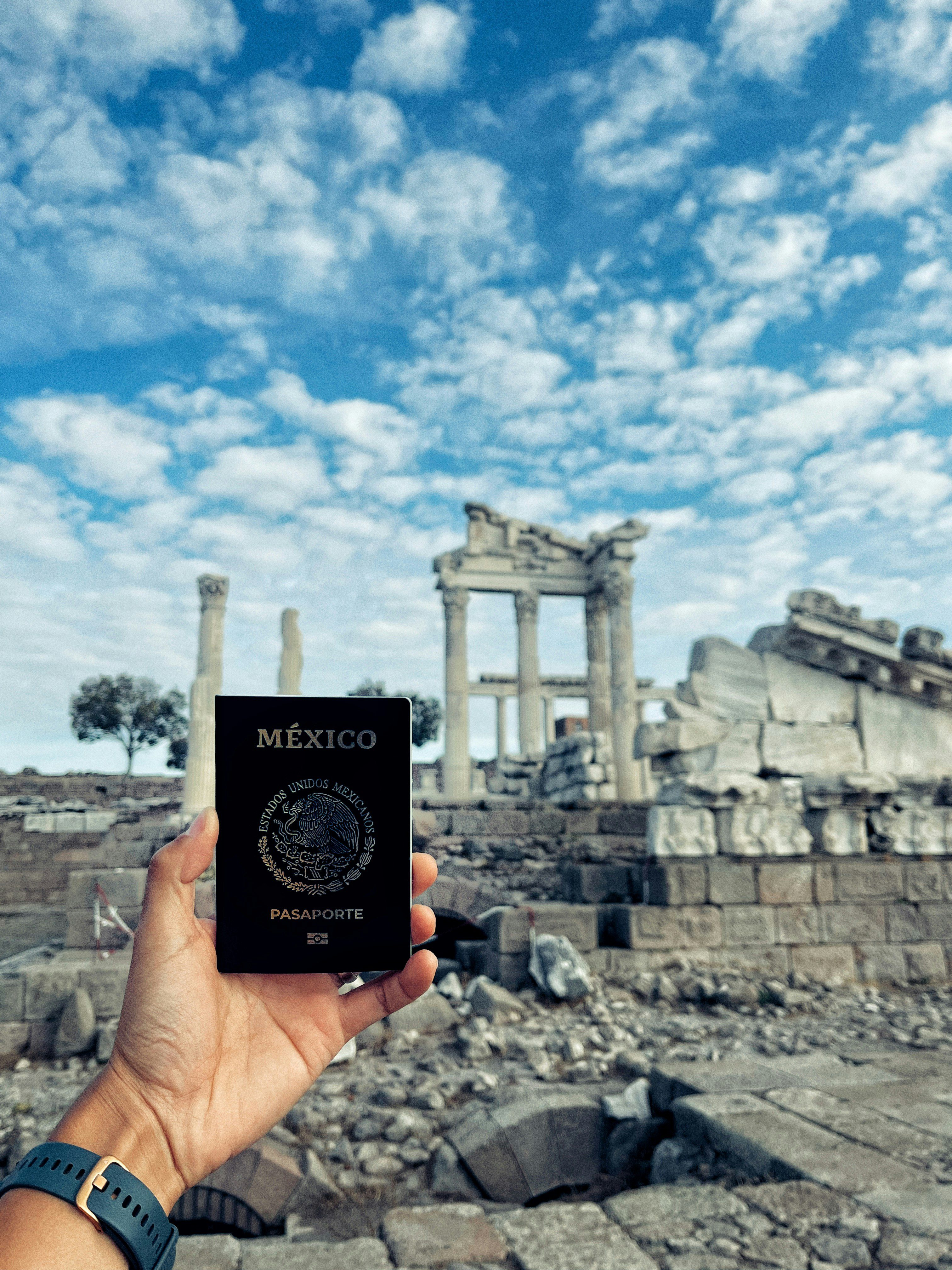
There are no official statistics showing how many children born to noncitizens have obtained Mexican citizenship by birth. However, tens of thousands of Haitians are currently residing in Mexico.
In 2021, during a rise in Haitian migration to Mexico, the International Organization for Migration (IOM) under the United Nations reported that at least 10% of Haitian women arriving in the country were pregnant.
In the United States, the principle of birthright citizenship was закрепed after the Civil War with the adoption of the 14th Amendment to the Constitution, a measure intended in part to ensure that formerly enslaved people were recognised as citizens.
The scope of the rule was broadened in the late 19th century when the Supreme Court determined that almost all individuals born on U.S. soil are citizens, regardless of their parents’ immigration status.
Many legal historians trace the origins of the practice back to the 17th and 18th centuries, when European monarchies promoted settlement in the growing American colonies. At the same time, colonists often insisted that children born abroad should still be recognised as citizens of their European homelands.
“So even as colonial borders changed, the idea persisted that citizenship was tied to being born within the ruler’s territory,” said César Cuauhtémoc García Hernández. “But the legal connection between European countries and their settlers stayed strong through the assurance of birthright citizenship.”
A policy change in 2007 saw the Dominican Electoral Council direct that children born to parents without legal status should not be granted citizenship.
Six years afterward, a court in the Dominican Republic extended the ruling’s effect backwards, applying it retroactively to 1929.
More than ten years later, an estimated 130,000 people were still left without citizenship, even after a 2014 law was introduced to address the court’s ruling following widespread international criticism, according to the Center for Migration Studies of New York. The report also notes that the effects continue to ripple forward, leaving the next generation at risk of deportation.
Petit Frere was born in Saint Martin, where citizenship is not automatically granted at birth. When she was six years old, she and her mother, who is Haitian, were deported back to Haiti.
Petit Frere had originally left Haiti in search of a better future. However, years later, she was saddened when her teenage daughter travelled from Haiti to join her in Tijuana and arrived already about five months pregnant. Having experienced teen motherhood herself, she had hoped her daughter’s journey would follow a very different path.
However, Alexca, a bright and playful toddler who loves to laugh and run around, has completely melted her grandmother’s heart. Petit Frere expressed appreciation that her granddaughter was born in Mexico instead of Haiti, where escalating gang violence has reportedly displaced over one in ten people.
It would also make international travel much easier. In comparison, a Haitian passport is known for its restrictions, with very few countries offering visa-free entry to its holders.
“As a Mexican citizen, she will have more opportunities,” Petit Frere said.
That’s also true for her three nieces who were born in Brazil and made automatic citizens there, she said.
Petit Frere explained that she and her daughter already held permanent residency in Mexico before her granddaughter was born. However, she noted that this is not the case for many other parents within Tijuana’s Haitian community.
Under Mexican law, parents of children who acquire citizenship by birth are eligible to apply for permanent residency, a pathway that does not automatically extend to all migrant families.
“There are a lot of children in Tijuana who are 6, 7, 8 years old now who are Mexican and their parents who are Haitian did not have legal status but now have become permanent residents because their children were born here,” she said.
Petit Frere has already begun the process of applying for Mexican citizenship, saying it would help her grow and expand her business further.
Petit Frere also works as a community organiser with the Haitian Bridge Alliance, where she supports and advocates for Haitian migrants. She added that she hopes to further her education by studying international migration, potentially at a university in the United States.
“The children of immigrants are proving to be the most outstanding in the world,” she said. Trump’s efforts to limit birthright citizenship “could just be out of jealousy.”