
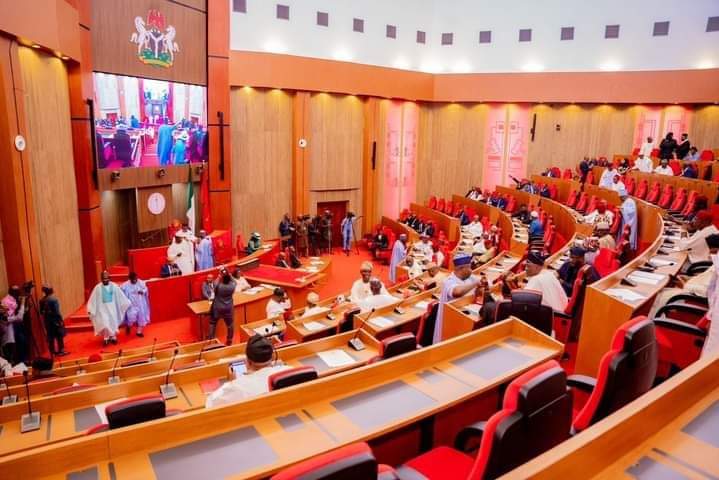
In a swift and unanimous vote, the Nigerian Senate has granted President Bola Tinubu sweeping authority to deploy troops to the Republic of Benin, officially to restore stability after a failed weekend coup. But behind the diplomatic language of “regional support” and “constitutional order” lies a far more urgent and grim mission: to stop a shadow war from exploding across West Africa.
The legislative green light, announced by Senate President Godswill Akpabio on Tuesday, grants formal backing for a Nigerian-led ECOWAS standby force to enter Benin. While framed as a neighborly duty under the principle that “an injury to one is an injury to all,” security analysts say the rapid deployment is a pre-emptive strike against a far greater danger than a single, contained mutiny.
The Official Story: Containing a Coup
The public catalyst was Sunday’s dramatic, if short-lived, attempt by a faction calling itself the “Military Committee for Refoundation” to overthrow President Patrice Talon. Although loyalist forces quickly reclaimed control, the brazen television announcement sent shockwaves through a region already buckling under a “coup epidemic.”
President Tinubu’s urgent request to the Senate warned that the situation required “urgent external intervention to prevent further deterioration.” ECOWAS, with Nigeria at the helm, has now ordered an immediate multinational force comprising troops from Nigeria, Sierra Leone, Côte d’Ivoire, and Ghana to “preserve constitutional order.”
The Real Mission: A Firewall Against Chaos
Officials are calling it a stabilization operation. Insiders describe it as building a firewall. The real assignment for Nigerian boots on the ground is not to fight a war that’s already over, but to prevent the next one from starting.
Their core objectives, according to security briefings, are to:
1. Deter a Resurgence: Physically separate disloyal military factions from key infrastructure and armories to prevent a second, more violent attempt.
2.Secure a Corridor of Instability: Benin’s northern borders touch Niger and Burkina Faso—both ruled by military juntas that have expelled French forces and welcomed Russian Wagner mercenaries. The mission is to seal this porous frontier from becoming a pipeline for foreign militants, weapons, or ideological support that could reignite the coup.
3.Send a Unmistakable Message: To the junta leaders in Niger, Mali, and Burkina Faso—who formed their own “Alliance of Sahel States” after leaving ECOWAS—this deployment is a direct signal. It demonstrates that ECOWAS, led by Nigeria, still has the political will and military capability to defend member states, drawing a red line against further contagion.
A High-Stakes Gambit for a Weary Giant
For Nigeria, this is a risky but necessary projection of power. As West Africa’s traditional hegemon and current ECOWAS chair, its credibility is on the line. A successful operation secures a critical ally, stabilizes a volatile border, and reasserts a fading regional authority. A failure—or an incident that turns the Beninese public against foreign troops—could be catastrophic, emboldening adversaries and stretching Nigeria’s already strained military.
The Senate has approved the deployment. The troops are moving. Their public mandate is peacekeeping. Their unspoken orders are far more critical: to stop a single spark in Cotonou from igniting the entire region.