It was supposed to be a blockbuster. A $1 million ticket to the American dream. A “green card on steroids.” The Trump administration predicted a stampede of wealthy foreigners, a $1 trillion revenue windfall, and a major step toward balancing the federal budget.
So far, exactly one person has bought it.
President Donald Trump’s “gold card” visa, where a foreigner can shell out at least $1 million to legally live and work in the US, has been approved for one person, Commerce Secretary Howard Lutnick said Thursday. That appears to fall a bit short of earlier claims.
After the program launched in December, Lutnick said that the government had sold $1.3 billion “worth” in just several days, as Trump stood by holding up the gilded ticket and called it “essentially the green card on steroids.” At $1 million per card, $1.3 billion would imply approximately 1,300 buyers. The reality is one. Lutnick did not address the apparent discrepancy in an exchange with a congresswoman at Thursday’s committee hearing.
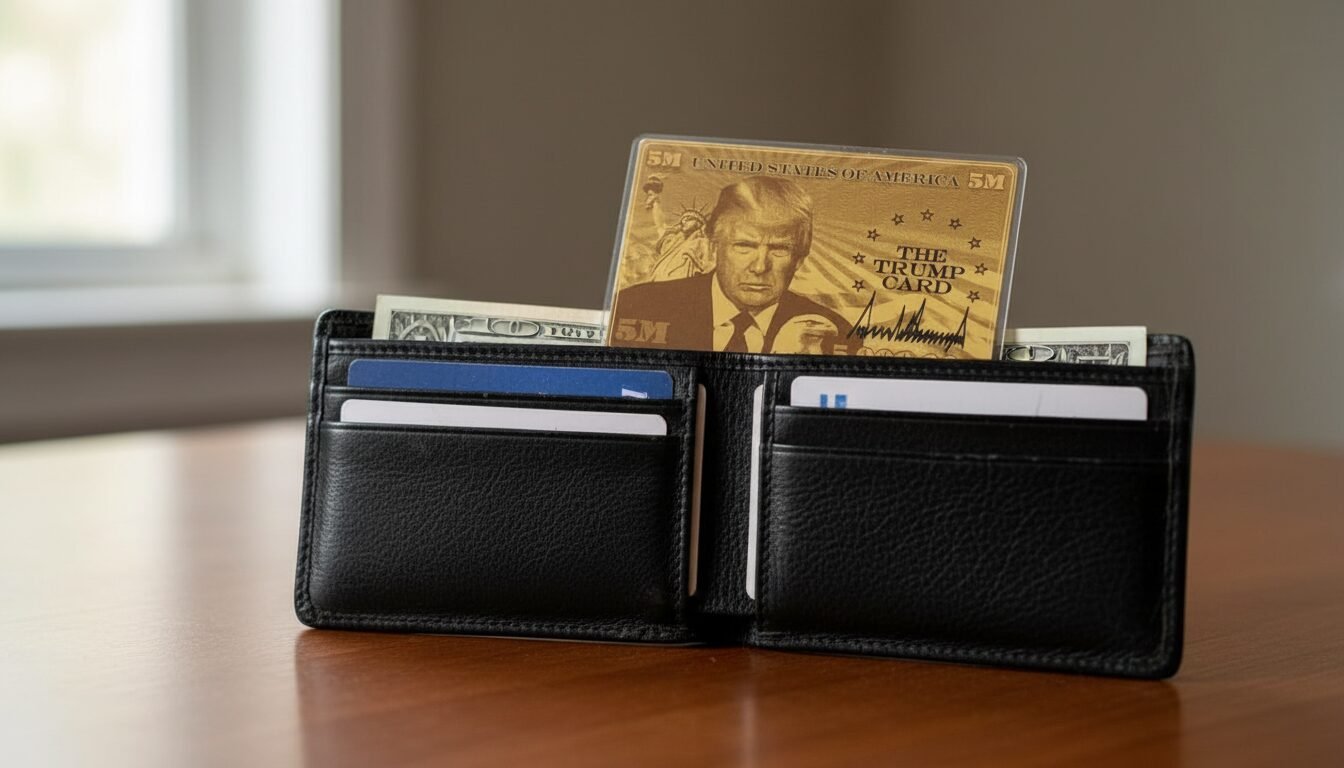
The Hype vs. The Reality
Trump pushed the idea last year, initially suggesting a cost of $5 million, and arguing that it would entice foreign talent to US shores and fill out federal coffers. The program is meant to replace the EB-5 program, a decades-old initiative that offered US visas to people who invested about $1 million in a company with at least 10 employees.
The commerce secretary noted that each applicant pays a $15,000 fee on top of their million dollars, which allows for “rigorous vetting” of those applying to the program that eventually opens a path to US citizenship. The program also allows corporations to spend $2 million for a foreign-born employee, along with a 1 percent annual maintenance fee.
It boasts a glitzy government website with the phrase “Unlock life in America” above a depiction of a gold card featuring Trump’s stern visage alongside a bald eagle, the Statue of Liberty, and his squiggled signature. The website also touts the upcoming $5 million “Trump Platinum Card,” which offers up to 270 days in America without being taxed on non-US income.
But for now, the gold card has barely moved off the shelf.
The Optimistic Spin
Though only one person has been approved, “there are hundreds in the queue that they are going through,” said Lutnick, appearing pleased with the program’s results. “They’ve just set it up, and they wanted to make sure they did it perfectly.”
A year ago, Lutnick said at a cabinet meeting that the gold card would raise $1 trillion in revenue and help “balance the budget.” For context, the publicly held debt is $31.3 trillion, and outside projections by the Committee for a Responsible Federal Budget estimate that this fiscal year’s annual budget deficit will be roughly $2 trillion. A program with one paying customer is not going to move those numbers.
When asked how the proceeds will be spent, Lutnick said: “That will be determined by the administration, and its terms are for the betterment of the United States of America.” Currently, with only $1 million in proceeds, the administration has little to determine.
The Broader Context
While Trump has built a presidential identity partially around deporting immigrants without legal status, he has repeatedly supported skilled immigration to the US, which the gold card program could facilitate. The idea is relatively common around the world, with dozens of countries offering versions of “golden visas” to wealthy individuals, including the United Kingdom, Spain, Greece, Malta, Australia, Canada, and Italy.
But those programs have track records. Some have been scaled back or eliminated after criticism that they inflated real estate prices and offered easy citizenship to questionable individuals. Trump’s version is brand new. And so far, the world’s wealthy are not exactly lining up.
The $5 million “Trump Platinum Card” website may attract some curiosity. But the gold card’s launch numbers suggest that even at the $1 million price point, demand is tepid. Either the marketing has not reached the right audience, or wealthy foreigners are not as eager to pay for US residency as the administration assumed.
The Bottom Line
Trump’s $1 million “gold card” visa has been approved for exactly one person so far, Commerce Secretary Howard Lutnick confirmed Thursday. The program launched in December with great fanfare, including Trump holding up a gilded ticket and calling it a “green card on steroids.” Lutnick had previously claimed $1.3 billion in sales, implying approximately 1,300 buyers. He did not explain the discrepancy at a congressional hearing.
Each applicant pays a $15,000 fee on top of the $1 million, which allows for vetting and eventually a path to citizenship. Lutnick says “hundreds are in the queue,” but only one has been approved. The program’s website also touts a future $5 million “Trump Platinum Card.” The gold card was supposed to raise $1 trillion and help balance the budget. So far, it has raised $1 million.
The green card on steroids is still waiting for its first real customers.