
A clip of Zendaya wearing an afro wig to an event recently resurfaced, and the internet had a lot to say about that. As usual, the conversation revealed more about us than it did about her.
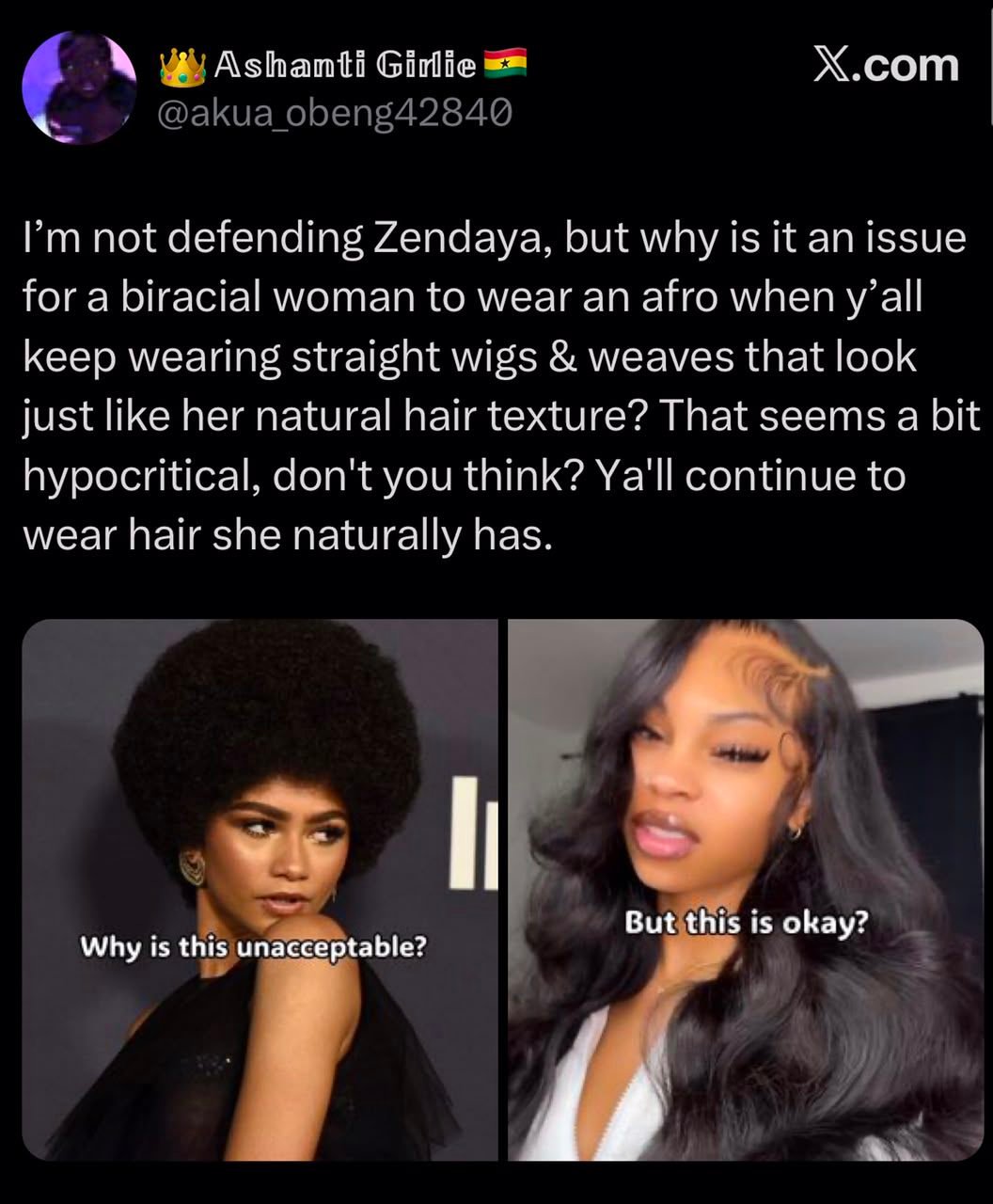
A quote tweet post on X from August 24, 2026, captures the central question perfectly:
“I’m not defending Zendaya, but why is it an issue for a biracial woman to wear an afro when y’all keep wearing straight wigs & weaves that look just like her natural hair texture? That seems a bit hypocritical, don’t you think? Ya’ll continue to wear hair she naturally has.”
This backlash, however, is not new, as Zendaya has been here before.
The History: Zendaya and Hair Controversy
In 2015, an 18-year-old Zendaya attended the Oscars with her hair in faux locs. Giuliana Rancic, then co-host of E!’s Fashion Police, remarked that Zendaya looked like she “smells like patchouli oil or weed.”
The comment sparked immediate backlash. Zendaya responded on Instagram:
“There is a fine line between what is funny and disrespectful. To say that an 18-year-old young woman with locs must smell of patchouli oil or ‘weed’ is not only a large stereotype but outrageously offensive.”
She ended her statement with a powerful line: “My wearing my hair in locs on an Oscar red carpet was to showcase them in a positive light, to remind people of color that our hair is good enough.”
Rancic apologized. But the moment became a turning point. Law Roach, Zendaya’s stylist, has since said that incident “actually went on to change the way Black people’s hair was accepted in schools and the workplace” and “birthed” the movement that led to the CROWN Act.
Zendaya’s 2015 moment has been widely credited with helping to spark the national conversation about hair discrimination that led to the passage of the CROWN Act in California in 2019 and similar legislation in many other states.
The 2026 Debate: Same Song, New Verse
Fast forward to 2026. Zendaya wears an afro. The criticism is quieter but still present. And the same question emerges: Why is this a problem?
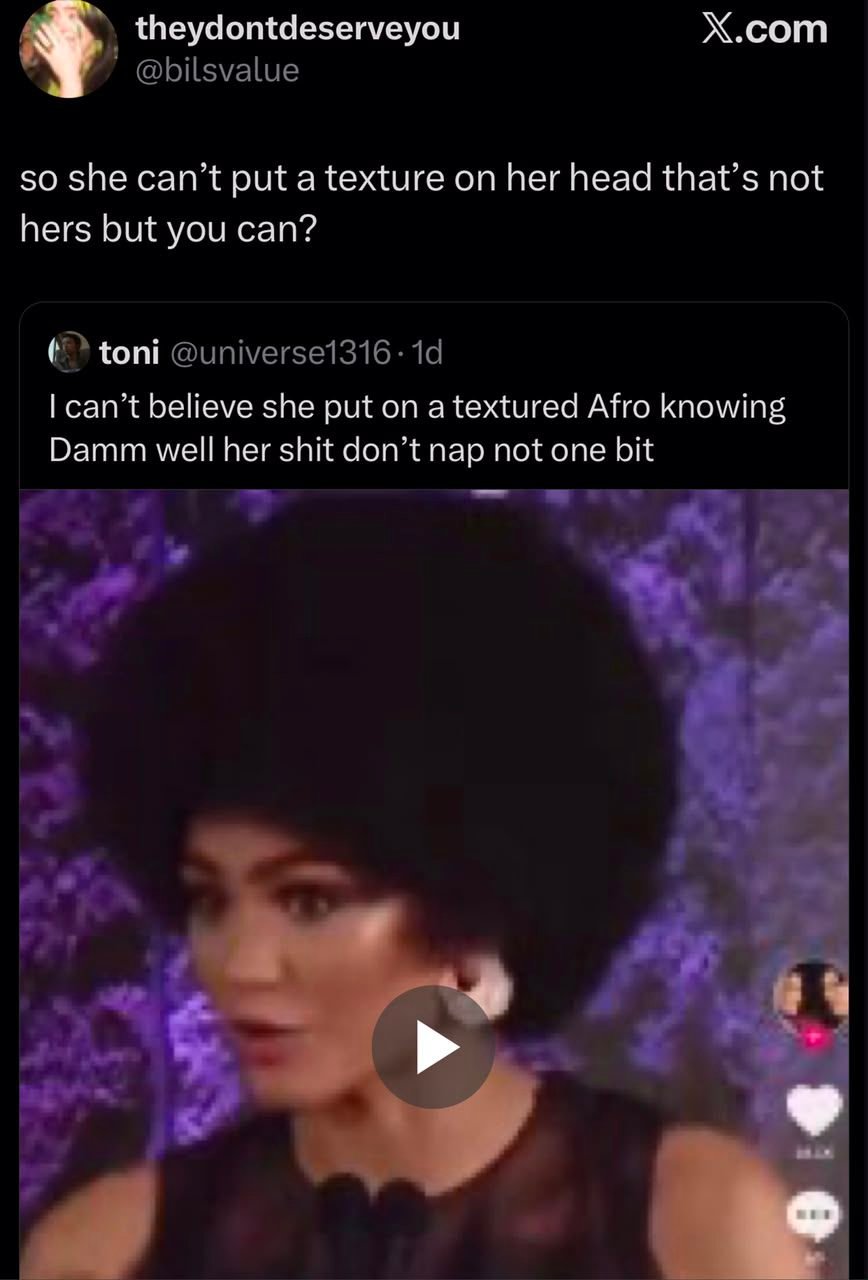
The X post makes the hypocrisy argument bluntly. If Black women can wear straight wigs and weaves that mimic Zendaya’s natural hair texture, why can’t she wear styles that mimic theirs?
It is a valid question. And it points to a deeper tension in how we police Blackness.
The Cultural Appropriation Framework
Zendaya herself has spoken about cultural appropriation in the past. In a 2016 interview, she addressed the trend of non-Black celebrities wearing boxer braids:
“Braids are not new. Black women have been wearing braids for a very long time… It’s not this new, fresh, fun thing. Another problem is it became new and fresh and fun, because it was on someone else other than a black woman.”
She added: “If something feels personal to your culture or to your background, then you take that personally and you feel affected by it. You can’t tell someone not to be upset about it.”
Her solution was conversation and education: learn the history behind what you wear. It is a position that makes her 2026 afro criticism seem ironic. She is not the problem, especially because she has spent years on the right side of this conversation.
The Hypocrisy Argument
The X post is not defending Zendaya. It is pointing out a double standard. If Black women are permitted to wear hairstyles that mimic Zendaya’s natural texture, why is she not permitted to wear hairstyles that mimic theirs?
The argument is not that Zendaya is beyond critique. It is that the critique is applied unevenly. The policing of Black hair—who can wear what, who is allowed to claim certain textures—is not about protecting Blackness. It is about enforcing a narrow, often exclusionary definition of who is “Black enough.”
Conclusion
Zendaya wearing an afro wig is not an act of appropriation. She is a biracial woman whose father is Black. She has a long history of defending Black hair, using her platform to speak out against discrimination, and being on the right side of these conversations.
Her 2015 Oscars moment helped catalyze the movement for the CROWN Act. The backlash she faced then was rooted in racism and ignorance. The backlash she faces now seems to be rooted in a different problem: the policing of who qualifies as Black enough to wear certain styles
As the X post argues: “Since we want to obsess over straight hair then let others wear our hair too.” It is a provocative framing, but it captures the fundamental hypocrisy of the criticism.