Iran launched attacks on U.S. military installations in the Gulf on Wednesday, days after Washington carried out strikes on multiple locations in Iran and reimposed sanctions targeting the country’s oil exports. The United States said its military action was in response to alleged Iranian attacks on vessels operating in the Strait of Hormuz.
The latest exchange of attacks renewed concerns that the conflict in Iran could escalate again. Adding to the uncertainty, Donald Trump declared that the temporary ceasefire was “over,” but said he remained willing to let diplomatic talks move forward.
Fresh attacks have continued to test the fragile ceasefire, while Trump’s remarks have heightened uncertainty over its future. His comments also triggered a sharp rise in oil prices. Any return to full-scale fighting could spread across the wider Middle East and once again disrupt energy supplies passing through the Strait of Hormuz, a key route for global oil trade.
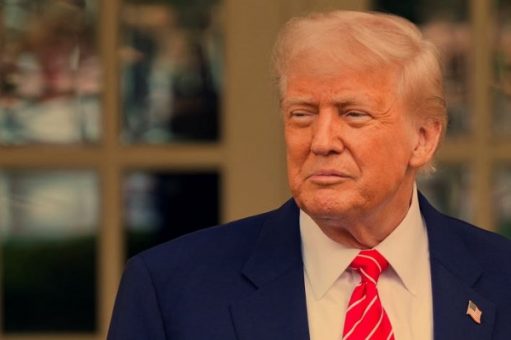
“For me, I think it’s over,” Trump responded when asked about the status of the ceasefire. He added that U.S. representatives can continue negotiations, but he cast doubt on the outcome. “They can talk, but I think they’re wasting their time,” he said.
Formal negotiations aimed at reaching a lasting agreement were expected to begin after the conclusion of the days-long funeral for Iran’s Supreme Leader, Ali Khamenei, who was killed on February 28 during the opening phase of the conflict. The funeral, scheduled to end on Thursday, had been viewed as an opportunity to ease tensions.
The planned negotiations are expected to address the most contentious issues, including the full reopening of the Strait of Hormuz and scaling back Tehran’s controversial nuclear programme.
“The era of bullying and extortion is over,” Iran’s Parliament Speaker Mohammad Bagher Qalibaf wrote on X. “It leads nowhere. We don’t fold.”