Thousands of voters in Louisiana have already participated in early voting for congressional candidates, even as new district boundaries threaten to render some of those votes uncertain. In Alabama, primaries are just days away, but officials may be forced into a rerun of U.S. House voting. Meanwhile, a newly drawn congressional map in Tennessee has already disrupted races that were months in preparation.
The sudden changes are part of a wider wave of Republican-led redistricting across several southern states following a recent U.S. Supreme Court ruling that significantly weakened protections under the Voting Rights Act. The shifts have created confusion among voters and operational challenges for election officials, even as primary elections are already underway.
The redistricting battle, which critics say is heavily driven by partisan interests, was intensified after moves initiated under President Donald Trump aimed at strengthening Republican control of the narrowly divided U.S. House of Representatives.

The Supreme Court ruling, delivered last month, forced Louisiana to revisit its congressional map, which had previously included two majority-Black districts. Those districts elected Black representatives under the 2024 arrangement, but the new ruling opens the door for Republicans to eliminate one or both in a state where about 30% of residents are Black.
Similar redistricting efforts are being considered in Alabama, Mississippi, South Carolina, and Tennessee, with Republicans reportedly targeting up to four Democratic-held seats, including three represented by Black lawmakers. Florida has also adopted a new map that could reduce Democratic representation by four seats out of 28.
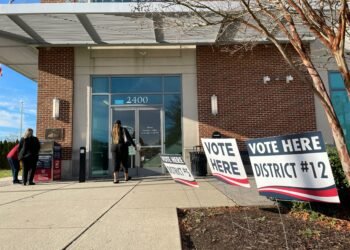
In Louisiana, voter Sallie Davis described her confusion after casting an early ballot in New Orleans. She said inconsistencies at her polling station left her uncertain whether her vote would even count.
“I was supposed to believe a piece of paper with an X on it marking out the person I wanted to vote for,” the 66-year-old said. Her voice reportedly broke as she continued, “I think I have been disenfranchised. I think my vote, which I just voted on, is not going to count or something. I think it’s illegal.”
Election officials across affected states are now facing mounting pressure as legal battles, map revisions, and voter confusion continue to overlap with active election timelines.