
In a secretive late-night operation that fully highlights the volatile politics of West Africa’s coup belt, Togo has arrested and summarily extradited Burkina Faso’s former junta leader, Paul-Henri Sandaogo Damiba, back to the country he once ruled, where he now faces accusations of orchestrating a murder plot against the man who overthrew him.
The handover, finalized Saturday, answers the headline’s question, which is that Togo exiled a former president to Burkina Faso as a political bargaining chip, securing promises for his “physical integrity” in exchange for removing a destabilizing exile from its soil.
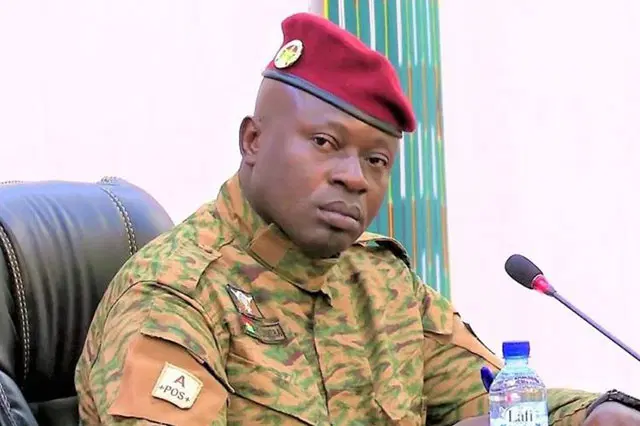
Damiba, who seized power in a 2022 coup only to be ousted himself nine months later by current strongman Captain Ibrahim Traoré, had been living in Togo. His extradition follows months of escalating accusations from Ouagadougou that he was the mastermind of a “military wing” plotting from exile to assassinate Traoré and destabilize the state.
Togo’s justice ministry stated the transfer was part of a deal where Burkina Faso promised to ensure Damiba’s fair trial rights and, crucially, the absence of the death penalty—a significant concession given Traoré’s junta recently reinstated capital punishment for crimes like high treason.
The Real Crime: Being a Rival to a Sitting Junta
The laundry list of formal charges against Damiba includes embezzlement, corruption, and money laundering. However, the core, unstated allegation is one of existential political rivalry. Traoré, a 34-year-old artillery officer who accused Damiba of failing to defeat jihadist insurgents, has spent his rule consolidating power: expelling French forces, adopting a militant nationalist stance, and purging rivals. Damiba, as the immediately preceding leader, represents a latent alternative, a figure around whom military dissent could coalesce.
By accusing him of a murder plot (an allegation announced on state TV by Security Minister Mahamadou Sana), the Traoré regime shifts a political threat into a criminal one, justifying his arrest and likely televised trial.
Togo’s Calculus: Stability Over Sanctuary
For Togo, a nation ruled by the same family for over half a century, the decision was one of cold realpolitik. Hosting a wanted ex-president accused of plotting a coup in a neighboring country is a liability. It makes Togo a base for subversion and risks souring relations with Burkina Faso’s assertive, unpredictable junta at a time when Islamist violence spills across borders.
Extraditing Damiba with a promise of “dignity” allows Togo to wash its hands of a problem, present itself as a cooperative regional actor, and avoid becoming entangled in Burkina Faso’s internal military feuds. It is the act of a regime that values its own stability above offering sanctuary to a fallen strongman.
Why It Matters
Far from resolving tension, Damiba’s return in handcuffs is likely to escalate divisions within Burkina Faso’s armed forces, which are already battling one of the world’s worst jihadist insurgencies. His trial will be a lightning rod, forcing officers to choose sides. It exposes the brutal truth of junta politics: yesterday’s savior is today’s traitor, and exile offers no protection from the long arm of a successor’s vengeance.
The answer to “why” Togo exiled him is clear: to eliminate a nuisance. The more pressing question now is what Burkina Faso will do with him. His fate will signal whether the region’s coup-born regimes are maturing into something resembling rule of law, or simply perfecting the art of liquidating their predecessors.