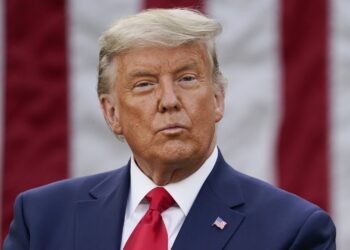
President Donald Trump has made a shocking announcement: No US government official will attend the G20 summit in South Africa later this month. On the surface, he cited “human rights abuses” against white Afrikaners as the reason. But digging deeper, there are hints that much more may be going on behind the scenes, and many in Washington are asking why the U.S. is completely pulling out of a major international event.
Trump’s statement, posted on Truth Social, was blunt. He claimed Afrikaners are “being killed and slaughtered” and that their land and farms are “being illegally confiscated.” He added that the United States would not send any officials to the summit until these abuses stop.
At first glance, this appears to be a human rights argument. But experts and critics are questioning whether Trump has other, less obvious motives, ranging from political calculations at home to unresolved tensions with South Africa over economic and military policies.

Could It Be More Than Human Rights?
While Trump emphasizes the plight of Afrikaners, insiders suggest his decision may involve other issues. For example:
- Gaza and Israel: Trump has reportedly been upset with South Africa over its stance on Israel’s military actions in Gaza. The country recently accused Israel of genocide, something Trump sees as hostile to U.S. allies. This alone could explain why he wants to keep U.S. officials away.
- Economic Grievances: South Africa’s land reform policies have long frustrated Trump. Beyond human rights rhetoric, Trump may be concerned that hosting the G20 in Cape Town could spotlight economic policies he sees as anti-business or unstable, threatening U.S. trade interests in the region.
- Political Messaging at Home: By refusing to attend, Trump may also be sending a domestic signal to his political base. Highlighting “Afrikaner persecution” appeals to voters who view him as a defender of traditional Western values. This move could help solidify support ahead of his political ambitions.
- Secret Backroom Deals? Some analysts speculate that Trump may have been informed of confidential dealings among G20 nations that he disagrees with, possibly relating to trade, energy, or military cooperation. Choosing not to attend gives him a reason to publicly distance the U.S. from policies he does not approve.
JD Vance and the U.S. Team Pullout
Vice President JD Vance, originally expected to attend the summit in Johannesburg from November 22-23, reportedly will not travel. Sources close to the White House say the decision is in line with Trump’s directive and signals a broader U.S. disengagement from this G20 cycle.
It’s unusual for a major global power to completely skip a summit, particularly one chaired by a country with growing economic influence in Africa. While the official reason is human rights concerns, the move leaves room for speculation. Could it be fear of embarrassing negotiations? Or is it a signal to future G20 hosts that the U.S. expects more favorable conditions?
South Africa Pushes Back
South Africa’s foreign ministry has called Trump’s post “regrettable” and reiterated that the claims of Afrikaner persecution are “not substantiated by fact.” Officials emphasized that the country is capable of handling internal divisions and is uniquely positioned to bring global solidarity to the G20 discussions.
But Trump’s announcement casts a shadow over Pretoria’s efforts. Analysts suggest that even if the human rights argument is overstated, the decision to boycott the summit could have long-term diplomatic consequences. It raises questions about U.S. commitment to global cooperation and could embolden other nations to challenge American influence in multilateral forums.
What Could Be Wrong?
Several possibilities exist that could explain why Trump is making this move:
- Internal U.S. Politics: Trump may be using the boycott to dominate headlines and control the narrative about foreign policy before domestic elections.
- Hidden Negotiations: There may be unreported trade or defense negotiations at the summit that Trump does not want U.S. officials involved in without his direct oversight.
- Security Concerns: The White House could have received intelligence about risks to U.S. delegates in South Africa, and the human rights argument is the public reason.
- Message to the World: By refusing to attend, Trump sends a signal that U.S. participation is conditional, reminding other countries that American engagement is not guaranteed.
Long-Term Implications
Trump’s decision sets a precedent that could reshape U.S. participation in global forums. If a president can unilaterally decide to skip major summits over perceived slights or disagreements, the international system faces uncertainty. For South Africa, this is a diplomatic embarrassment, especially as it holds the G20 presidency until November 2025.
Trump saying no US government official will attend G20 summit in South Africa may seem like a narrow policy statement, but the broader implications touch diplomacy, trade, and political strategy. It raises serious questions about how far domestic politics and personal grievances can influence international relations.
The Bottom Line
While the official reasoning points to alleged human rights violations against Afrikaners, the truth may be far more complicated. Trump’s boycott could involve a mix of political strategy, economic concerns, security calculations, and his personal approach to foreign policy.
Regardless of motive, the U.S. absence will be noticed. Allies and adversaries alike are watching, and the move might embolden nations to test Washington’s influence on the global stage. The G20 summit in South Africa will now proceed under a cloud of controversy and speculation, leaving the world to wonder what is really happening behind closed doors.