

President Donald Trump has dramatically escalated his statement in the third week of the U.S.-Israeli war on Iran, threatening to launch further strikes on the nation’s primary oil export hub, Kharg Island. In a startling interview with NBC News on Saturday, Trump claimed that U.S. forces had already “totally demolished” military targets on the island but warned that more strikes could follow, stating, “We may hit it a few more times just for fun.”
A Crisis at the Chokepoint
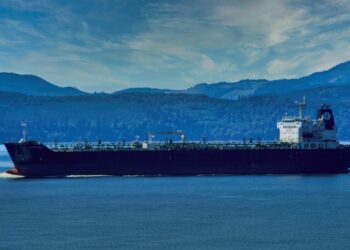
The threat comes as global oil markets face their most severe disruption in history. Iran has effectively shut down the Strait of Hormuz, the narrow waterway through which 20% of the world’s oil flows. In response, Trump took to Truth Social to demand that nations like China, France, Japan, and South Korea send their own warships to secure the passage. His message was clear: those who rely on the oil must help protect the route. “The Countries of the World that receive Oil through the Hormuz Strait must take care of that passage, and we will help—A LOT!” he wrote.

“Epic Fury” Continues Unabated
While Trump suggested that Tehran might be looking for a deal, he quickly dismissed the possibility of a ceasefire, noting that “the terms aren’t good enough yet.” This hardline stance undercuts recent attempts by Middle Eastern allies, including Oman and Egypt, to mediate a peace agreement. Instead, the U.S. administration appears committed to Operation Epic Fury, a mission aimed at the total destruction of Iran’s military and nuclear capabilities.
Iran Vows Retaliation
Tehran has responded with its own set of threats. Foreign Minister Abbas Araqchi warned that any strike on Iran’s energy infrastructure would result in immediate retaliation against oil facilities across the Gulf region. The Revolutionary Guards have already claimed responsibility for a series of drone and missile strikes on U.S. bases and Israeli targets, calling it “the first round” of revenge. As the war of words intensifies, the new Supreme Leader, Mojtaba Khamenei, has remained out of the public eye, leading Trump to openly question if his rival is even still alive.
The Economic Fallout
The human cost of the war has already surpassed 2,000 lives, but the economic cost is being felt globally. With the Strait of Hormuz closed and Kharg Island, which handles 90% of Iranian oil exports, under siege, energy prices have skyrocketed. While some allies like France are considering a naval coalition, others, like Japan, face high legal hurdles to joining the fight. For now, the world remains in a high-stakes standoff, watching to see if the next “fun” strike from the U.S. will be the one that permanently disables the world’s most sensitive energy artery.