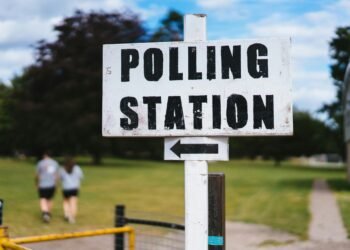
The United States military has said it does not intend to deploy federal troops or federalised National Guard personnel to polling stations during the November 2026 midterm elections.
Chairman of the Joint Chiefs of Staff, Gen Dan Caine, made the clarification in a letter to Democratic Senator Elissa Slotkin, amid concerns over whether the Donald Trump administration could involve the military in the upcoming elections.
In the letter obtained by The Guardian and first reported by the Associated Press, Caine assured Slotkin that the military had no plans to send personnel to polling locations or use them to take possession of ballots, voting machines or other election materials.
“The Joint Force has no plans to send Federal military personnel or Federalized members of the National Guard to polling places during the 2026 elections,” Caine wrote.
He added that there were also “no plans to use such personnel to seize ballots, voting machines, or other election-related material”.
Slotkin, who sits on the Senate Armed Services and Homeland Security committees, had requested the clarification from Caine and Defence Secretary Pete Hegseth after Trump called for Republicans to “nationalize” elections.
The senator also raised concerns after Trump said he had not ruled out sending National Guard members or immigration enforcement personnel to polling locations.
Caine further assured Slotkin that he had not been given, nor did he expect to receive, an unlawful order relating to the military’s role in the elections.
“I have neither received nor anticipate receiving any unlawful order concerning the role of the Joint Force in the upcoming November 2026 midterm elections,” he said.
Slotkin’s office was still waiting for a response from Hegseth, according to her press secretary, Sonja Thrasher. The senator had asked both officials to respond by August 28.
Concerns among Democrats about possible federal interference in the midterms have increased following Trump’s deployment of federal agents to Democratic-led states despite objections from local authorities.
Slotkin previously told the Associated Press that she believed Trump had been preparing the groundwork to challenge the legitimacy of the 2026 election if the results did not favour him.
She also pointed to Trump’s actions following his defeat in the 2020 presidential election, including his reported consideration of using the military to seize voting machines. Trump has also deployed National Guard troops to cities over the objections of Democratic leaders and sent active-duty Marines to Los Angeles during an immigration enforcement operation in 2025.
US federal law generally bars the deployment of armed federal forces at election sites except in circumstances involving the need to repel armed enemies of the United States. If military personnel were involved in election-related duties, the National Guard operating under state authority would be the more likely route.
White House Chief of Staff Susie Wiles previously rejected suggestions that Trump would use the military to suppress voting during the midterms.
The issue has also come up between Slotkin and Hegseth before. During a congressional hearing in April, she asked the defence secretary whether he would obey an order to seize ballots. Hegseth dismissed the question as a “gotcha hypothetical” but said: “I’ve never been ordered to do anything illegal, and I won’t.”
A similar concern arose during the 2020 election. Gen Mark Milley, who was then chairman of the Joint Chiefs of Staff, responded to a letter from Slotkin, who was a member of the House of Representatives at the time.
“I believe deeply in the principle of an apolitical U.S. military,” Milley wrote.
“In the event of a dispute over some aspect of the elections, by law U.S. courts and the U.S. Congress are required to resolve any disputes, not the U.S. military.”